

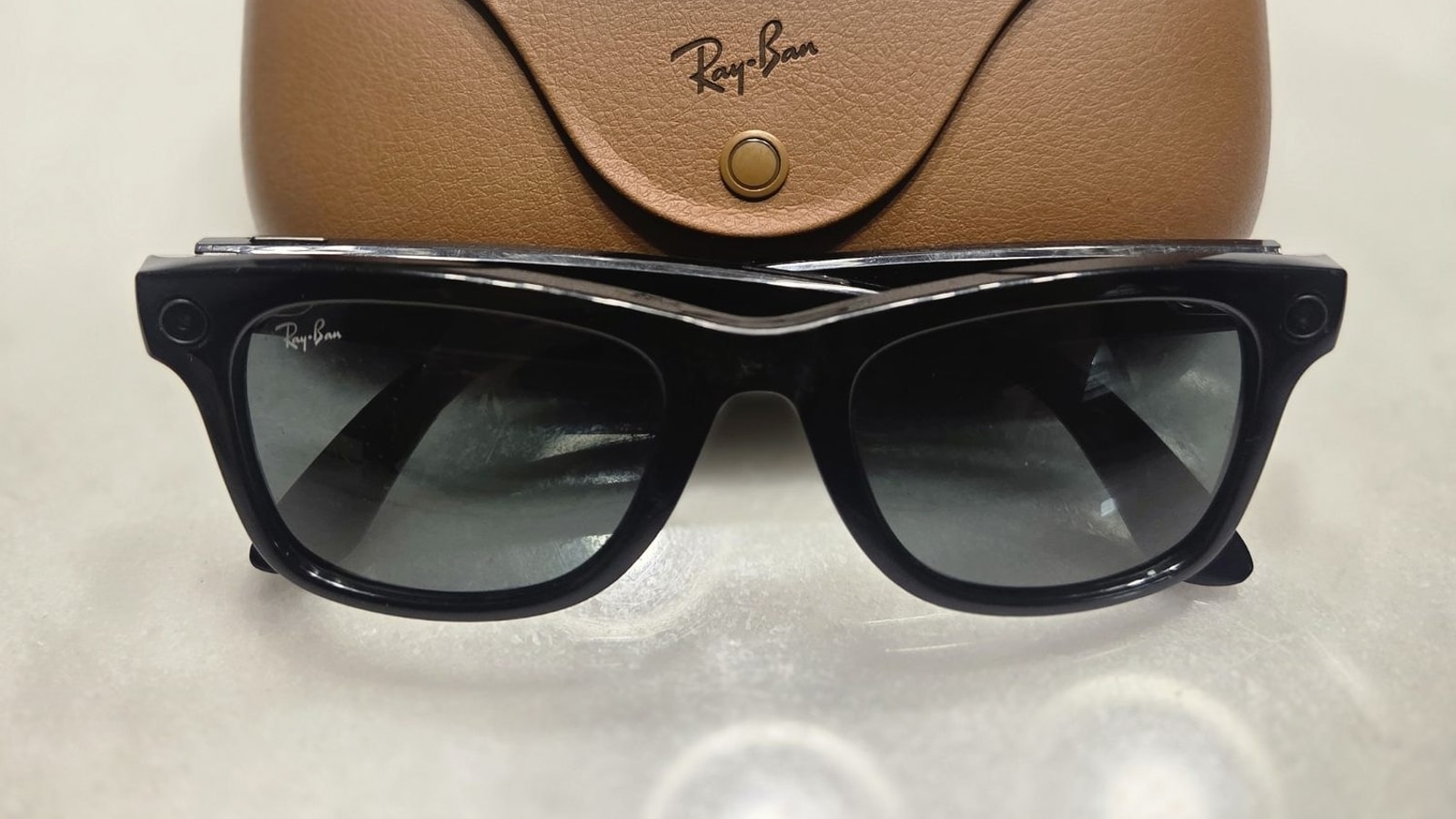
For most of the camera's history, recording required a gesture. Someone raised a camera, pointed a phone, opened an app or held a lens toward the subject. The gesture did not guarantee consent, but it created information. People could see that a recording device had entered the interaction.
Smart glasses erase much of that ceremony.
Paris prosecutors have opened at least one criminal investigation following complaints tied to alleged sexual harassment involving smart glasses and a social-media trend in which women were filmed on the street without consent. France's data-protection authority, CNIL, has separately received workplace complaints and questions from employers asking whether camera-equipped glasses can be banned at work. Australia is considering restrictions in government workplaces. Some cinemas have already prohibited them.
The technology is not difficult to understand. That is precisely the problem. It is a camera placed inside an object whose normal social function is to look at other people.
The old cue was physical
A smartphone camera changed privacy norms because almost everyone carries one. Yet the phone still provides a conspicuous cue. A person usually has to hold it at an angle that resembles photography or video. Smart glasses replace that cue with ordinary eye contact.
Meta says its glasses use a white capture LED to indicate when content is being recorded, and the company says covering or disabling that LED disables the camera. That is a meaningful design control. It does not solve the larger human-factors problem. A small light must be noticed, recognized and correctly interpreted by someone who may be several meters away, distracted, visually impaired or simply unaware that the glasses contain a camera.
The distinction is important: an indicator can disclose recording without creating consent. Those are different functions.
Wearables turn privacy into an interface problem
Privacy law is usually discussed as text: terms, permissions, statutory definitions, reasonable expectations. Wearable computing forces part of the question into industrial design. How visible should a recording indicator be? Should recording create an audible cue? Should certain environments be able to broadcast a machine-readable “no recording” policy? Should employers be able to require devices to enter a restricted mode? Can the wearer prove afterward whether the capture indicator was functioning?
Those questions sound mundane compared with debates about artificial intelligence, but they determine how technology behaves in actual rooms full of people.
The same design tension appears everywhere. A device becomes more useful when interaction becomes frictionless. A camera becomes socially legible when recording creates friction. The product designer wants the user to forget the hardware is there. The bystander may need exactly the opposite.
The workplace is where this becomes operational
Businesses have reasons to care that extend beyond personal privacy. A wearable camera can enter a meeting, laboratory, manufacturing floor, hospital, courtroom, repair bay or computer room without attracting the attention a phone held in recording position would.
That creates problems involving trade secrets, regulated data, customer information, patient privacy, source code, whiteboards, badges, screens and conversations. A blanket ban may be impractical as glasses become prescription devices and accessibility tools. A blanket allowance may be equally impractical in sensitive environments.
The resulting policy will probably have to distinguish wearing from recording and ordinary recording from AI processing. A device may capture nothing but still analyze what the wearer sees. Another may record locally. Another may send images to cloud services. From a security perspective those are different data paths even if the frames look identical.
Evidence becomes complicated too
Smart glasses can create valuable evidence. A worker may document an accident. A victim may record harassment. A technician may preserve a repair process. A police officer, journalist or ordinary witness may capture events from a perspective no fixed camera could obtain.
But evidentiary value depends on provenance. When did recording begin? Was the file edited? Did AI enhancement alter pixels or audio? Was the device clock correct? Did an automated assistant select or summarize the footage? Is the original available? Can the device's capture log corroborate the media?
As wearable cameras become AI devices, courts will increasingly need to distinguish the sensor record from machine interpretation of that record. “The glasses said” is not a chain of custody.
Facial recognition is the obvious second act
A camera that merely records creates one category of risk. A camera connected to systems that identify people, retrieve profiles, transcribe speech or remember previous encounters creates another. The user does not have to stare at a phone and search. The information can arrive while the conversation continues.
That can be enormously useful for accessibility and memory assistance. It can also transform anonymous public presence. The same architecture that helps someone remember a colleague's name could, under different rules and software, identify strangers who never chose to participate.
The technical capability therefore cannot be separated from permission architecture. Which recognition features are allowed? Which databases can be queried? Is biometric processing local or remote? What gets retained? Can a third-party application access the camera stream? What happens when a government or employer requires a different policy?
The indicator problem will not disappear
Meta's capture LED is an attempt to preserve the old social signal in a new form factor. The regulatory question is whether that signal is sufficient. One possible future is stronger standardized indicators across manufacturers, much like safety symbols. Another is environment-aware restrictions. A third is legal rules focused less on the act of capture and more on dissemination, harassment, biometric processing and misuse.
Each approach solves a different problem. A bright indicator helps awareness. It does not prevent abuse. A ban prevents some recording but can exclude legitimate accessibility uses. Punishing dissemination addresses harm after capture but does not protect sensitive information that should never leave a room.
There will not be one privacy switch because there is not one privacy problem.
What would prove this concern overstated?
If misuse remains rare, indicators prove highly effective, workplace policy converges smoothly and courts apply existing recording law without significant ambiguity, smart glasses may become socially ordinary much like phones did. The burden of proof should therefore remain empirical. Track complaints, prosecutions, workplace restrictions, indicator bypasses, accessibility conflicts and actual enforcement outcomes.
Smart glasses are not important because they invented portable recording. They are important because they remove the physical gesture that taught everyone else a camera was operating. The next privacy architecture has to restore that lost information without destroying legitimate uses. The camera has become socially invisible. Law, interface design and workplace security now have to decide how visible the act of recording should remain.
Source trail
Reuters, Sept. 18, 2026 — French smart-glasses scrutiny