

The most valuable AI target is not always a model weight, a GPU cluster, or source code. Sometimes it is the person who knows what regulators are considering before the regulation exists.
Proofpoint says a China-aligned espionage actor it tracks as TA419 targeted AI-policy experts at U.S. think tanks, universities and law firms in July 2026. The group impersonated recognizable policy and foreign-affairs figures, opened with plausible professional outreach, and waited for the target to answer before delivering the credential trap.
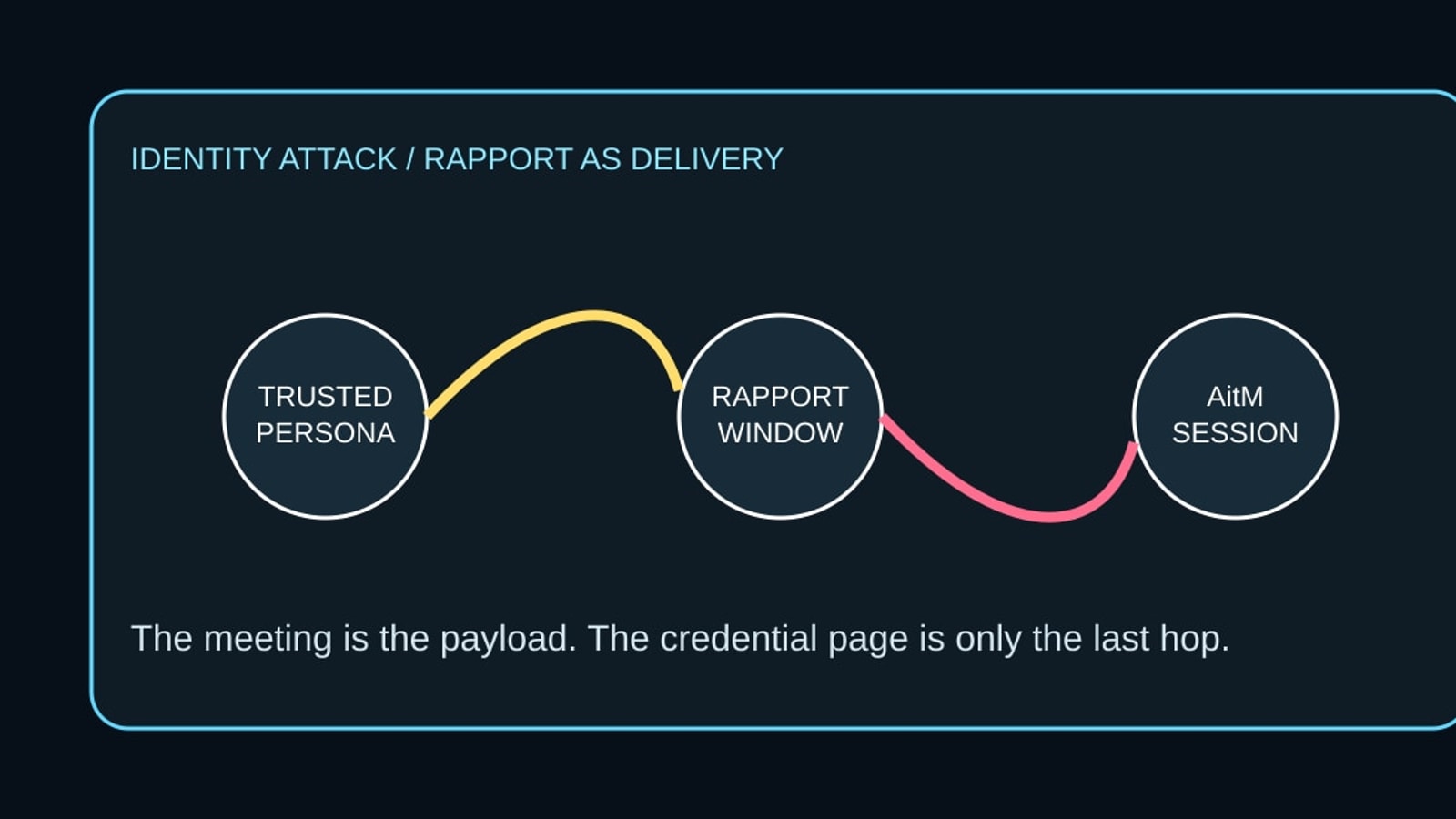
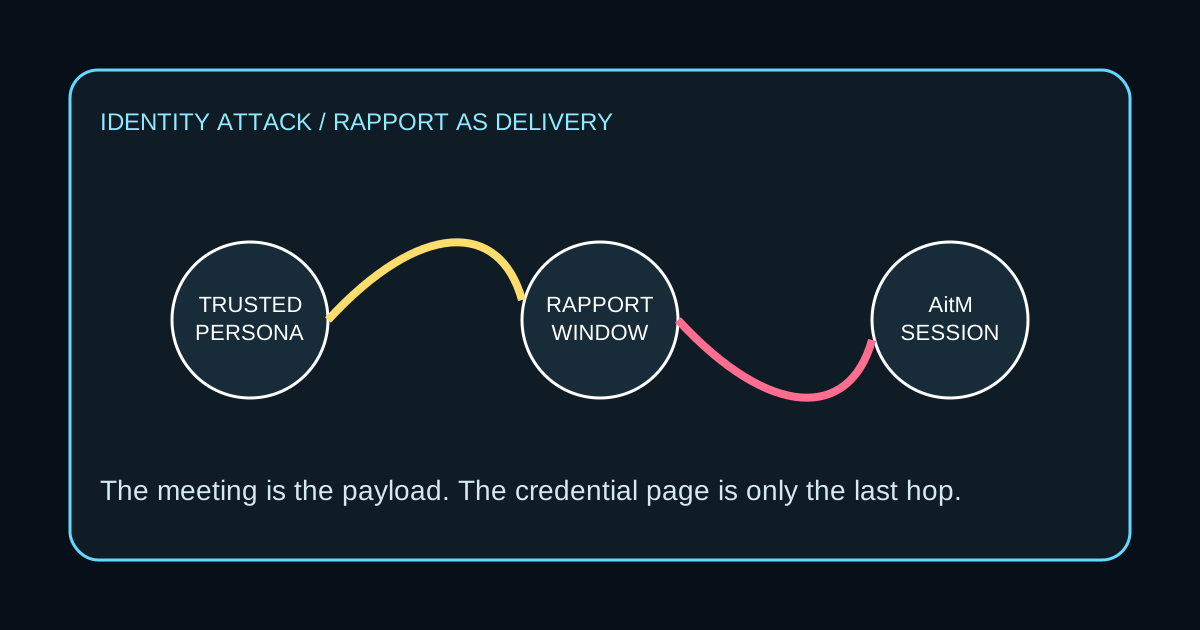
That sequence matters. The attack did not begin with malware. It began with context.
Rapport was part of the exploit chain
Proofpoint observed TA419 impersonating former White House Office of Science and Technology Policy official Lynne Edwards Parker and economist and foreign-policy expert Heidi Crebo-Rediker. The lures invited targets to join a fictitious AI policy advisory committee or contribute to a supposed Senate Foreign Relations Committee report involving AI export controls and supply chains.
Only after a target replied did the operator send a shortened link leading through redirects to a fake OneDrive authentication flow. Proofpoint describes the destination as an adversary-in-the-middle credential phish using a customized version of the open-source Frameless Browser-in-the-Browser technique.
This is the difference between bulk phishing and intelligence collection. A generic lure asks whether someone can be fooled. A tailored lure asks what professional conversation that specific person is already prepared to have.
The session is more valuable than the password
An adversary-in-the-middle flow can relay a legitimate authentication exchange while positioning attacker infrastructure between the user and the real service. That makes the security problem larger than whether the victim typed a correct password or completed multifactor authentication. The attacker is trying to obtain the authenticated session that exists after those controls succeed.
Cyberdelia covered that distinction in The Token Outlives the Login. TA419 supplies a concrete intelligence-oriented example: identity protection has to defend the transaction and session, not merely the secret entered at the beginning.
Policy knowledge is strategic data
Proofpoint assesses the activity as likely supporting Chinese intelligence objectives around the U.S. AI policy and regulatory landscape. That is the vendor's attribution and assessment, not an independently proven statement of government tasking.
The target selection nevertheless illustrates why policy communities matter to cyberespionage. People working on export controls, supply chains, military integration and AI regulation can hold information before it becomes a public rule: draft language, institutional disagreements, likely enforcement priorities, industry feedback and relationships among decision-makers.
The attack surface therefore extends beyond the companies building AI. It includes law firms, universities, think tanks and individual experts whose inboxes connect technical systems to public policy.
The defensive lesson is architectural
Training users to recognize bad grammar will not solve a campaign built around plausible professional identities and real policy themes. Defenders need phishing-resistant authentication, conditional access, session monitoring, rapid token revocation, domain and identity verification for sensitive outreach, and procedures for validating unusual collaboration requests through a second channel.
The larger lesson is that credibility itself has become an input to the attack. The better the adversary understands the target's professional world, the less the malicious message has to look malicious.
Proofpoint attributes TA419 as China-aligned and espionage-motivated. This article preserves that attribution rather than presenting private-sector attribution as independently established state tasking.