

Space missions are often sold as pictures. Earth Explorer 12 is better understood as an argument about missing measurements. The European Space Agency has three remaining candidates: a mission to improve the accounting of energy entering and leaving Earth, a mission to observe the thin and poorly sampled atmosphere above most weather systems, and one to learn what happens inside and underneath great ice sheets. Those are different scientific questions. Their instruments would not be substitutes for one another.
On September 25, ESA’s Programme Board for Earth Observation moved ECO, Keystone, and CryoRad into the next phase. A fourth concept, Hydroterra+, did not advance. The scientific advisory committee had ranked the candidates in that same order: ECO, Keystone, CryoRad, Hydroterra+. ESA says scientific relevance and programmatic considerations both informed the board’s decision. That order is advisory information, not a declaration that ECO has already won the final competition. The point of further study is to test scientific return and technical feasibility before committing to one.
ECO: balance the planetary books
Earth’s energy imbalance is the difference between incoming solar energy and outgoing energy. If more energy enters than leaves, the climate system stores the excess, especially in the ocean, with consequences for temperatures, ice, sea level, and weather. Scientists already study this imbalance using space-based radiative observations and changes in heat stored within the climate system. The difficulty is making a sufficiently accurate, stable global measurement that can resolve a small difference between large flows over long periods.
ECO is intended to target global mean Earth energy imbalance directly. ESA’s advisers called it one of climate science’s most important persistent measurement gaps and acknowledged that the proposed mission is extremely challenging. That qualification is the heart of the story. Measuring incoming sunlight and outgoing radiation is not conceptually mysterious. Determining their tiny global difference with enough confidence to tell a physical change from instrument drift, sampling gaps, and calibration error is hard. A climate-mitigation signal also cannot be read from a single year’s satellite number without accounting for natural variability and the response time of oceans and ice.
The case for ECO is therefore a case for an instrument whose stability and calibration could improve the long-term energy ledger. A meaningful assessment would inspect the June 2026 mission assessment material for proposed accuracy, coverage, overlap with existing records, and independent calibration. A promised “direct measure” is a scientific objective, not a published demonstration that every uncertainty in the climate energy budget has been closed. If a mission begins around 2036, its trend value will accumulate only with time and continuity.
The policy relevance is real but indirect. A better energy ledger can test whether modeled and observed planetary heat accumulation agree and, over time, help evaluate how the climate system responds to changing forcing. It will not by itself certify that a particular national policy caused a measured change. That causal question requires emissions data, ocean measurements, atmospheric composition, models, and careful treatment of natural variation. A satellite can sharpen an input to the argument; it cannot perform the whole argument alone.
Keystone: the atmosphere between weather and space
Keystone addresses a different blind spot: roughly 50 to 250 kilometers above Earth, a region where the familiar lower atmosphere meets the environment in which satellites operate. ESA says the concept would produce global direct observations of atomic oxygen together with co-located temperature, wind, and relevant atmospheric constituents. The proposed observing approach includes limb sounding across terahertz, infrared, and ultraviolet-visible spectral ranges.
The combination matters more than any single map. Atomic oxygen can affect spacecraft surfaces and is a tracer of processes in the upper atmosphere. Temperature and wind influence the density and movement of air at altitudes where drag can alter low-orbit trajectories. Measuring these quantities in different places or times leaves a harder inference problem; co-located observations can test how the system behaves together. Keystone would also look for metals introduced as space debris reenters. ESA says such debris is expected to grow, but the scale and composition of future reentry are not measured by this proposed mission yet.
Keystone sits at the intersection of climate science, atmospheric dynamics, and orbital infrastructure. The upper atmosphere responds to conditions from below and to solar activity from above. A dataset there could improve models used for satellite operations and reveal chemical changes associated with reentry. But it would take years of observations and model comparisons to establish the practical improvement. The proposal should not be described as an operational space-traffic radar or a completed pollution inventory. It is a scientific instrument concept aimed at quantities that present monitoring leaves uncertain.
There is also a public-accounting question. As satellite constellations grow, reentering hardware becomes a material flow through the atmosphere. If a mission can observe metal signatures, researchers could compare their distribution against launch and reentry records and atmospheric models. Turning that into a global emissions or health estimate would demand further chemistry, deposition, exposure, and background measurements. The observation is a possible starting point, not the final risk calculation.
CryoRad: look inside ice, not just at its surface
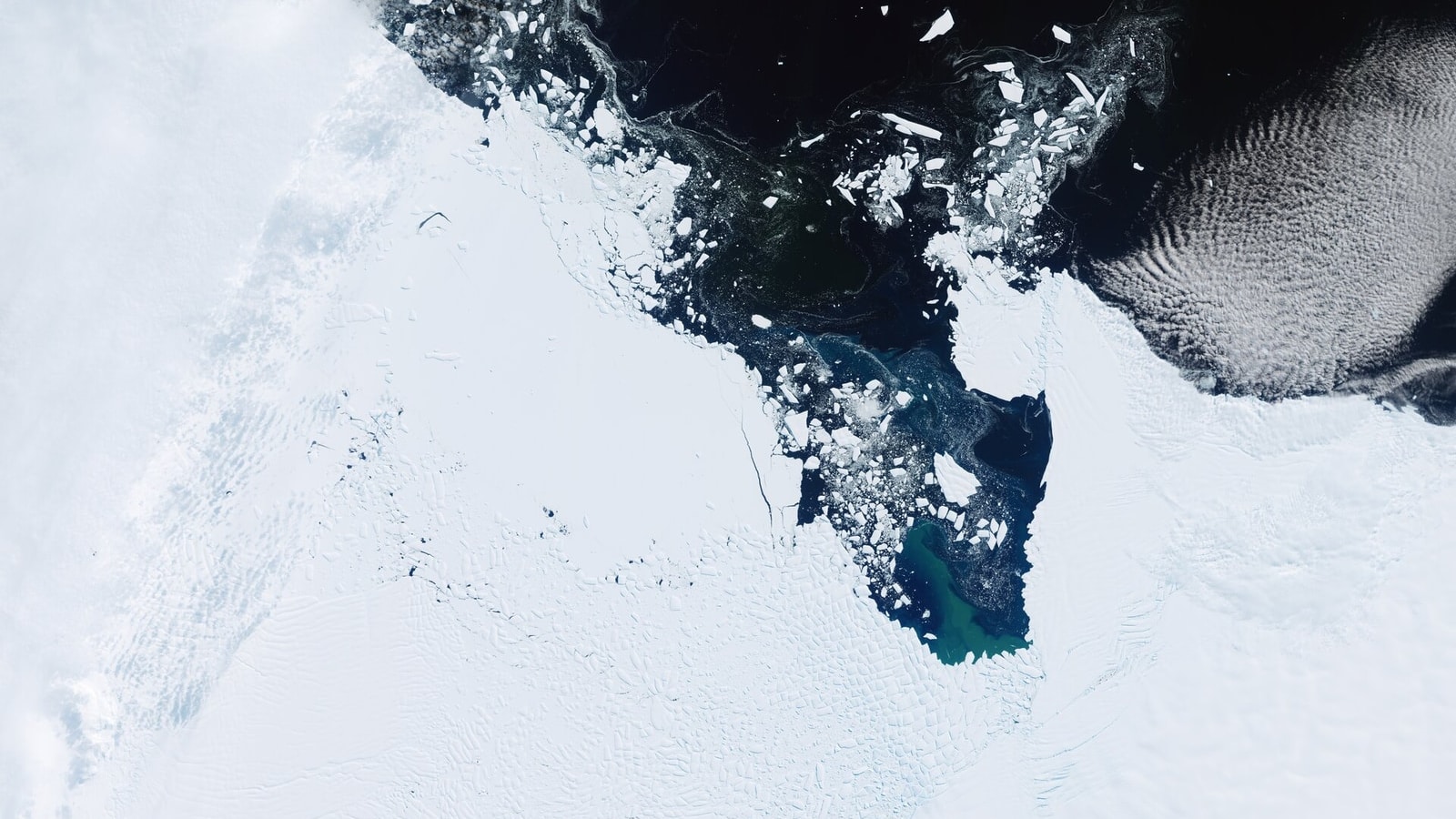
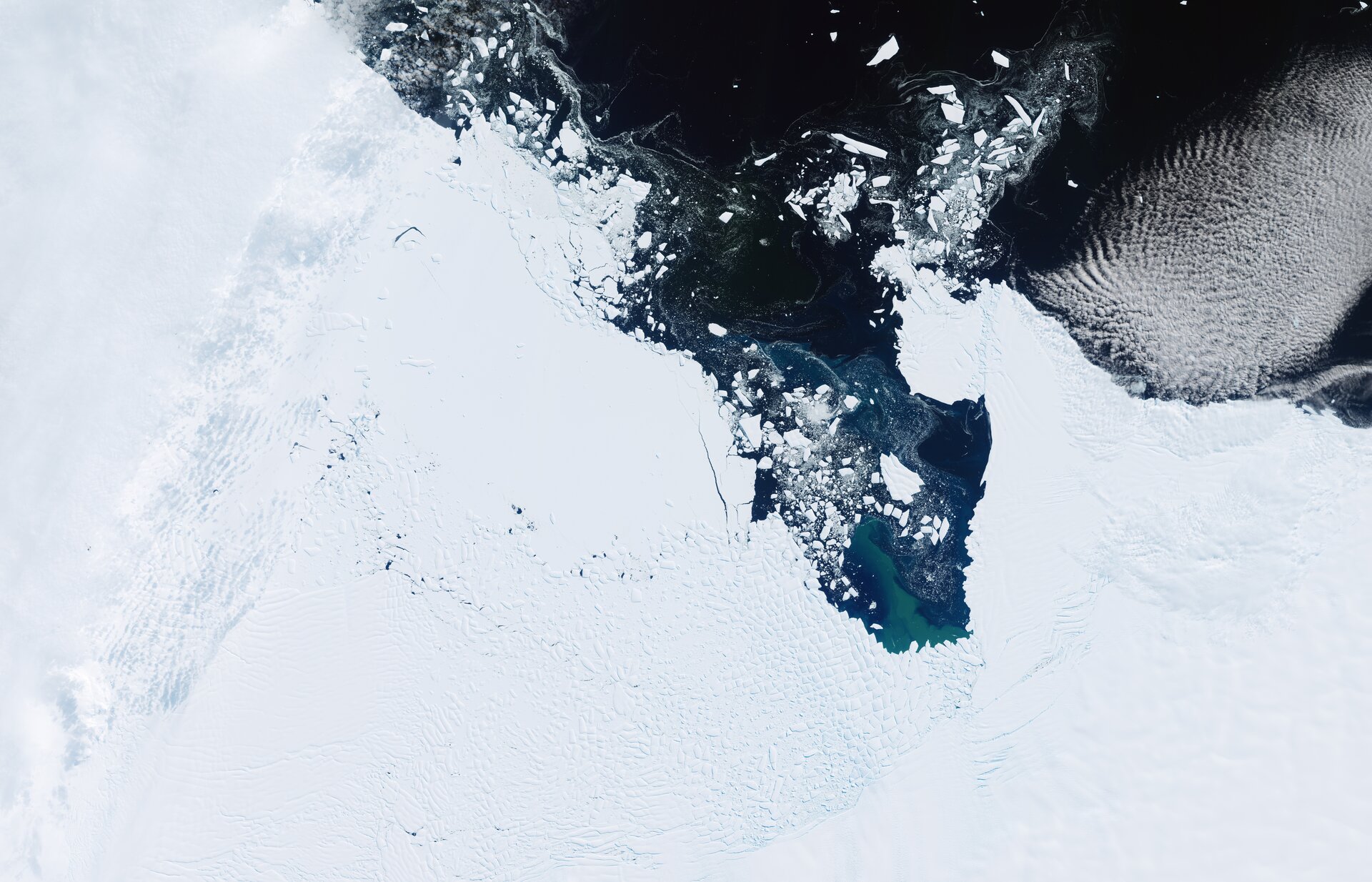
CryoRad aims to measure temperatures and basal conditions within polar ice sheets. Ice-sheet loss is often described through surface melting, calving fronts, and changes in elevation. What happens at the bed also matters: warmer or wetter basal conditions can change friction and how ice flows toward the sea. Ice thickness and surface motion alone do not uniquely reveal the temperature and water state underneath.
The scientific promise is better constraints on ice dynamics and future sea level. It is not a claim that one orbital mission can state a single exact date or number for the next century’s sea rise. Polar systems vary by region and respond to ocean conditions, snowfall, atmospheric warming, bed geometry, and internal ice processes. A measurement that narrows basal uncertainty can improve model tests without removing all of those other uncertainties.
The word “directly” in an agency summary warrants careful reading. A proposed sensor may infer physical conditions through measured radiation or other signatures, with an inversion model between instrument signal and the hidden quantity of interest. The eventual mission documentation must define what is directly measured, what is retrieved by a model, its depth sensitivity and resolution, and how it would be validated against field observations. That is the difference between an instrument specification and a promise that the ice interior has become transparent.
CryoRad would also face an observational mismatch common to remote sensing. A global or polar-wide view may reveal patterns that a few field stations miss, while field measurements may resolve local processes that a satellite pixel blends together. The strongest design combines them. A mission useful to sea-level science must show how its proposed data reduce the uncertainty in the model outputs that actually matter, rather than simply providing a novel image of polar terrain.
Selection is a trade, not a scoreboard
ESA cannot combine these three concepts into a single instrument just because all are valuable. Their measurements require different hardware, observing geometries, calibration plans, and science communities. A choice for ECO prioritizes a planetary energy constraint; Keystone prioritizes an underobserved atmospheric layer and orbital-environment physics; CryoRad prioritizes hidden conditions controlling ice flow. Each would leave the other two gaps for existing systems or later missions.
Scientific ranking is one input. An ambitious design can promise a transformative observation and still carry integration, calibration, cost, schedule, or launch risks. Conversely, a technically mature idea can deliver a lower-risk dataset without addressing the largest gap. ESA explicitly cited scientific and programmatic considerations in advancing three rather than simply declaring the highest-ranked winner. The next phase should produce evidence about whether the instruments can actually meet the required uncertainties within their resource limits.
A decision expected before the next ministerial council and a launch projected for the 2036 timeframe create a long interval in which current Earth-observation missions, models, and needs will evolve. The 2026 selection therefore needs an update ledger. Which candidate’s performance was demonstrated on the ground? Which measurement gap was reduced by another mission? Which requirements changed? What did costs and risk do to the original scientific ranking? A ten-year launch horizon should make the case more inspectable, not freeze a 2026 press release as destiny.
What would change the assessment
The mission assessment reports and later technical reviews may show that a candidate cannot achieve its advertised accuracy or coverage. That would materially weaken its science case. Demonstrated calibration and retrieval performance, independent cross-checks against current observations, and transparent estimates of model improvement would strengthen it. The final down-selection will be a consequential development, but until then every article should use “candidate” and “proposed” in the right places.
This competition is a useful reminder of what a space agency actually purchases with a science mission. It purchases a measurement over time, with an error budget, a way to compare it with the world, and a chance to rule out explanations that currently fit the data. ECO, Keystone, and CryoRad are three different proposals for spending that opportunity. The winner will tell us which missing fact ESA believes can be measured well enough to matter.
This down-selection defines three different measurement bets. Their relative value cannot be judged by headline appeal alone; the decisive evidence will be uncertainty reduction, calibration, coverage, cost, and technical performance in the next phase.