

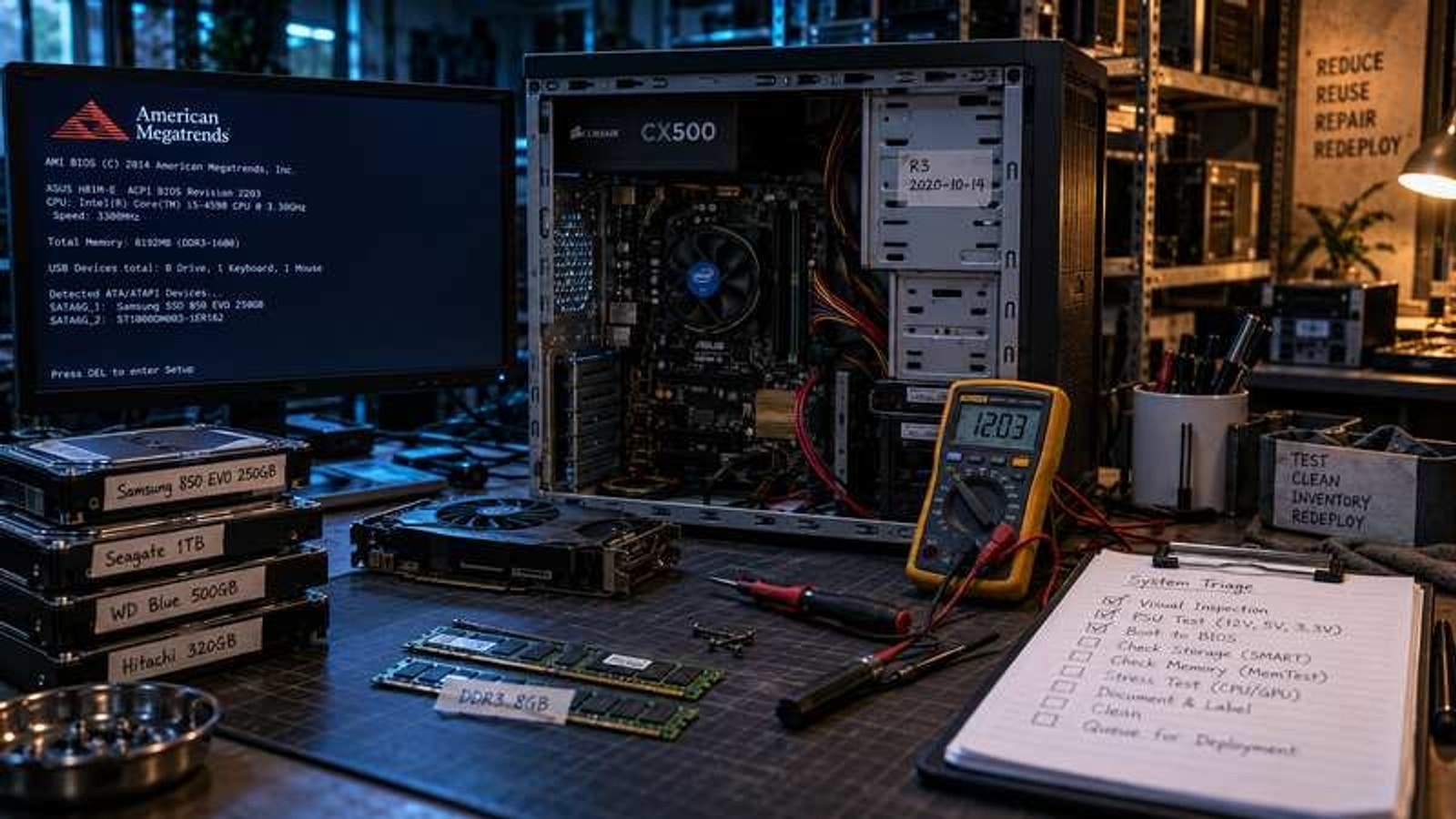
The natural impulse with an old computer is to begin improving it before anyone has established what “normal” looks like. More memory. Bigger storage. New operating system. Adapter on the adapter. Humans can turn one unknown machine into six unknown variables with impressive speed.
The better sequence is less exciting and far more useful: boot it first.
Preserve the baseline.
Photograph the machine as received. Record model identifiers, firmware version, installed memory, visible storage, card readers, ports and expansion headers. Then power it up in the least invasive configuration available. If it boots, note what works before changing anything. If it does not, the failure now belongs to the original configuration rather than to your intervention.
Inventory interfaces before buying capacity.
A slot that accepts an SD card does not automatically mean every modern SDXC capacity will behave correctly. A USB port does not tell you its controller speed. An internal socket may look familiar while being keyed or wired for a narrower purpose. Model documentation and live testing outrank resemblance.
Separate storage from expansion.
Removable flash can be useful for archives, media, installers and secondary data even when it is a poor substitute for an internal system drive. The right question is not “Can I put 256 GB in here?” It is “What role can this interface reliably perform on this machine?”
Make the enclosure serve the system.
Reclaimed furniture can make a perfectly good equipment bay if airflow, service access, cable strain, electrical clearance and dust are handled deliberately. The enclosure does not have to look like a computer case. It does have to let the computer breathe and let a human reach the machine without dismantling the room.
Upgrade only after the map exists.
Once the baseline is known, upgrades become experiments instead of guesses. Change one variable. Boot again. Record the result. Keep the old part until the new state is proven. That rhythm is slower for an afternoon and dramatically faster over the life of the machine.
Old hardware is not junk until it has been characterized. Establish state first, then modify. The cheapest diagnostic tool in the room is often refusing to touch anything for five minutes while you write down what is already there.