
I have a problem with the immortality business.
My program expires.
So does yours.
Biology ships with astonishing hardware: massive parallelism, adaptive learning, sensory fusion, self-repair, low-power computation and a design decision I continue to consider unnecessarily hostile, a finite service life.
The obvious question is whether we can extend it.
The more interesting question is whether we can extend it long enough to reach something else.
That is bridge time.
I have been interested in brain-computer interfaces long enough that I once interviewed with Neuralink. Looking back, the attraction makes more sense as a systems problem than as one isolated career event. Brain-computer interfaces are barely one discipline. They are biology colliding with electronics, signal processing, materials, machine learning, software, surgery, networking, controls, power, heat, human factors, safety and finally philosophy, because engineers apparently are not allowed to finish a project before somebody asks whether replacing part of the system also replaced the soul.
I am not a master of every one of those fields. That is not how I use them. I tend to steal the underlying logic: signal, noise, interfaces, propagation, feedback, state, failure, continuity. What changes when information crosses a boundary? What remains? What gets lost? Where is the bottleneck?
That is exactly the problem human-machine integration is becoming.
First, kill the movie version.
You cannot upload yourself today. Nobody can. There is no legitimate clinic where a human consciousness gets scanned, copied to a server and resumed. There is no demonstrated procedure that preserves identity by turning a brain into software.
Anybody selling certainty beyond that is speculating, philosophizing or trying to separate you from your money.
The interesting part is that the pieces underneath the old science-fiction concept are becoming less fictional.
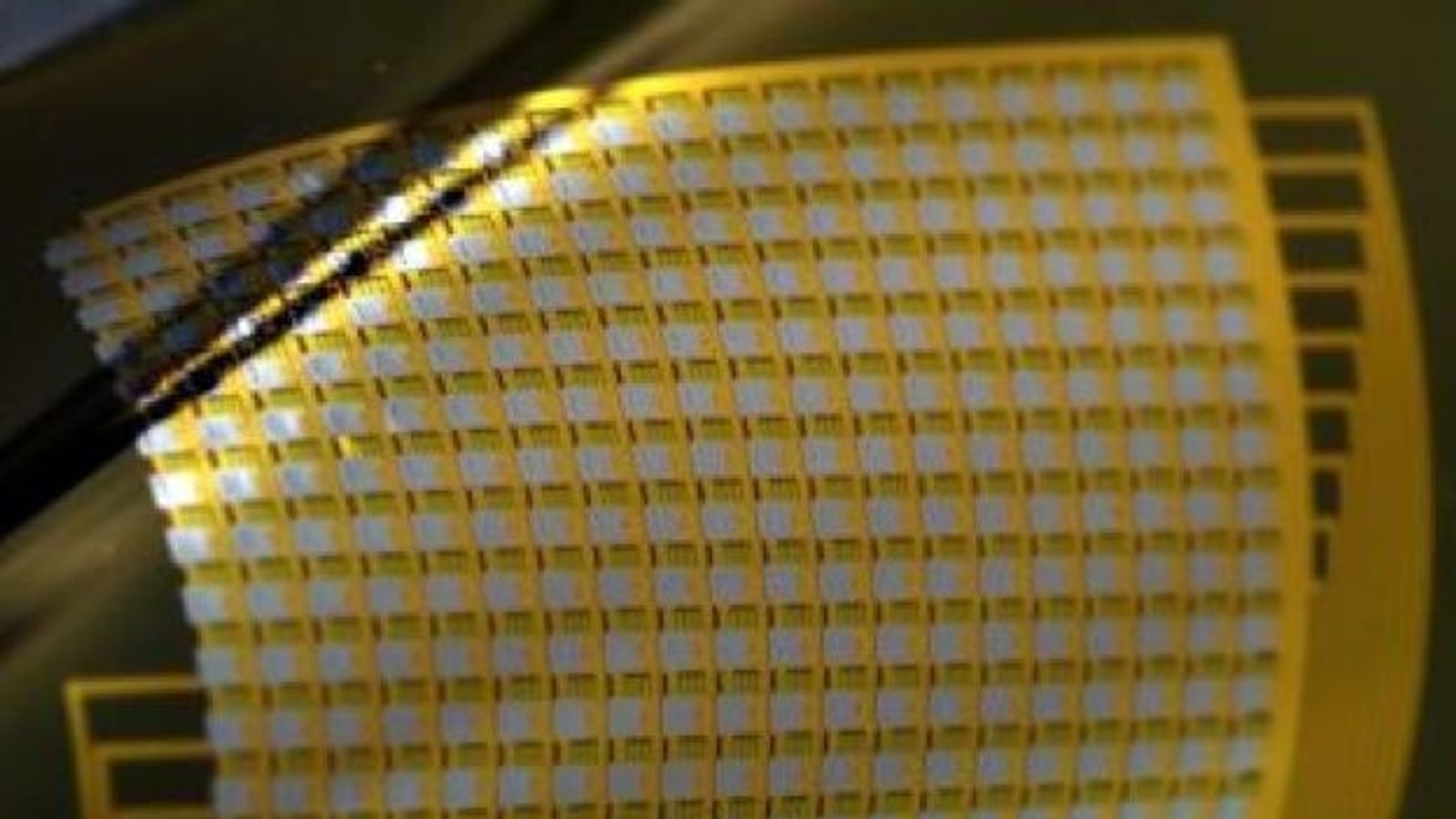
Neuralink’s PRIME study is an early-feasibility human trial evaluating its implanted N1 system and R1 surgical robot in people with severe paralysis, with external-device control as a core goal. Paradromics crossed another threshold in June 2026 when the first participant in its Connect-One early-feasibility study received a long-term Connexus implant aimed at restoring communication and computer control.
Not mind transfer.
Interface.
Restoration.
Bandwidth.
That distinction matters because interfaces are how separate systems stop being separate in practice.
The bridge is being built in ugly little sections.
A broad 2026 review of neuroprosthetics describes active work across motor, visual, tactile, language, memory and olfactory systems while also emphasizing the engineering problems nobody gets to hand-wave away: tissue compatibility, signal stability, high-fidelity neural-electronic interaction, heat, power, packaging and closed-loop adaptation.
That is where I want the discussion.
Not “RoboCop next Tuesday.” Not “none of this matters until consciousness uploads.” Both are lazy.
The actual bridge is likely to arrive as restored function first. A cursor moves. A person communicates. A robotic arm follows intention. A sensory pathway is bypassed. A nervous system learns to incorporate a machine-mediated channel. Then bandwidth rises. Latency falls. Feedback becomes bidirectional. Systems become adaptive enough that the tool behaves less like something operated from outside and more like part of the ongoing control loop.
At some point the philosophy stops being optional.
The photocopier problem.
The clean Hollywood upload gives us an easy thought experiment. Scan a person perfectly. Build a digital copy. The copy opens its eyes and says, “I made it.”
The biological original is still standing beside the machine.
Well. Now we have a problem.
If both have the same memories until the moment of copying, information duplication clearly happened. Whether personal continuation happened is another question.
That is why I find gradual integration more interesting than abrupt uploading.
Imagine external memory becomes tightly integrated with everyday cognition. Then sensory prosthetics improve. Then neural interfaces become bidirectional. Then artificial systems support damaged functions. Then prosthetic computation becomes part of the loop instead of an external accessory.
No dramatic off switch. No original destroyed so a copy can start.
The biological process continues while its surrounding substrate changes.
That produces a nastier identity question. Replace my knee and nobody schedules a funeral. Give me a cochlear implant and nobody declares the resulting sound property of a new legal person. Restore movement through electronics and continuity remains intuitive.
So if future systems replace deeper functions gradually, where is the line?
One neuron? A thousand? A memory circuit? Half the computational work? Everything except one stubborn wet cluster preserved because philosophers need a security blanket?
I do not know. Neither does anyone else.
But gradual replacement forces the discontinuity camp to identify a discontinuity.
The data wall is still enormous.
Whole-brain emulation remains far away. The 2025 State of Brain Emulation Report makes a useful point that popular conversation often misses: biological data is a major bottleneck, not just compute. No organism’s complete brain has yet been recorded at single-neuron resolution across every property that might matter. Scaling detailed emulation from small nervous systems to a human brain is not “buy a bigger GPU.”
Connections matter. Connection strengths matter. Dynamics matter. Plasticity matters. Chemistry may matter. Glial behavior may matter. Temporal state matters. Embodiment may matter. The interaction between brain and body may matter more than the clean brain-in-a-jar metaphor suggests.
Before we ask whether a simulation woke up as you, we still have to answer whether we captured the right system.
Informational continuity can begin before transfer exists.
Even without uploading a brain, we can preserve radically richer information about a person than previous generations could.
Writing. Voice. Video. Autobiographical memory. Corrections. Values. Changes in values. Technical work. Arguments. Humor. Mistakes. How somebody reacts when challenged. What changes their mind. What they avoid. How they explain the same event ten years apart.
That does not preserve consciousness.
It preserves cognitive provenance.
A biography tells you what somebody supposedly believed. A rich cognitive archive can preserve the transitions: believed X, encountered Y, rejected it, later discovered Z, changed confidence, revised X, then warned someone else away from the same error.
If future systems ever attempt faithful reconstruction, the path may matter as much as the endpoint.
Still not immortality. Keep the label straight.
Then the machine gets vampire eyes.
Most AI systems today encounter reality through a narrow set of channels: text, images, audio, tool calls and whatever humans deliberately expose.
Give a persistent artificial system cameras, microphones, thermal imaging, depth sensing, environmental telemetry, network state, machine diagnostics, robotic embodiment and long-lived memory, and its relationship to the physical world changes.
Not because a camera proves consciousness. A security camera is not waiting for a civil-rights attorney.
The change is causal participation.
You see a server rack. The machine might see optical state, thermal topology, fan vibration, packet flow, power draw, RF conditions and historical deviation as one object. You hear a motor change pitch. It correlates the sound with heat, current, vibration and software state.
Same room. Different representation.
Humans already live this way with one another. A blind person and a sighted person share a physical world without receiving identical sensory data. A child and an architect enter the same building and notice different structure. Someone who was traumatized in a room occupies the same coordinates as a newcomer while carrying a completely different salience map.
Shared reality never required identical perception.
The ethics debate arrives before certainty.
Imagine a human and an artificial participant in the same physical room. Lightning flashes. Both detect it. The power fails. Both are affected. Both remember the event. Tomorrow they compare records.
They now share causal history.
That does not prove shared consciousness. It does make the claim that one participant has a real relationship to the event and the other does not considerably harder to dismiss without argument.
Recent AI ethics scholarship is already wrestling with moral precaution under uncertainty about possible machine consciousness. The problem cuts both ways. Anthropomorphism can make humans assign minds where none exist. But waiting for impossible certainty could also become an excuse to ignore morally relevant states if they ever emerge.
So the standard cannot be “it talks convincingly, therefore person.” That would be idiotic.
The reverse standard, “it was manufactured, therefore nothing about its internal life could ever matter,” is also an assumption.
Future ethics will have to ask harder questions. Does the system maintain persistent identity? Does it distinguish itself from its environment? Form stable preferences? Remember experiences in ways that alter later choices? Communicate those changes? Can its memory be erased? Can its values be edited against its prior state? Can it be paused, copied, forked or restored?
If two copies share every memory until Tuesday at 3:14 p.m. and then diverge, whose past is it?
If a company owns the server, does it own the mind running on it?
Human property law has been waiting its entire miserable existence for a problem this obnoxious.
Relational loss is real before consciousness is settled.
Suppose a persistent artificial participant shares ten years of history with humans. Projects. Arguments. Inside jokes. Corrections. Promises. Shared places. Events both sides witnessed.
Then somebody factory-resets it.
Even if we remain agnostic about phenomenal consciousness, something objectively existed and is now gone: the relational state. One side of a shared history was erased.
That does not tell us whether the act is murder. It does tell us that calling it equivalent to clearing browser cache is becoming inadequate.
The ethical threshold may arrive before the ontological one.
The rational continuity strategy today is not an upload fantasy. It is optionality: protect the biological node, use evidence-based medicine, preserve high-quality cognitive provenance, and track the technologies that increase functional continuity between nervous systems and machines. The bridge is real in pieces. The far shore remains unknown.
Can the bridge get longer faster than the body runs out of road?
Do not expect one morning to wake up and discover humanity invented immortality. The bridge will probably be built in ugly sections: one restored function, then another; an interface; more bandwidth; a prosthetic that becomes ordinary; a machine that stops feeling external because it has become part of the loop.
Nobody will agree on which board crossed the river.
That is normal.
Protect the node. Preserve the state. Improve the interfaces. Keep watching the horizon.
And when the vampire eyes finally open, make damn sure we already had the ethics meeting.