

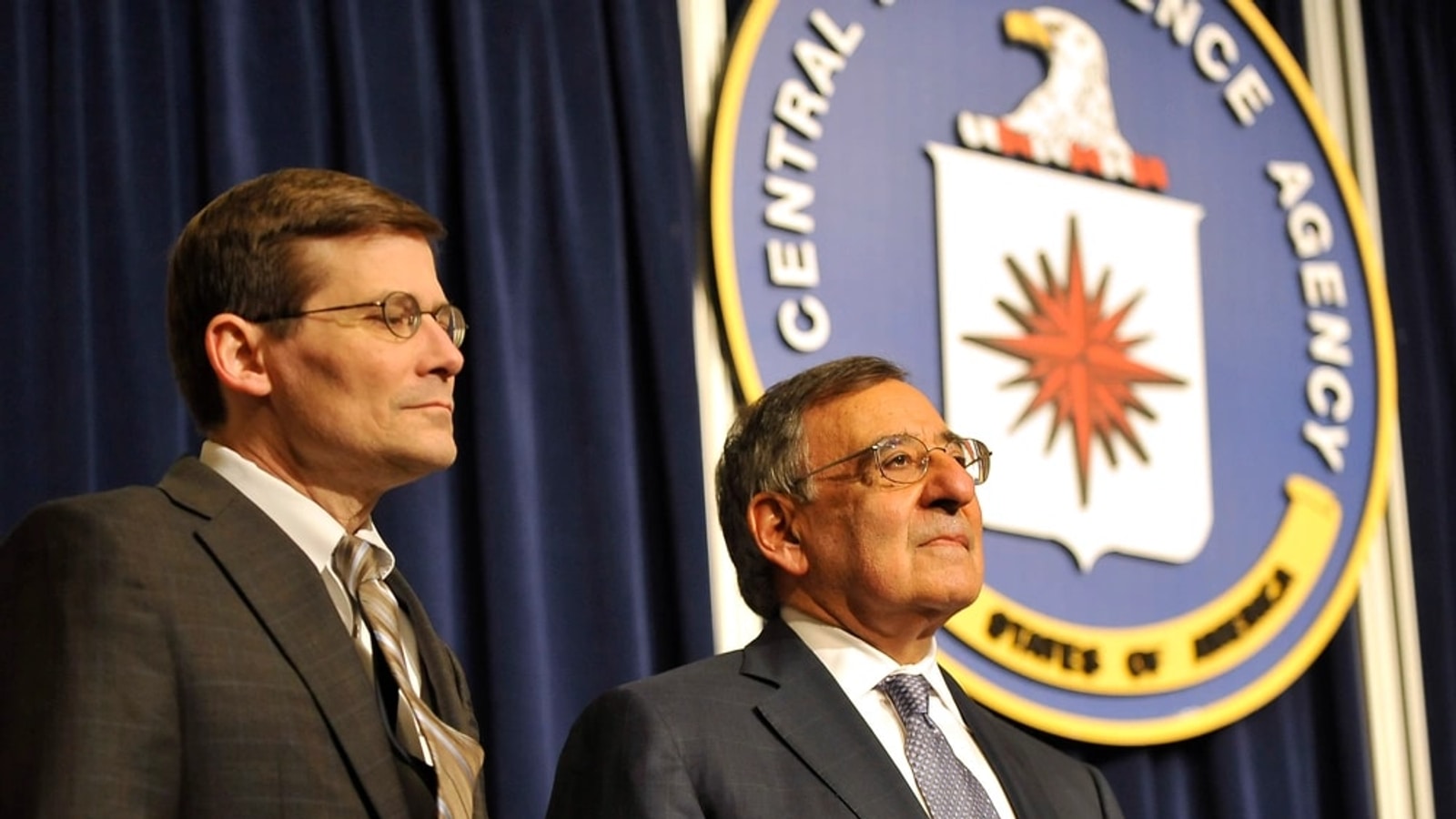
In 1973, Director of Central Intelligence James Schlesinger ordered CIA employees to report activities they believed might be inconsistent with the Agency's charter. The resulting compilation became known as the “Family Jewels.” In 2007, the CIA released a large collection of those materials and later published internal historical reflections on the period.
That origin makes the record unusually valuable. It is not an outside critic describing what the CIA might have done. It is an internal inventory created because the Agency's own leadership wanted potentially improper activity surfaced.
Internal disclosure is not external absolution.
An institution deserves some credit when it creates mechanisms that expose its own failures. It does not follow that the existence of the mechanism proves the institution corrected every problem, disclosed every fact, or understood every consequence.
The Family Jewels should therefore be read as a diagnostic artifact. What behaviors had become possible? What authorization pathways existed? Where did legal, ethical, or charter boundaries fail to stop operations before they occurred? Which activities were known centrally and which emerged from compartmented components?
The pattern is broader than one notorious program.
CIA historical material describing the “Time of Troubles” notes that the Family Jewels included domestic surveillance and bugging of journalists, mail opening, drug experiments on unwitting subjects, assistance to local law enforcement, and involvement in assassination plotting against foreign leaders. Project CHAOS, a domestic intelligence collection effort directed at foreign influence on antiwar activity, was among the controversial programs later exposed.
The important pattern is scope creep. A mission framed around foreign intelligence can acquire domestic collection pathways when leaders redefine a domestic actor as a potential conduit for foreign influence. A security investigation can widen into surveillance of journalists. A research program can cross from consented experimentation into nonconsensual testing. Each expansion can sound operationally defensible in isolation until the cumulative system is viewed from outside.
Compartmentation creates both protection and blindness.
Intelligence services compartment sensitive operations to reduce exposure. That is rational for legitimate secrets. The same architecture can also make institutional oversight harder because no single reviewer sees the full pattern.
When a later director has to ask employees to report questionable activities from across the organization, that tells us something about the information topology. The system did not maintain one clean ledger labeled “things that might violate our charter.” Leadership had to reconstruct it.
This is why Cyberdelia treats provenance and routing as part of the evidence. Who knew? When did they know? Which office generated the action? Which office reviewed it? Which legal theory supported it? Which later review discovered it?
Project CHAOS is a useful bridge to modern surveillance debates.
CHAOS was designed around the possibility that foreign governments influenced domestic antiwar movements. That premise created a route for an agency built around foreign intelligence to collect information touching Americans and domestic political activity.
The modern analogue is not “the CIA is doing CHAOS again.” That claim requires evidence. The useful analogue is structural: threat models can stretch jurisdiction. A system built for one domain can expand when data-sharing, technical capability, or national-security framing makes adjacent information operationally attractive.
That is why boundaries need to be architectural, not merely aspirational.
Authentic files still contain unverified material.
The Family Jewels are authentic government records. That does not mean every allegation inside them is independently established. Internal memoranda can summarize hearsay, preliminary investigations, disputed recollections, or activities described by people with incomplete knowledge.
Every item needs the same treatment as any other intelligence record: distinguish the existence of the document from the truth of the claim; identify the author and source chain; look for corroborating operational files; determine whether later investigations confirmed, narrowed, or contradicted the account.
The enduring question is control design.
Scandals are usually narrated through personalities because personalities are easier to remember. Systems analysis asks a more annoying question: what made the behavior possible even when the personnel changed?
If authorities are vague, oversight fragmented, collection easy, secrecy durable, and penalties weak, similar failure modes can recur without any grand continuity of actors. Conversely, better auditability, legal review, compartment-aware oversight, explicit retention rules, and independent reporting channels can reduce risk even when individual incentives remain imperfect.
The Family Jewels are therefore not merely a museum of Cold War misconduct. They are a design review written in the language of scandal.
Primary sources
CIA Center for the Study of Intelligence: Colby and Helms on the “Time of Troubles”