

There is a categorical difference between asking a database, “Where was this known vehicle?” and asking software to help decide, “Which vehicle looks suspicious?”
The first retrieves evidence against a question supplied by a human. The second can participate in generating the question itself.
Search is becoming semantic.
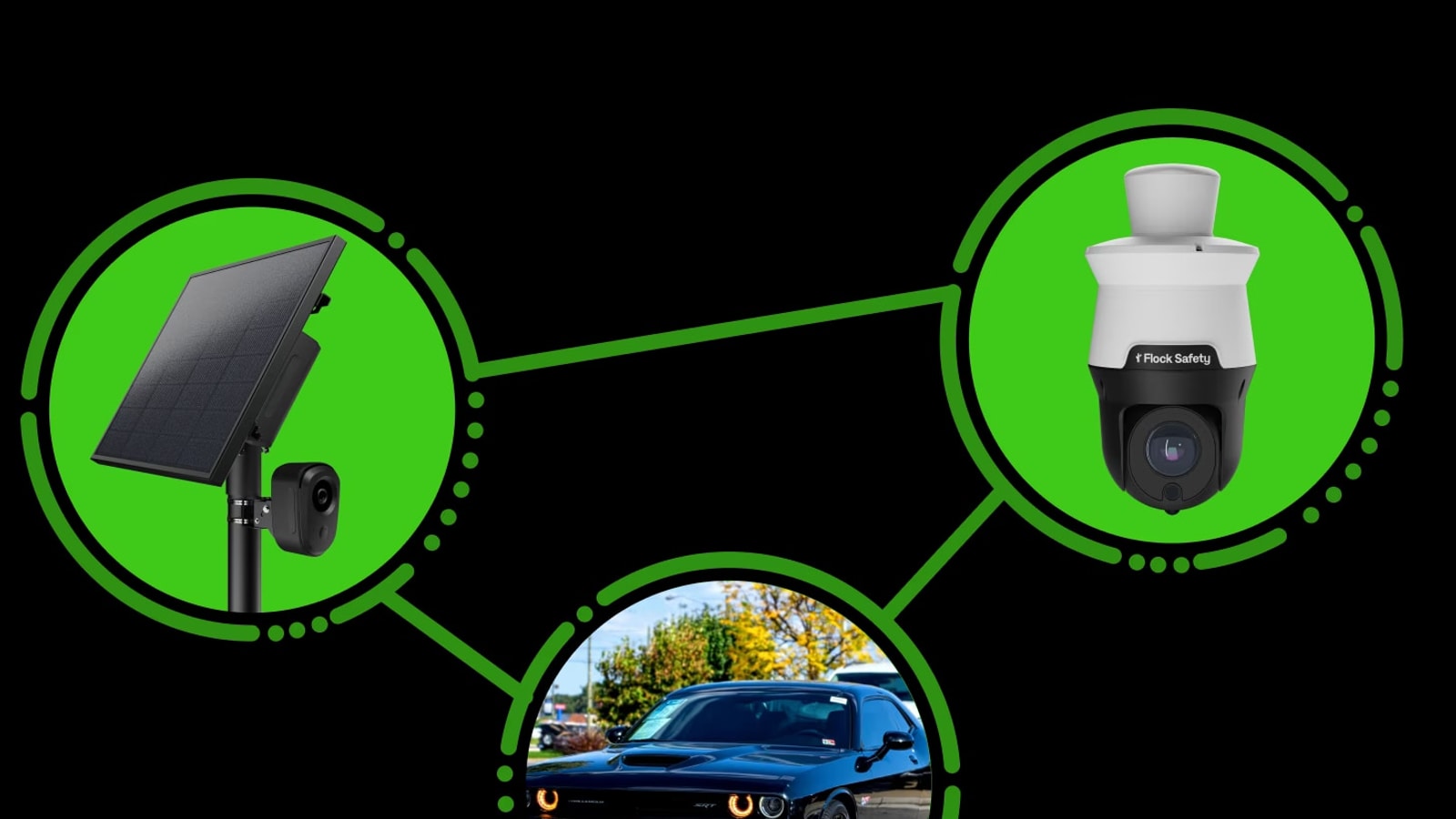
Flock markets FreeForm, an AI-assisted search layer that lets users search video and license-plate-reader evidence using natural-language descriptions rather than only exact plate numbers or rigid filters. The company says participating agencies can, where permissions allow, search shared evidence across jurisdictions and surface relevant vehicle movement patterns.
That is operationally useful. It also means the interface is moving farther from a simple plate lookup and closer to an inference system.
The dangerous phrase is “suspicious pattern.”
The ACLU has specifically criticized Flock for features it says can analyze movement patterns and report activity to police as suspicious. Whatever terminology a vendor uses, the governance issue is the same: what happens when a model's inference becomes an investigative predicate?
A pattern can be unusual without being criminal. A vehicle can repeatedly visit a location for work, caregiving, worship, medical treatment, political activity, or reasons the model cannot observe.
The system sees movement. It does not automatically know motive.
The real risk sits downstream of the model.
sensor observation → structured metadata → model query → ranked match or anomaly → analyst interpretation → police action
Every arrow can add or remove uncertainty. A low-confidence machine lead that is clearly labeled and independently checked is different from a score that silently becomes probable cause in practice.
The question is therefore not merely “does AI make mistakes?” Every analytical tool does. The question is whether the organization preserves the uncertainty as the lead moves downstream.
Human review must be meaningful.
“Human in the loop” is weak language if the human sees a system-generated result stripped of its confidence, assumptions, comparison set, or false-positive history.
Meaningful review requires enough information to disagree with the machine. That means provenance, reason codes where possible, source imagery, query history, and a rule against treating an automated association as self-authenticating evidence.
Measure the model where it touches rights.
If an AI feature can contribute to stops, surveillance expansion, investigative targeting, or inclusion on a watch list, agencies should know more than whether users like the interface.
Useful metrics include precision, false-positive rates, demographic or geographic error patterns where applicable, how often machine-generated leads are rejected by analysts, and how often they produce enforcement action.
Without that measurement, “AI-assisted investigation” risks becoming a black box whose errors are visible only after somebody is on the side of the road.
Cyberdelia is distinguishing marketed capability, civil-liberties criticism, and independently verified model performance. We do not have public benchmark data sufficient to calculate false-positive rates for every Flock AI feature.