

There is a good way to investigate a stock promotion and an expensive way.
The expensive way begins by accepting the promoter's frame: a technological breakthrough is presented beside an unnamed public company, recognizable customers and a dramatic growth forecast. The investor is then asked to pay for the ticker.
Market Atlas started with the clues instead. The original question was deceptively simple: what geothermal company had a roughly 60-year history, controlled much of the plant-development chain, worked on major projects in New Zealand, appeared connected to Google and Meta, and somehow belonged to a remarkable Utah geothermal well completed in only 16 drilling days?
The answer looked like Ormat Technologies (NYSE: ORA). That was a strong identification of the stock being promoted. It was not, however, the owner of every achievement in the story.
The 16-day Utah well belonged to Fervo.
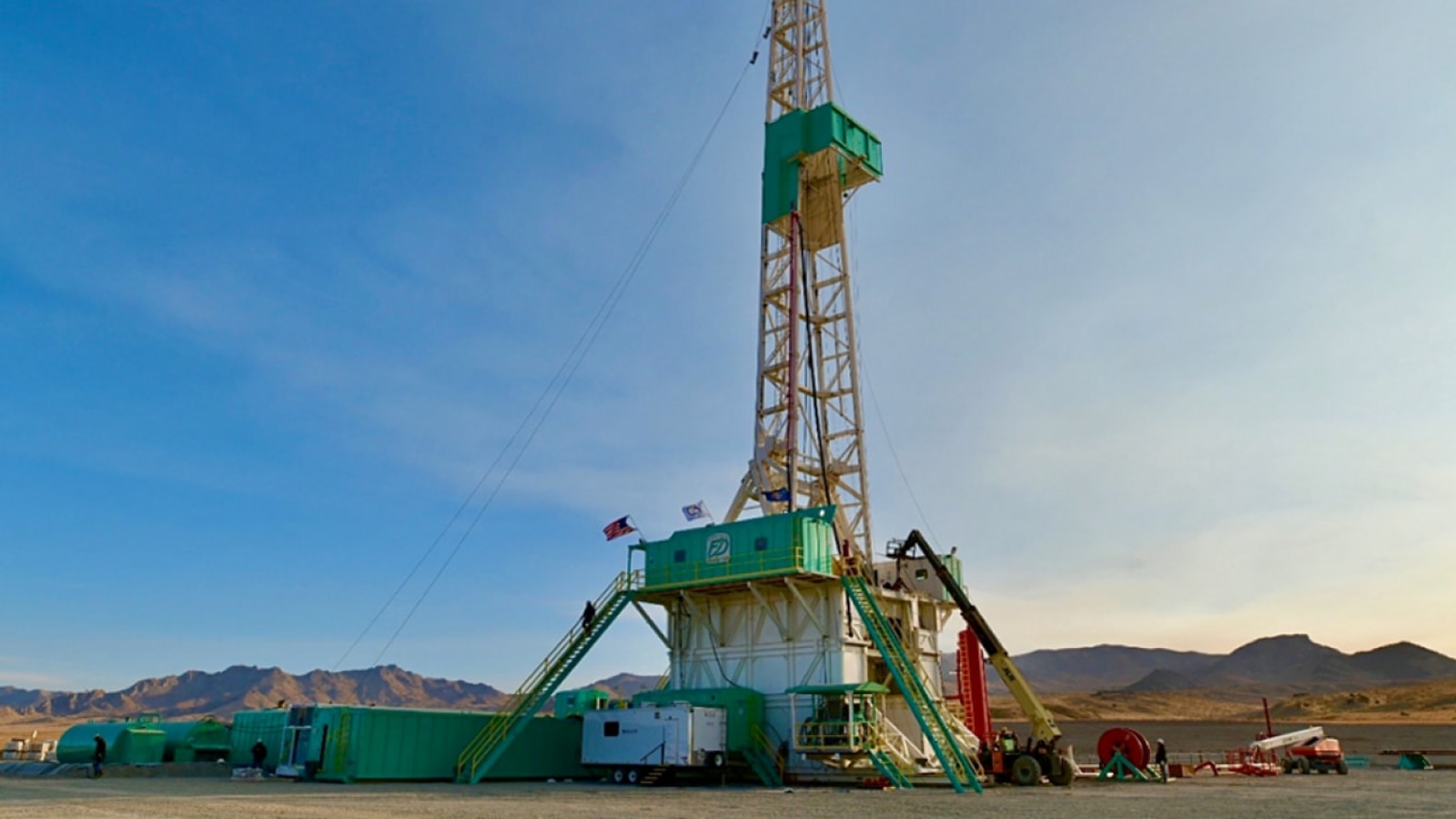
On June 10, 2025, Fervo Energy announced results from its Sugarloaf appraisal well at Cape Station in Beaver County, Utah. Fervo said the well reached a true vertical depth of 15,765 feet, encountered projected bottom-hole temperatures around 520°F, and was completed in 16 drilling days.
That matters because drilling time is one of the central cost variables in enhanced geothermal systems. Faster drilling does not automatically make a project economic, but it attacks one of the largest pieces of the cost stack.
The well was not an Ormat well. It also was not a Utah FORGE well. Cape Station sits near the Department of Energy's Utah FORGE research site, and the two belong to the same broader next-generation geothermal ecosystem, but they are different projects.
Oil-and-gas expertise is another layer. Helmerich & Payne has supplied rigs and drilling capability to Fervo. That is part of the larger technological story: enhanced geothermal is borrowing horizontal drilling, directional drilling, reservoir characterization and stimulation methods from an industry that spent decades learning how to make hard rock surrender hydrocarbons.
Google identified demand, not a single winner.
Google became one of Fervo's most important early commercial partners. Their Nevada project began supplying electricity to the grid serving Google's data centers in 2023, and the relationship later expanded through NV Energy and additional Fervo capacity.
By March 2026, Fervo disclosed a framework with Google covering the potential development of up to 3 gigawatts of geothermal capacity through 2033.
Then the clue became less exclusive. Ormat also entered a long-term portfolio agreement supporting Google's Nevada data-center demand through NV Energy.
That distinction is financially important. A hyperscaler signing geothermal agreements does not identify a secret stock. It demonstrates that large, creditworthy buyers are willing to contract for firm, carbon-free power. Several suppliers can benefit.
The Meta clue belonged to Sage.
Meta's widely discussed next-generation geothermal agreement was with Sage Geosystems, which announced plans for as much as 150 MW of geothermal power to support Meta's data-center growth.
Ormat later invested $25 million in Sage and established a strategic relationship around next-generation geothermal technologies. That makes Sage relevant to Ormat's optionality. It does not turn Meta's original Sage agreement into an Ormat contract.
This is precisely how a promotional narrative can remain composed mostly of true statements while creating a misleading overall impression. Remove the company names, compress the relationships, and one firm appears to possess an entire industry's achievements.
New Zealand is where the Ormat identification becomes strong.
The New Zealand clues fit Ormat much more directly. Ormat designs and manufactures geothermal equipment, develops projects, performs engineering and construction work, and owns and operates generating assets.
Its recent New Zealand work includes the Ngatamariki and TOPP2 projects, Te Huka Unit 3, and an approximately $200 million engineering, procurement and construction contract for Contact Energy's Te Mihi Stage 2 geothermal plant.
This is an important contrast with Fervo. Fervo is trying to prove that enhanced geothermal can become a repeatable, scalable development platform. Ormat already owns an operating business across equipment, construction and power generation.
The technological thesis is better than the sales pitch.
Traditional geothermal development has been constrained by geology. Developers need heat, fluid and permeability in useful combinations. Enhanced geothermal systems attempt to engineer around part of that constraint.
If advanced drilling and reservoir engineering can repeatedly access hot rock at competitive costs, the addressable geothermal resource expands far beyond the handful of locations blessed with ideal natural reservoirs.
That is especially attractive to data centers. Wind and solar are powerful low-cost resources, but computing facilities consume electricity continuously. Firm geothermal power can complement variable generation without depending on fuel deliveries.
The Department of Energy has modeled very large potential contributions from next-generation geothermal by mid-century if drilling, reservoir and project costs continue falling. The exact deployment number is uncertain. The direction of the opportunity is not.
Fervo is now investable, which makes the comparison cleaner.
For years, public-market investors interested in enhanced geothermal had to buy indirect exposure. That changed in May 2026 when Fervo completed its IPO and began trading on Nasdaq under FRVO.
The IPO raised roughly $2.2 billion at $27 per share, giving Fervo significant capital for Cape Station and future development.
But a technological breakthrough and an attractive security are different propositions. In its second-quarter 2026 results, Fervo was still in a heavy construction phase, reporting minimal operating revenue alongside substantial losses and capital expenditures. Its valuation therefore depends heavily on future project completion, contracted deliveries, drilling economics and financing discipline.
By August 27, FRVO was trading materially below its $27 IPO price. The market had already demonstrated the point Market Atlas was making before Fervo even became public: a powerful story can be true while the entry price is wrong.
Ormat is the easier business to understand and still not an automatic buy.
Ormat is already producing meaningful revenue and adjusted EBITDA from operating power plants, equipment, construction and storage. It also has next-generation geothermal optionality through internal development and investments such as Sage.
That makes ORA the more mature business. It does not eliminate valuation risk.
Market Atlas reached the useful conclusion during the original investigation: a good company is not automatically a good stock at every price. Mom's decision was to watch ORA rather than buy it because she believed the market price already reflected too much optimism.
That is not a rejection of geothermal. It is valuation discipline.
The better investment map is a value chain.
The geothermal opportunity is easier to analyze when the players are separated by function:
Fervo Energy (FRVO) — advanced-geothermal developer. The bet is on drilling economics, reservoir performance, project execution, financing and commercialization.
Ormat Technologies (ORA) — integrated geothermal operator and equipment/EPC provider. The bet is on operating cash flow, global project growth, equipment demand and next-generation optionality.
Helmerich & Payne (HP) — drilling and services exposure. The geothermal upside is one extension of a much larger drilling business.
Sage Geosystems — private next-generation geothermal developer with Meta exposure and an Ormat strategic investment.
Utah FORGE / DOE — public research infrastructure. It advances the industry's technical knowledge but is not a security investors can buy.
The geothermal investment thesis is stronger when the mystery-stock narrative is dismantled. Fervo's drilling progress, Ormat's operating platform, Sage's data-center agreement, H&P's drilling capability, DOE research and hyperscaler demand are complementary evidence that the sector is maturing. They are not evidence that one ticker owns the revolution. Investors should decide which layer of the value chain they want, then ask whether the current price compensates them for that layer's specific risk.
What has to remain true?
For the broad geothermal thesis to hold, next-generation drilling and reservoir performance must continue improving; projects must be delivered close enough to budget and schedule to attract repeat capital; transmission and interconnection cannot become crippling bottlenecks; and customers must continue valuing firm clean power enough to sign long-duration contracts.
The strongest counter-case.
Enhanced geothermal may remain technically impressive but economically niche. Deep drilling can encounter cost overruns, reservoir performance may vary by geology, capital intensity is enormous, permitting and transmission can delay revenue, and competing resources can become cheaper. A few successful showcase projects would not prove that the technology scales nationally.
Ormat faces a different counter-case: the business can execute well while the stock underperforms if investors pay too much for expected growth. Fervo faces the more severe version: execution risk, project concentration, construction spending and market expectations all sit on top of an early public-company history.
What would break or materially change this conclusion?
Repeated Cape Station delays, materially weaker reservoir performance, persistent drilling-cost inflation, financing stress, loss of major power buyers, or evidence that competing firm-power technologies consistently undercut geothermal would weaken the sector thesis. Conversely, repeatable Fervo project economics, successful commercial scaling by Sage or other developers, and expanding Ormat equipment/EPC demand would strengthen it.
What Market Atlas got right.
The original exercise began because paying for a mystery-stock reveal was unnecessary. It ended up demonstrating a better research method.
Instead of asking, “What stock does the advertisement want me to buy?” Market Atlas asked: Who drilled the well? Who owns the project? Who supplied the rig? Who signed the power agreement? Who built the New Zealand plant? Which company is public? Which claim belongs to which entity? What does the stock price already assume?
Those questions transformed an advertisement into a map.
The resulting lesson is less thrilling than a secret ticker and much more durable:
A technological revolution is not a ticker symbol.