

Cybersecurity language makes electrical infrastructure sound more abstract than it is.
The bulk-power system is full of extremely physical equipment that increasingly carries software, firmware, communications, maintenance interfaces, and remote-management paths. On Aug. 26, the White House declared a national emergency over foreign-produced bulk-power-system electric equipment and gave the Department of Energy broad authority to restrict new transactions and impose conditions on some equipment already installed.
The obvious headline is foreign equipment. The operational problem underneath it is inventory quality.
You cannot secure equipment you cannot describe.
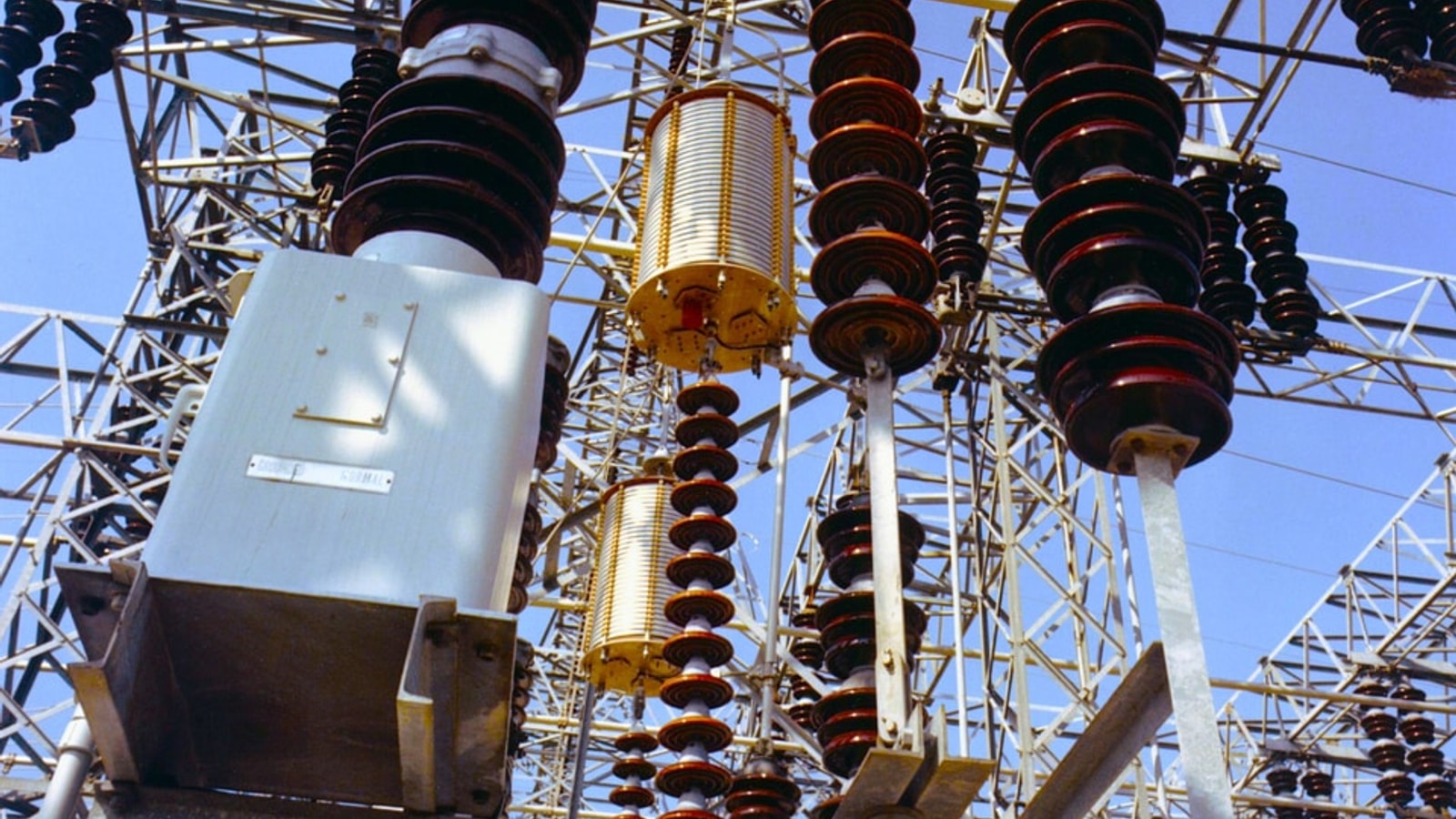
Executive Order 14420 covers far more than large transformers. Its definition includes reactors, capacitors, grid-connected inverters, battery energy-storage systems, generators, protective relays, metering equipment, high-voltage circuit breakers, turbines, industrial control systems, programmable logic controllers, intelligent electronic devices, distributed control systems, and safety-instrumented systems.
It also tells agencies to consider software, firmware, remote-access capability, lifecycle maintenance, update mechanisms, and other supply-chain dependencies.
That means a useful inventory cannot stop at manufacturer and model number. It needs to answer questions such as:
Who designed it? Who assembled it? Which critical subcomponents came from where? Which firmware build is running? Who can update it? Which vendor accounts still work? Which remote channels exist? Which maintenance contractor has credentials? Which communications modules can reach outside the operational network? Which replacement is electrically compatible if the device has to come out?
If those answers are scattered across purchase orders, vendor portals, engineering drawings, password vaults, and the memory of somebody retiring next spring, the security problem begins before any adversary arrives.
The order creates a risk-classification system, not an automatic ban on everything foreign.
The order authorizes the Secretary of Energy to prohibit covered transactions when specified foreign involvement and unacceptable risk are both present. It also allows mitigation measures, licensing, pre-qualified equipment and vendor lists, and conditions on continued use of some previously installed equipment.
That distinction matters. “Foreign-produced” is a screening variable. It is not proof of malicious function.
A coherent implementation therefore needs a chain closer to:
asset → origin → ownership/control → firmware + services → remote access → operational consequence → replacement options → risk decision
Skip the middle of that chain and policy degenerates into nationality-based guessing. Skip the final steps and a technically correct security decision can create a reliability problem worse than the risk it was meant to reduce.
Replacement capacity is part of cybersecurity.
The order explicitly tells the Energy Secretary to consider reliability, safety, secure replacement availability, and continuity of essential service before ordering isolation, disconnection, replacement, or removal.
That clause is where cyber policy collides with industrial capacity.
The Department of Energy said earlier this month that critical grid components already face imported-component dependence, limited domestic production, excessive customization, and lead times of two years or more in some cases. DOE is pursuing a supply-chain program of up to $375 million aimed at domestic transformer and grid-component capacity.
If a risk review concludes that a device should be replaced but the secure replacement has a two-year lead time, the decision is no longer simply “remove the risky box.” The operator needs phased mitigation: network isolation, monitoring, credential control, firmware restrictions, spare strategy, procurement priority, and a reliability-safe replacement schedule.
Remote access turns a supply-chain question into an operating-state question.
A component can be physically installed for decades while its effective attack surface changes repeatedly. Vendor maintenance portals change. Cellular modems are added. Firmware is updated. Cloud monitoring appears. Contractors rotate. Credentials survive employees. Remote-support software changes ownership.
That means country of manufacture is only one layer of provenance. The live question is who can exercise control now.
For some assets, the highest-value discovery may not be where the steel cabinet was assembled. It may be that an old support tunnel still reaches an engineering workstation, or that a supposedly isolated controller depends on a vendor service nobody included in the original asset register.
The grid is entering the same dependency crisis as enterprise software.
Software teams learned, painfully, that they needed inventories of libraries, packages, services, identities, and dependencies. The electric grid has a harder version of the same problem because the dependencies are welded to infrastructure that may weigh hundreds of tons, carry live power, and take years to replace.
A useful grid-security inventory therefore resembles a software bill of materials crossed with an industrial maintenance database and a network map.
Hardware provenance alone is insufficient. Network topology alone is insufficient. Procurement records alone are insufficient. The security object is the combined dependency graph.
The national-emergency language should not outrun the evidence.
The order says foreign actors may create or exploit vulnerabilities and gives the example that equipment might contain digital backdoors enabling remote access. That is a risk statement and policy rationale. The order does not publish evidence that a named installed device has such a backdoor.
Cyberdelia will keep that line bright. A policy designed to address a plausible class of risk is not evidence that every member of the class is compromised.
The better test will come from the implementation: which equipment classes are designated, what technical criteria are used, whether risk determinations identify concrete mechanisms, and whether replacements are prioritized by consequence rather than political theater.
The Aug. 26 order turns grid supply-chain security into an asset-management problem with national-security authority behind it. The decisive capability is not merely banning a vendor. It is being able to identify installed equipment, trace firmware and service dependencies, map remote access, rank operational consequence, and replace or isolate risky systems without destabilizing the grid. If the inventory is weak, the policy will be blunt. If the inventory is strong, the government can target actual dependencies instead of waving at categories.
What we will watch.
The next evidence arrives in implementation. We will track DOE's rules, covered-entity criteria, any pre-qualified vendor or equipment lists, required asset-inventory fields, treatment of legacy equipment, mitigation options short of replacement, and whether utilities receive a realistic path for equipment with long lead times.
The most revealing document may not be a blacklist. It may be the schema the government eventually requires operators to fill out.