

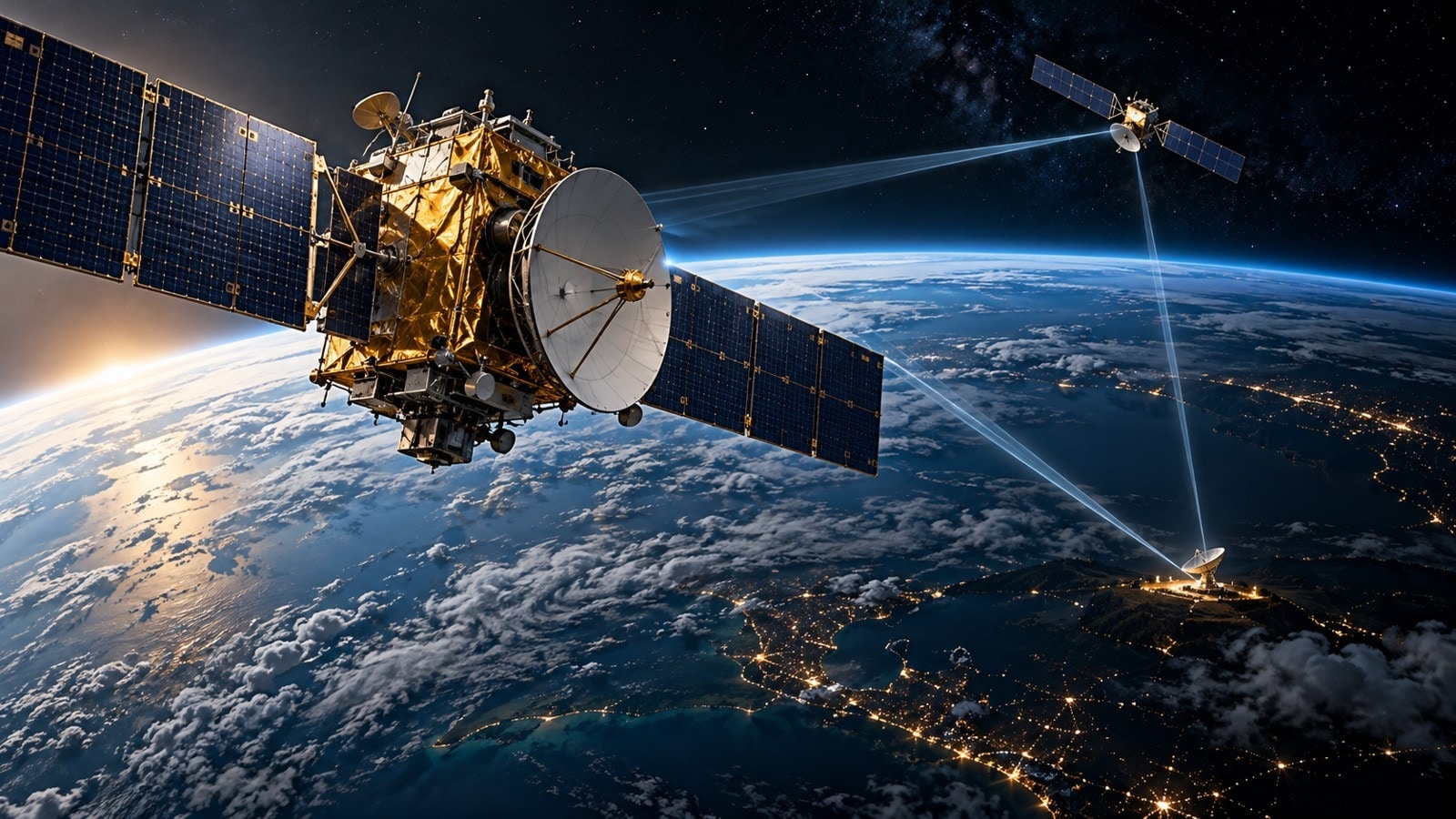
Launch is the starting gun, not the finish line
Two NASA-funded commercial communications demonstrations launched aboard SpaceX's Bandwagon-5 rideshare mission on October 20, 2026. NASA's partners Viasat and SES Space and Defense will test capabilities intended to move information between spacecraft and the ground. The distinction between launch and demonstration matters. Getting the hardware into orbit is not yet proof that its advertised communications service will meet NASA mission requirements.
NASA needs different communications modes for different kinds of information. Command and health telemetry require reliable lower-rate links. High-resolution observations and other large data products require more capacity. A mission architecture must supply the appropriate service when the spacecraft needs it, often across orbits where direct ground-station visibility is intermittent.
Two architectures under examination
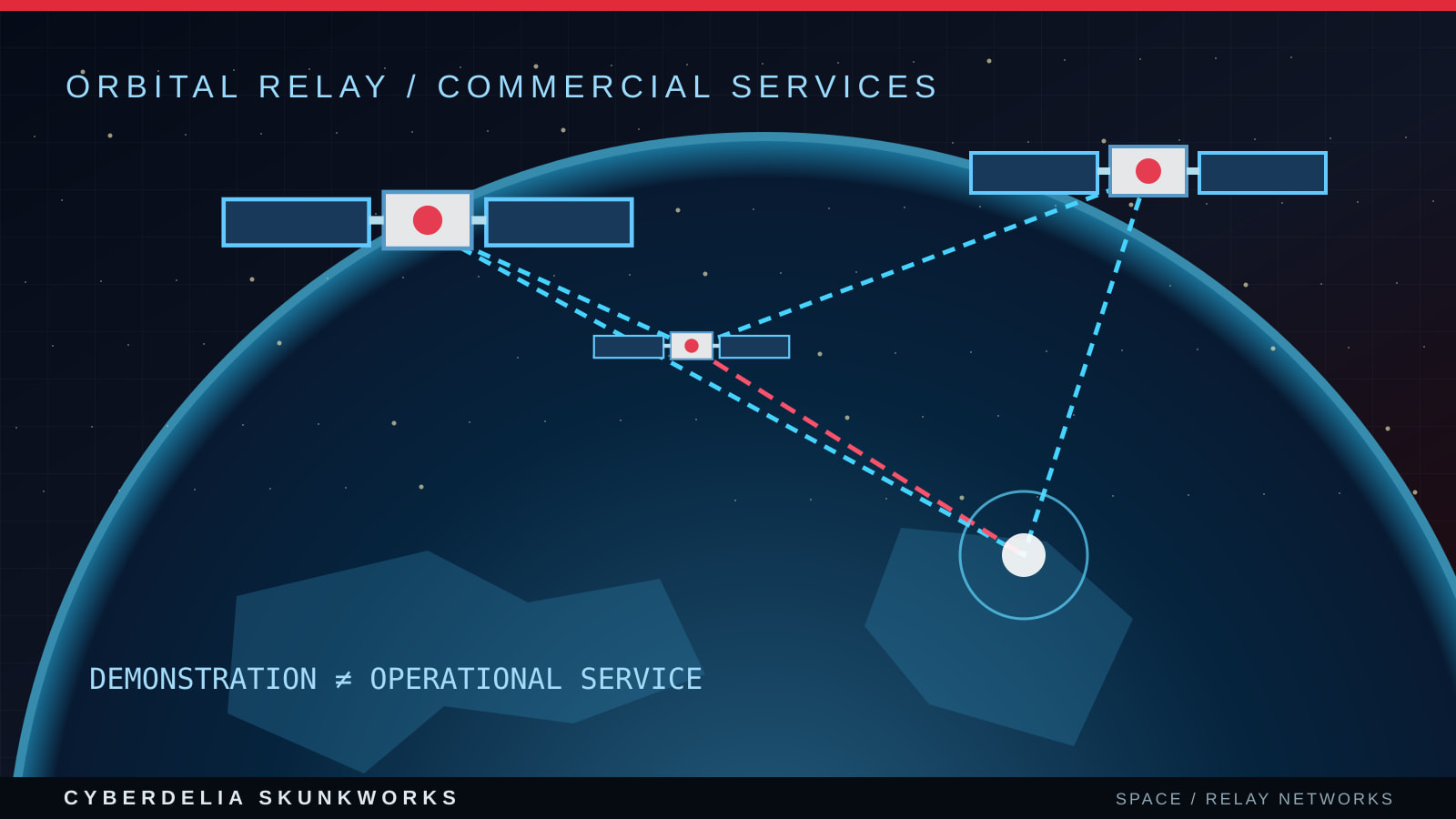
Viasat plans to use Maxwell, a demonstration spacecraft built by Rocket Lab, to evaluate autonomous data routing through its geosynchronous assets and global ground network. SES Space and Defense says it will use its medium-Earth-orbit O3b mPOWER constellation for higher-rate relay services and geosynchronous infrastructure for lower-rate links. Each approach involves a different geometry, link budget, network architecture and operational dependence.
It is tempting to show a diagram of laser beams crisscrossing Earth and assume a seamless planetary internet. That would be misleading. The demonstration's practical questions concern link availability, data handling, network management, handoffs, service assurance and the performance NASA can actually measure. A conceptual communications diagram explains potential paths; it does not prove their reliability.
Why purchasing the network matters
NASA's Communications Services Project began awarding commercial development work in 2022, with a combined $278.5 million in awards to industry. The project supports a gradual transition away from reliance on the aging Tracking and Data Relay Satellite fleet for future low-Earth-orbit operations. NASA says work with industry partners will continue through 2027.
This shift resembles a broader change in infrastructure economics. Instead of every mission requiring a wholly bespoke relay strategy, spacecraft operators could purchase standardized services from a commercial network. That could give mission designers more choices and allow agencies to concentrate resources on the science payload. But the model also introduces questions about dependence on vendors, coverage guarantees, pricing, cybersecurity, interoperability and continuity if a provider changes its operations.
The criteria that matter
A credible evaluation will examine achieved data rates, latency, coverage, routing behavior, outages, recovery procedures and service availability under realistic mission conditions. It should also specify how results differ from the performance expected in production. NASA has described planned tests, not confirmed operational substitution for its existing relay network.
For now, the verified event is a launch and a test program. The potential strategic shift is much larger: future spacecraft may be able to join an existing commercial communications system rather than building every link from scratch. NASA now has the hardware in orbit to begin finding out how well that idea works.
Source trail
Editorial status: Space Dispatch. Reported estimates are attributed; implications are analytical inferences. This dispatch can be expanded when new primary evidence becomes available.