

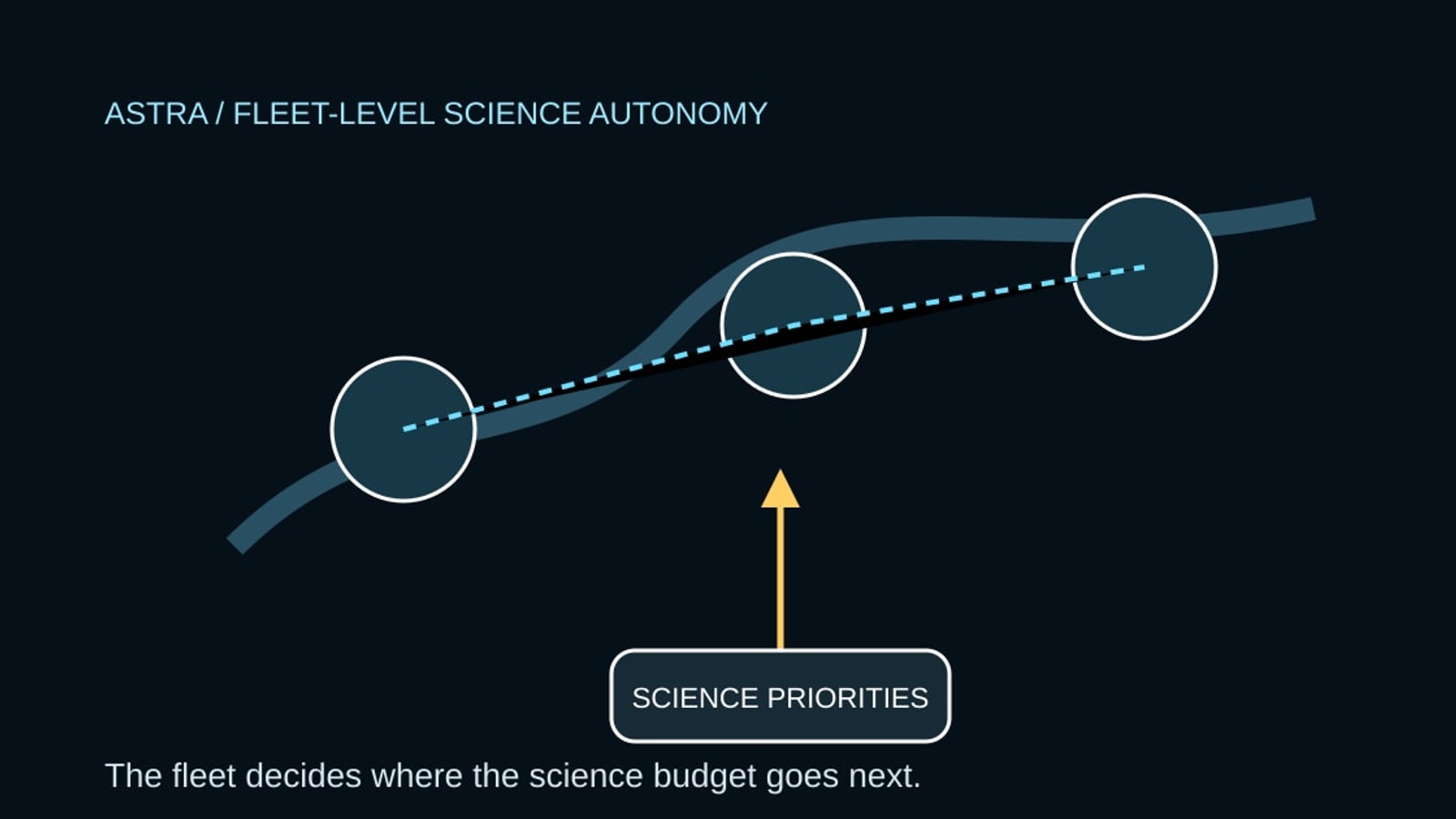
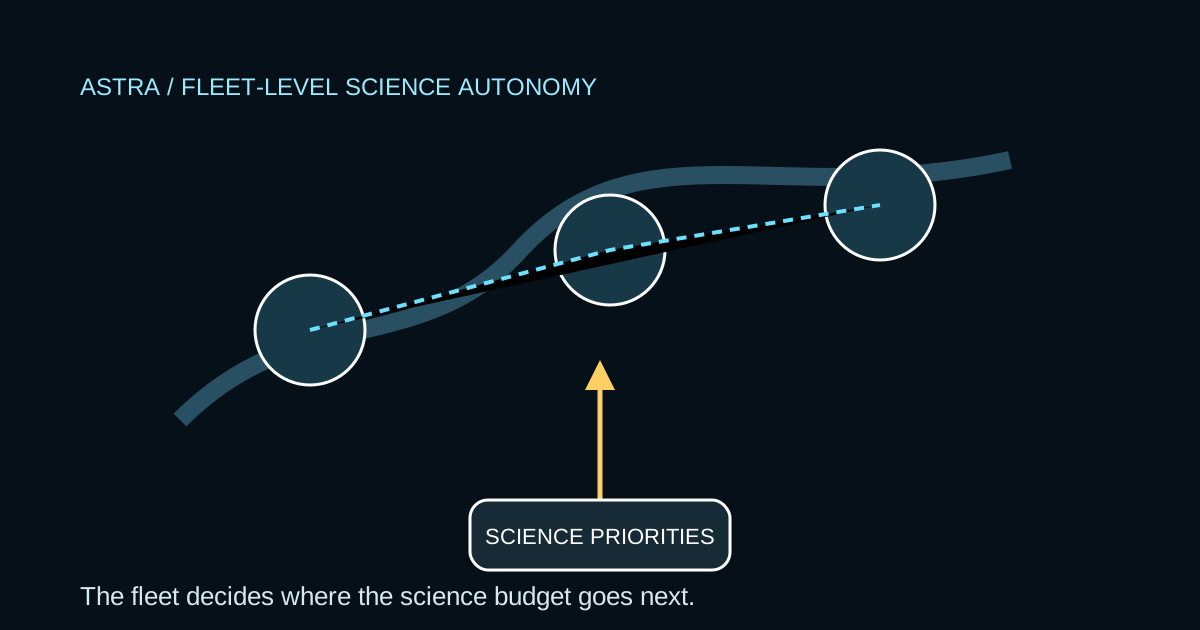
One robot can be autonomous and still waste an expedition. The next systems problem is deciding what an entire fleet should do with limited time, energy and communications.
The mechanism
NASA and industry partners field-tested ASTRA, Adaptive Sensing Technology for Responsive Autonomy, with multiple robots during a planetary-analog campaign.
The system is intended to help a fleet coordinate sensing and respond to new scientific information instead of executing a completely fixed sequence of observations.
That changes autonomy from obstacle avoidance into resource allocation. If one robot discovers something interesting, the useful question becomes whether another robot should move, retask a sensor or change the search pattern.
Why it matters
Distributed exploration is attractive because planetary surfaces are large and communications to Earth are slow or intermittent. But a fleet also multiplies coordination problems, failure modes and opportunities to waste power.
ASTRA is therefore less about an AI rover personality and more about building a decision layer above several machines.
Evidence boundary
What remains unknown: field testing on Earth does not establish performance on another planetary body, under long communication delays, harsh radiation or failures that remove multiple fleet members.
once exploration uses fleets, autonomy needs a chain of reasoning above the individual robot. Somebody, or something, has to decide where the science budget goes.