

Robot soccer stopped being a collection of clever demonstrations the moment twenty-two humanoids had to share a field and make decisions at the same time.
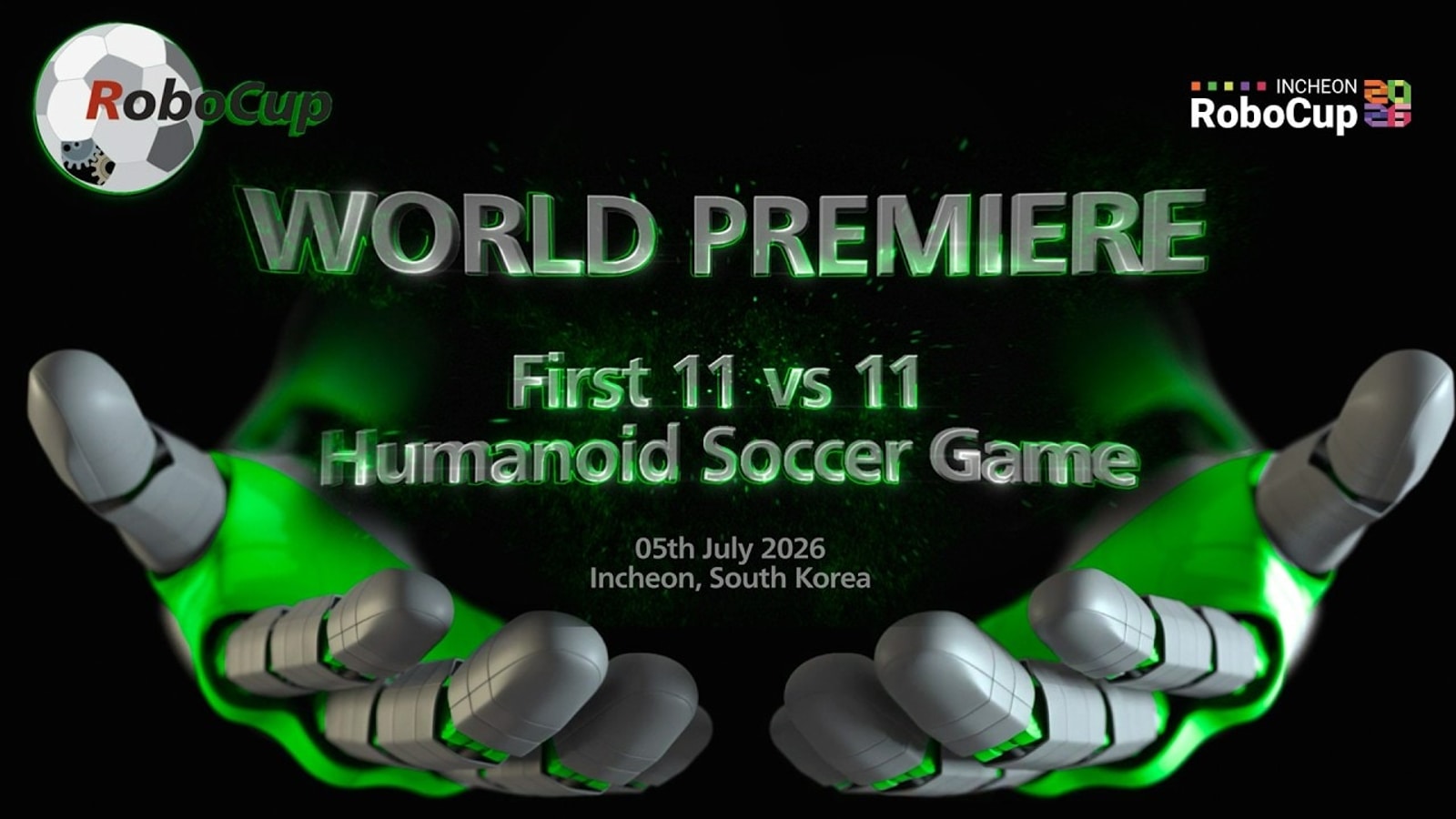
At RoboCup 2026 in Incheon, B-Human defeated HTWK Robots 4–0 in what the RoboCup Federation described as the first full 11-vs-11 humanoid robot soccer match on hardware.
The score is the least interesting statistic.
Soccer is a hostile environment for autonomous systems. The field changes constantly. Teammates move. Opponents block. The ball does not cooperate. Perception errors propagate into positioning errors, which propagate into tactical errors.
vision → localization → ball tracking → role assignment → path planning → gait → pass / shot → team state
One robot can recover from a mistake. Eleven robots can amplify each other's mistakes.
RoboCup's new Humanoid Soccer League matters.
The 2026 Humanoid Soccer League was formed by unifying the former Humanoid League and Standard Platform League. It now spans small, middle and large robot divisions with different team configurations.
The research target is explicit: hardware, vision, bipedal locomotion, learning, behavior control and multi-robot coordination under competitive pressure.
This is where tactics become software.
Human sports analysis asks why a back line collapsed or a midfielder failed to rotate. Robot sports can ask the same question one layer deeper: was the failure perception, localization, communications, policy, role assignment, path planning, actuator saturation or recovery behavior?
That is exactly the kind of sports desk Cyberdelia wants.
Humanoid soccer is becoming a systems benchmark disguised as a game. The teams that win consistently will teach us more about distributed embodied intelligence than another isolated lab demo ever could.