

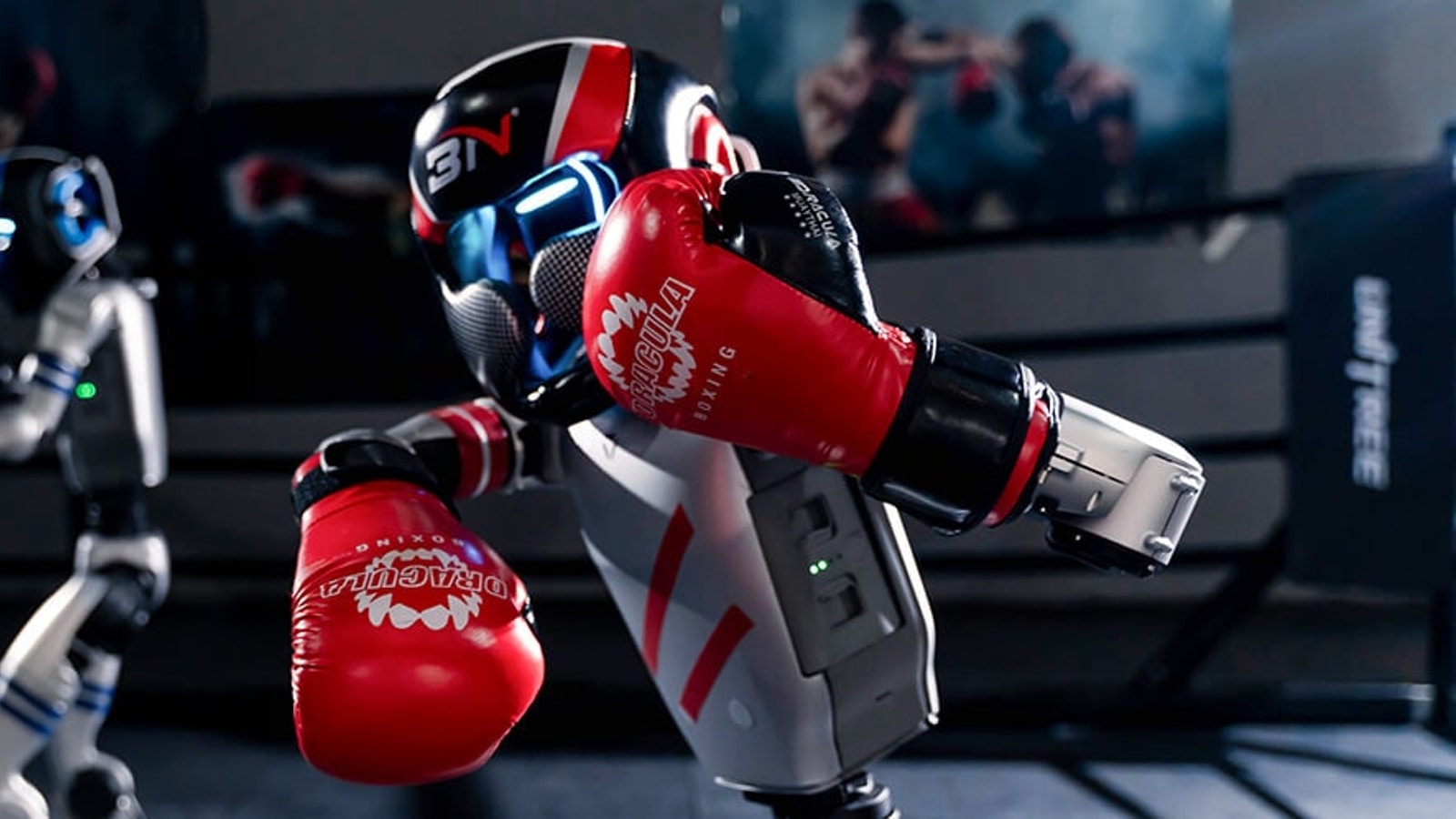
A robot can look excellent once. The harder version begins after the cameras stop: inspect joints, replace damaged protection, check fasteners, recalibrate sensors, diagnose faults, service batteries and make the same machine perform again.
The moment humanoid combat develops regular seasons, engineering emphasis shifts from peak capability toward repeatable capability.
A championship is an availability problem.
A fast fighter that spends half the season on a bench is not a championship platform. Teams care about whether the machine can be made ready on schedule, how often components fail, how long diagnosis takes and whether replacement changes calibration.
Contact changes the maintenance regime.
Humanoid robots already accelerate and decelerate articulated mass while balancing. Combat adds collision. Strikes and falls introduce impulse loads ordinary locomotion demos do not. Protective gear changes mass distribution and can alter thermal behavior.
This creates a distinction between failure and degradation. Backlash can grow. Sensor mounts can shift. Cables can become intermittent. Fasteners loosen. Gear wear changes response. A robot may remain functional while its performance envelope quietly narrows.
The second fight is the manufacturing test.
Manufacturing maturity appears when nominally identical parts behave similarly enough that replacements do not require heroic custom work. Repeated competition can expose which components consistently fail under combat duty cycles. Suppliers can improve them. Maintenance procedures can become standardized.
The repair bay becomes a feedback channel into manufacturing, much as motorsport creates harsh duty cycles that expose cooling, material, suspension and serviceability weaknesses.
Publish reliability statistics.
Useful technical statistics would include starts attempted, starts completed, unscheduled repair events, manual resets, time lost to malfunction, component replacements, calibration time and failure categories.
The industrial significance of robot fighting will not be proven by the hardest punch. It will be proven by a machine that fights, gets serviced, returns on schedule and delivers comparable performance again. The second fight, and the twentieth, are where a robot stops behaving like a prototype.