

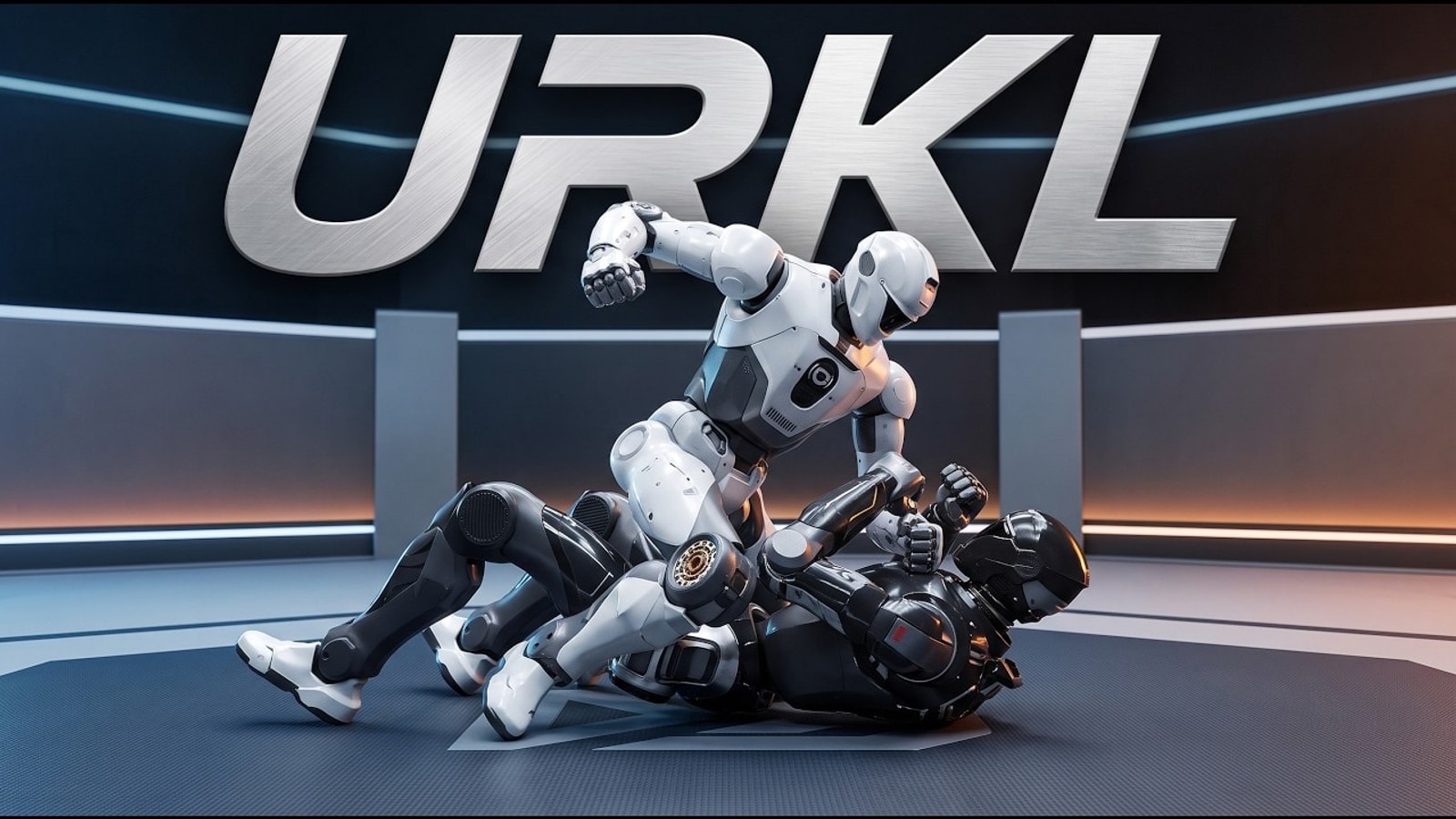
Boxing knowledge is valuable to robotics only if we are willing to discover that some of it is wrong for robots.
That is the point of translation rather than imitation. A traditional principle can be treated as a hypothesis about adversarial bodies. Then we test whether the mechanism survives when biology is replaced with electromechanical hardware.
Some principles look close to invariant.
Preserve balance after action. Control distance. Deny predictable timing. Avoid giving the opponent free information. Create angles. Reduce unnecessary movement. Force the opponent to reset. Do not commit more resources to an action than the expected return justifies.
Those ideas are broad enough to survive different bodies because they concern geometry, information and constrained action.
Some boxing wisdom is biological.
“Work the body” assumes a body with organs, fatigue and pain. “Take away his legs” has meanings tied to human physiology. A robot's vulnerable architecture may instead involve sensor occlusion, joint saturation, thermal accumulation or impact-induced calibration drift.
Even stance can differ. Human boxers protect a vulnerable head and torso while respecting hip and ankle limits. A robot with different mass distribution and joint authority may discover an optimal stance no coach would teach a person.
When that happens, the coach has not failed. The experiment has identified where the mechanism was biological rather than universal.
The coach's eye can become labeled data.
Film complete bouts and ask experienced coaches to timestamp states: reaching, squared, off balance, trapped, loading up, getting timed, losing range, chasing, failing to recover.
Then align those labels with robot telemetry. Search for measurable features that predict the human label. The result is a dataset linking expert compressed judgment to machine state.
It would be a mistake to assume every label maps cleanly to one variable. “Getting timed” may involve a pattern across action frequency, pre-motion signatures, opponent response and outcome. That complexity is precisely why expert labels are useful.
Commentary is part of the research.
Old-school round-by-round commentary forces the analyst to make claims in sequence rather than after the outcome is known. If the commentator says a robot is losing its base in round one and the machine falls repeatedly in round two, that prediction can be evaluated.
Commentary creates a timestamped hypothesis ledger. It is not merely entertainment.
Failure is the valuable category.
The most interesting discoveries will occur when a coach predicts a failure that telemetry does not explain, or when telemetry predicts a failure the coach does not see. Those gaps identify missing variables on one side of the translation.
The sweet science should be treated as a library of candidate invariants, not scripture. Translate each principle into a mechanism, test it against robot data, keep what survives, rewrite what does not, and preserve the failures. That process respects boxing knowledge more than copying human movement ever could.
Part 6 of 8 — The Sweet Science