
There is a peculiar irony in discovering that the institutions responsible for penetrating the secrets of foreign governments cannot always protect the machinery through which they examine the world.
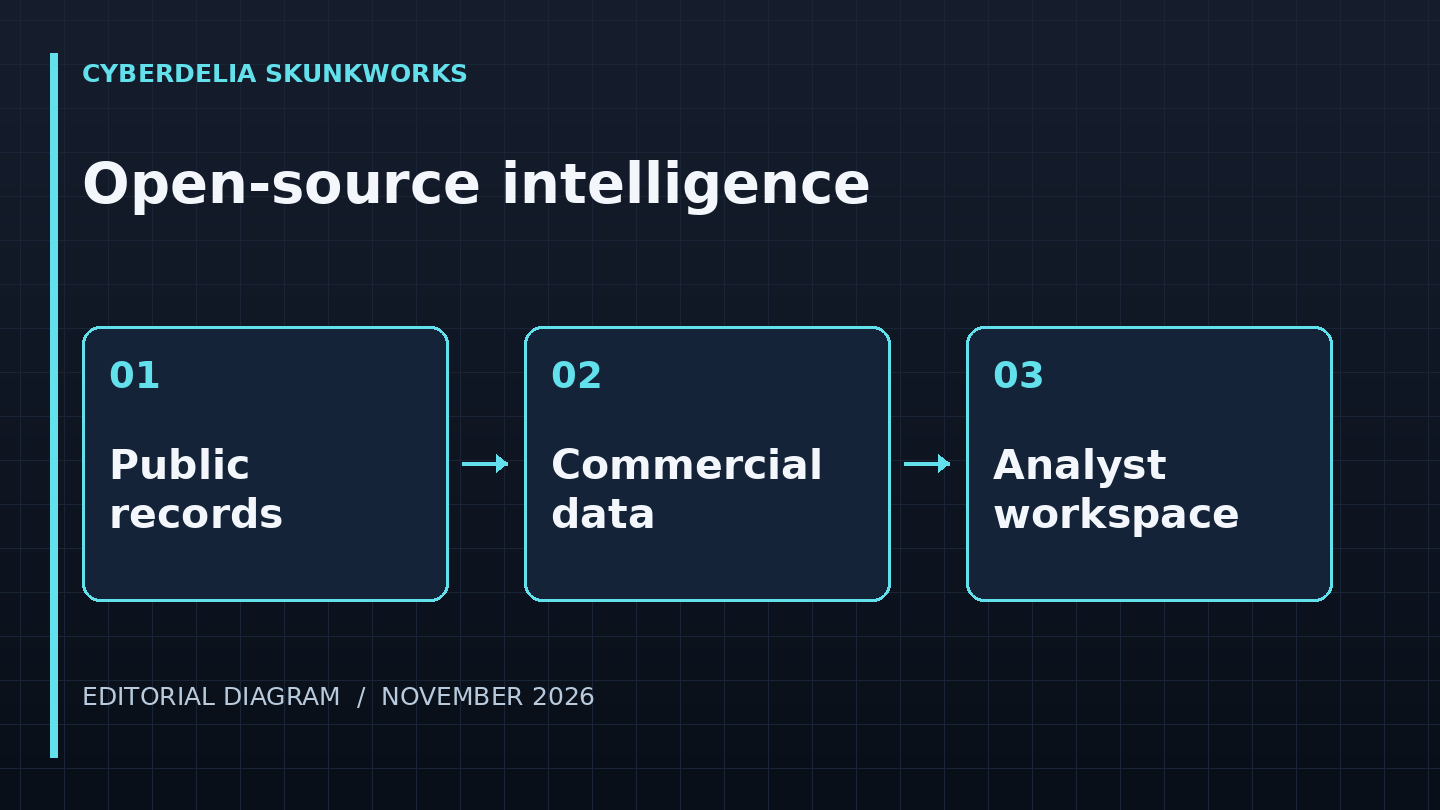
The Central Intelligence Agency and the Office of the Director of National Intelligence discovered a breach involving an unclassified system, Reuters and Nextgov/FCW reported, citing people familiar with the incident. Reporting published on November 24 describes an intrusion into infrastructure supporting the collection and analysis of publicly and commercially available information.
ODNI told Reuters that critical capabilities and classified systems had experienced no disruptions. A source familiar with the incident told the Associated Press it involved no classified information. The precise extent of the information accessed remains unclear.
That distinction matters. It is also considerably less reassuring than it might initially sound.
The modern intelligence apparatus does not operate exclusively within sealed rooms filled with classified documents. Increasingly, its work depends upon the systematic interrogation of information available outside those rooms. Commercial satellite imagery, shipping manifests, financial records, social media, public procurement documents, telecommunications data and seemingly insignificant fragments of human activity can collectively reveal things that no individual document contains.
The value resides not merely in the information itself, but in the relationships discovered within it.
Someone has apparently penetrated part of the machinery responsible for discovering those relationships.
The architecture of curiosity
Open-source intelligence, commonly abbreviated as OSINT, has become fundamental to contemporary national security.
Commercial satellites can expose military preparations. Public photographs can reveal the movement of equipment. Corporate records can illuminate procurement networks. Researchers can identify previously concealed relationships by analyzing information that was never intended to be secret.
The intelligence community's advantage lies partly in its ability to process these fragments at scale and combine them with institutional experience.
Consider two analysts reviewing the same publicly available satellite photograph. One sees an industrial facility. Another recognizes changes in vehicle distribution, construction activity and logistical arrangements that suggest something about the facility's future purpose.
Neither analyst necessarily possesses a classified image. The intelligence emerges from interpretation.
Now imagine an adversary obtaining access not to the photograph, but to the analytical infrastructure.
Depending on the permissions involved, that adversary might discover which regions are receiving attention, which organizations are being investigated, which datasets analysts consider important and where intelligence gaps exist.
These are potential consequences, not confirmed findings from the present breach. But they explain why categorizing an affected system as unclassified cannot, by itself, establish that an intrusion was insignificant.
A library catalogue can reveal considerable information about the person using it.
An intelligence agency's catalogue of questions could reveal considerably more.
Artificial intelligence enters the equation
Reporting by Nextgov/FCW introduces another potentially consequential dimension to the incident.
The publication identifies ARTEX, an automated cybersecurity tool reportedly developed by an engineer operating under the name Autumn-27, as a possible component of the intrusion.
Its involvement has not been independently established through a publicly available forensic report. The identity and nationality of the attackers also remain unknown.
These distinctions must be maintained. The existence of a tool does not establish its use in a particular incident, and the origin of software does not establish the identity or intentions of everyone using it.
Nevertheless, the possibility deserves serious attention because it reflects a wider transformation in the economics of computer intrusion.
Historically, sophisticated cyber operations required organizations to assemble personnel with specialized knowledge of networking, operating systems, software vulnerabilities and security architecture. Individuals possessing these skills were expensive, relatively scarce and difficult to replace.
Automation has steadily reduced those barriers.
Artificial intelligence potentially accelerates the transformation by helping operators interpret unfamiliar systems, organize technical information and adapt their activities across different computing environments.
It does not eliminate the need for expertise. It redistributes where expertise is required.
A comparatively small group of capable operators may be able to conduct activities that previously required a larger organization. Less capable operators may become more effective than their experience would traditionally permit.
The implications extend beyond the discovery of new vulnerabilities.
The internet already contains enormous numbers of systems affected by publicly documented weaknesses. An attacker does not necessarily need a revolutionary technical breakthrough. Exploiting the persistent gap between vulnerability discovery and effective remediation may be sufficient.
Automation makes that gap more economically attractive.
The attacker can potentially examine more targets while spending less time on each. The defender must still maintain the security of every system that matters.
It is an asymmetry that artificial intelligence may intensify rather than create.
The industrialization of intrusion
For decades, popular culture portrayed hacking as the work of exceptional individuals operating at the fringes of technological possibility.
That image increasingly obscures the organizational reality.
Cybercrime has developed markets for stolen credentials, compromised infrastructure, malicious software, fraudulent identities and other specialized services. Participants can purchase capabilities rather than develop them independently.
Artificial intelligence represents another potential layer in this emerging division of labor.
The consequential development is not that an artificial intelligence system has somehow become omnipotent. It is that more of the work associated with computer intrusion may become repeatable, scalable and commercially accessible.
The distinction is important because sensational narratives often encourage organizations to focus on extraordinary threats while neglecting ordinary weaknesses.
A sophisticated adversary may still enter an organization through an inadequately protected account. A powerful automated system may still depend upon an old software vulnerability. An intelligence operation may still succeed because an institution failed to understand the boundaries of its own network.
The future of cybersecurity may be defined less by spectacular displays of machine intelligence than by the relentless exploitation of mundane administrative failures.
The machines do not necessarily need to become brilliant.
They need only become persistent and inexpensive.
What public reporting has established
Public reporting currently supports a limited set of conclusions.
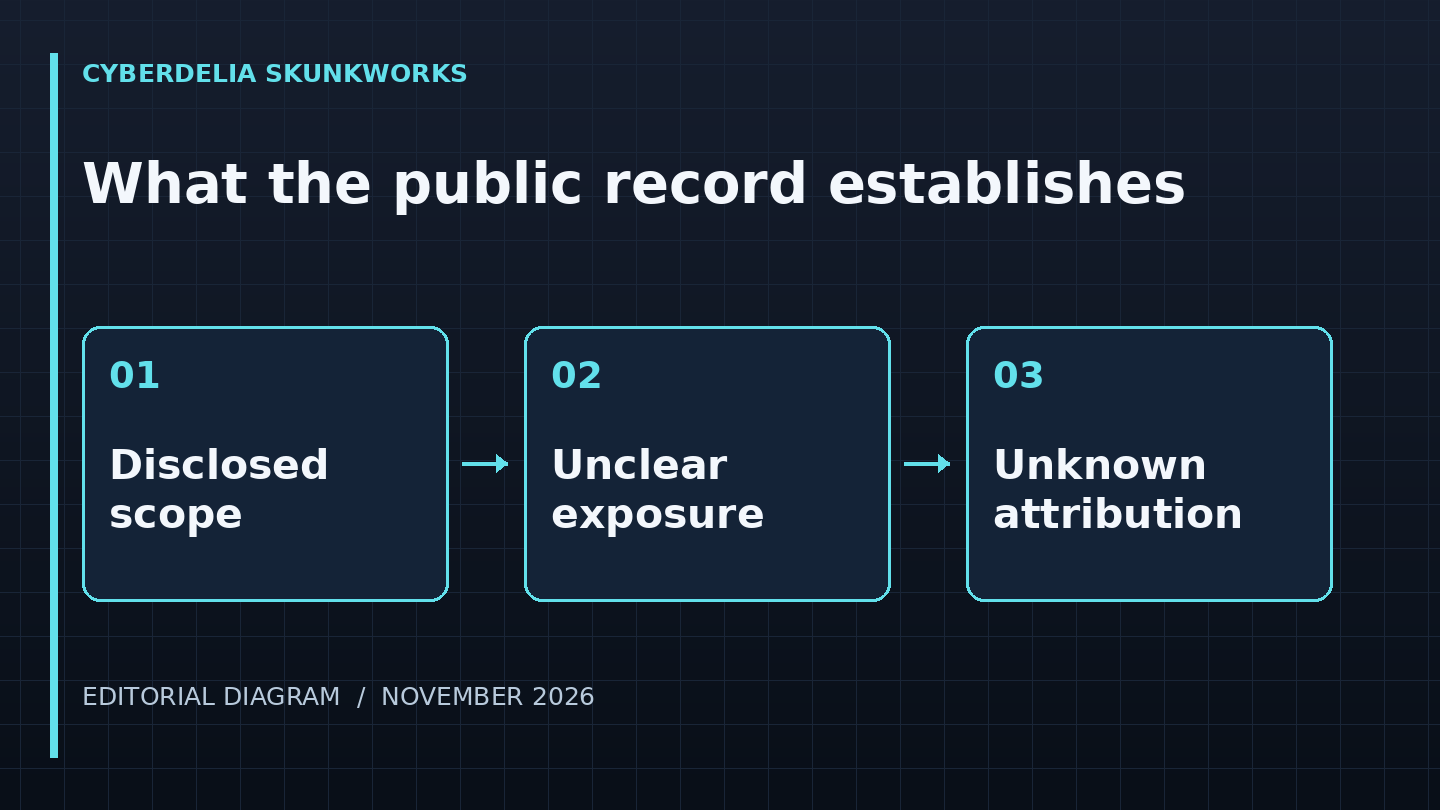
An intrusion affected unclassified intelligence infrastructure associated with the CIA and ODNI. ODNI said classified systems and critical capabilities experienced no disruptions. A source told the Associated Press the incident had been resolved. The reporting does not identify the entry point or describe a specific fix.
The full scope of accessed information remains uncertain.
Additional agencies may have been affected, but the public record is insufficient to establish the complete institutional boundaries of the incident.
The possible involvement of ARTEX remains unconfirmed.
No publicly established evidence identifies the responsible organization or government.
These limitations are not decorative disclaimers. They define the boundary between investigative journalism and speculation.
An intelligence breach inevitably creates opportunities for governments, criminal organizations, commercial security vendors and political actors to promote competing explanations. Each may possess different information and different incentives.
The absence of public forensic detail makes confident attribution particularly hazardous.
There is also a significant distinction between a successful intrusion, a confirmed disclosure of sensitive information and a demonstrated compromise of classified intelligence operations.
They are not interchangeable events.
Security beyond classification
Classification systems are designed to govern the handling of information according to the consequences of unauthorized disclosure.
Computer security must contend with a different problem: how information, access privileges and institutional processes interact.
An unclassified system can contain sensitive operational metadata. An ordinary user account may provide visibility into otherwise inaccessible relationships. A collection of individually innocuous records can expose patterns of organizational behavior.
This phenomenon is sometimes described as the mosaic effect.
A single fragment reveals little. Thousands of fragments can reveal the architecture of something that was never directly disclosed.
Intelligence agencies understand this principle exceptionally well because they employ it themselves.
Their defensive architecture must therefore protect not only individual documents but also the analytical environment in which documents acquire meaning.
This requires attention to identity management, access control, network segmentation, administrative privileges, monitoring and the integrity of analytical data.
The last consideration deserves particular scrutiny.
A compromised intelligence platform need not merely lose information. Depending on the access obtained, its reliability could also become questionable. The possibility of manipulated data or compromised analytical integrity represents a different category of risk from conventional espionage.
There is no public evidence that such manipulation occurred in this incident.
Its theoretical significance, however, illustrates why integrity must receive protection alongside confidentiality.
An intelligence organization that loses a secret has suffered a security failure.
An intelligence organization that can no longer trust its own observations faces a deeper problem.
The trap of perpetual modernization
The breach arrives amid broader concerns about the reliability of government computing infrastructure.
Recent reporting has described both malicious intrusions and technology outages involving American agencies. These events must not be automatically grouped into a single coordinated campaign.
An infrastructure failure caused by a flawed software update is not equivalent to a hostile cyberattack.
Yet both expose the difficulties of maintaining complex digital systems under continuous pressure.
Government agencies must update aging infrastructure without interrupting critical activities. They must introduce new defensive capabilities without creating additional dependencies. They must secure connections with contractors, commercial information providers and other agencies.
Every architectural transition introduces its own risks.
The natural institutional response to a changing threat environment is often to acquire more technology. Additional security platforms, monitoring services and automated management systems can improve visibility, but they can also expand the number of systems requiring protection.
Security cannot be measured simply by counting deployed security products.
It requires the ability to understand what the organization actually operates, how those components communicate, what privileges they possess and how the institution will respond when something fails.
There is no software subscription that substitutes for that understanding.
The questions that remain
The public deserves a careful account of the incident, consistent with legitimate national security requirements.
What information was accessible through the affected system?
How long did unauthorized access persist?
Were analytical records or user activity exposed?
Did attackers access commercially supplied data or credentials?
Did the breach affect the integrity of information as well as its confidentiality?
What evidence, if any, establishes the reported involvement of automated artificial intelligence?
How has the intelligence community verified that the compromise was contained?
These questions do not require the government to publish sensitive intelligence operations. They require sufficient institutional accountability to establish whether the public description of the incident reflects its actual consequences.
The intelligence paradox
The modern intelligence community exists to reduce uncertainty about a complicated world.
Its digital infrastructure has become indispensable to that mission.
But greater dependence on interconnected information systems creates opportunities for adversaries to study the observers themselves.
The irony is not that spies have been hacked. Espionage organizations have always been targets of espionage.
The irony is that the very machinery designed to assemble meaning from scattered information may become a source of intelligence about the institutions operating it.
Artificial intelligence could make that contest faster, cheaper and more crowded.
Whether it contributed to the present breach remains an open question.
What is no longer open to serious doubt is that intelligence organizations must defend more than their classified documents.
They must defend the architecture of their curiosity.
Sources and further reading
Nextgov/FCW, November 24, 2026
Associated Press, November 24, 2026
Editorial disclosure: This analysis is based on publicly available reporting. No independent forensic examination of the affected infrastructure has been conducted by Cyberdelia Skunkworks.