

Venus is where normal spacecraft thermal language starts sounding inadequate.
The mechanism
NASA’s DAVINCI team tested an engineering development unit of the mission’s descent probe in a furnace capable of reproducing the rapid temperature rise the spacecraft will experience in the Venusian atmosphere.
The chamber was driven to about 869 degrees Fahrenheit, or 465 degrees Celsius, over roughly an hour. NASA says that heating profile matches the pace at which the probe will warm during descent.
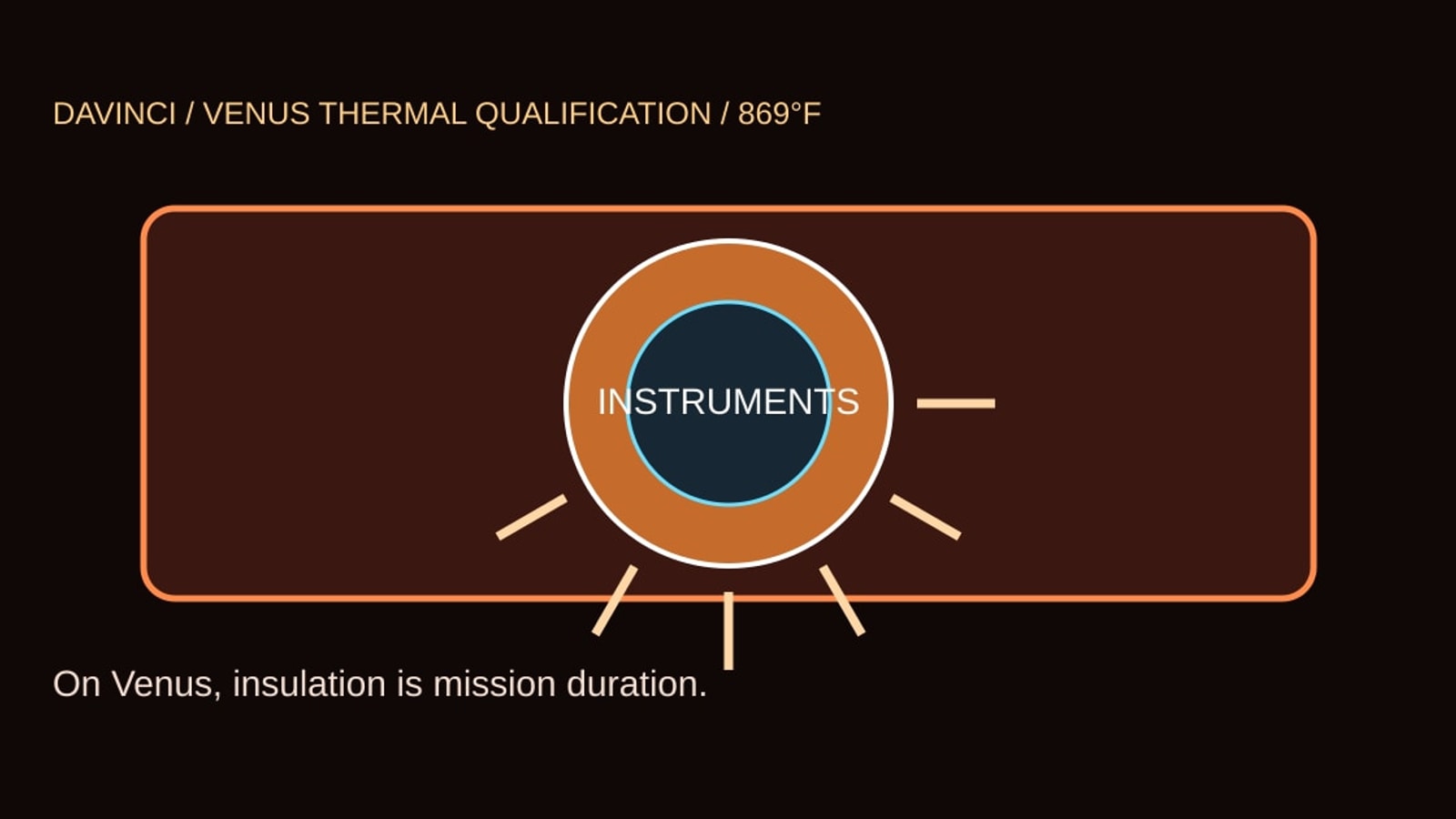
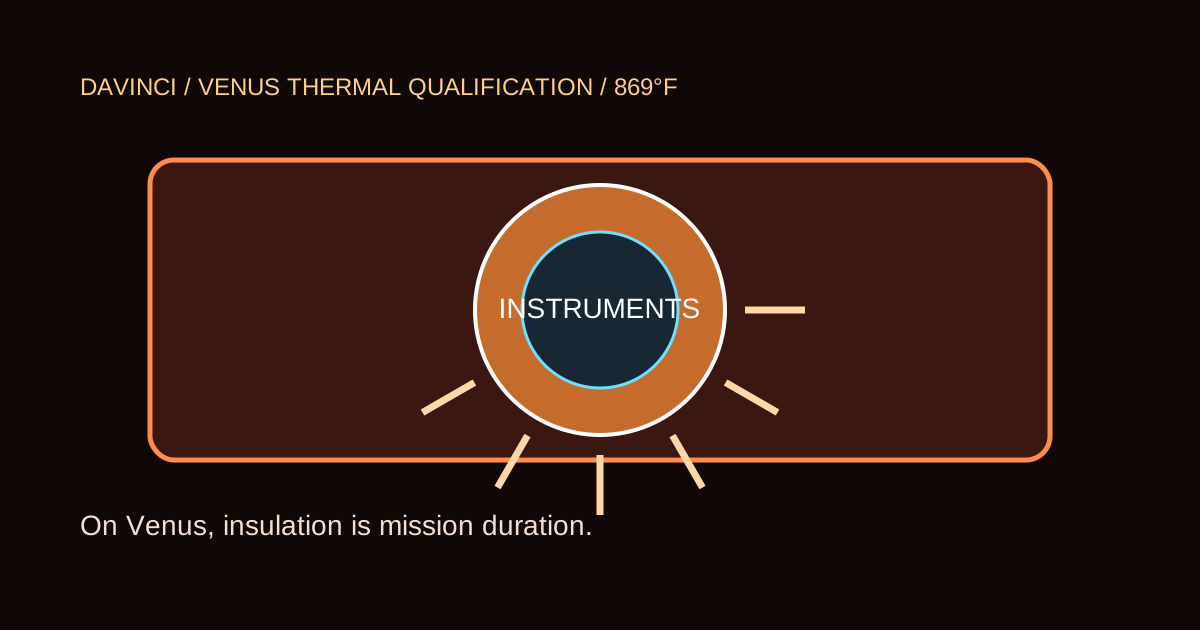
The test is less about whether metal can survive a hot furnace and more about whether the complete thermal architecture can keep instruments inside their operating envelope while the outside environment becomes brutally hostile.
Why it matters
DAVINCI is designed to sample Venus’s atmosphere during descent and return measurements about chemistry, noble gases and the planet’s history. The pressure vessel and insulation have to protect that science long enough to finish the job.
Thermal protection is therefore not passive packaging. It is mission duration. Every degree of heat leak spends part of the clock available to the instruments.
Evidence boundary
What remains unknown: an engineering-model furnace test does not reproduce every combined Venus condition, including pressure, dynamics and full mission operations at once.
the useful framing is simple. On Venus, insulation is not comfort. It is how long the spacecraft gets to remain a spacecraft.