

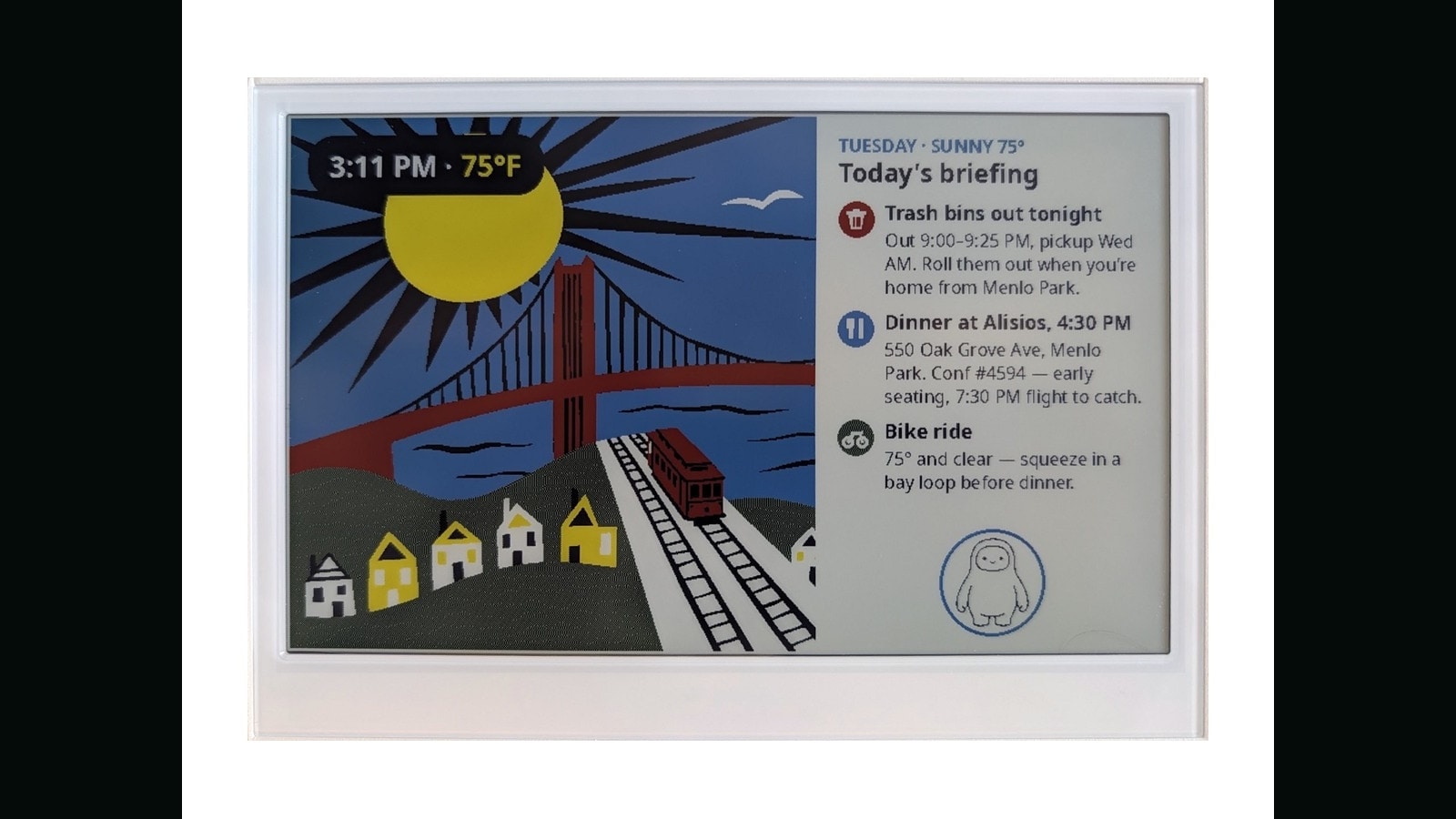
A spare Raspberry Pi or an ESP32 board can become the physical endpoint of a much larger system. Meta's Muse Gadgets release lowers the barrier to building that endpoint. The more interesting question is what remains under the builder's control once a homemade device is connected to a service that supplies its agent.
The public repository provides ESP32 and Linux device SDKs. Its documentation describes connecting displays, buttons, sensors, and actuators, as well as adding commands for Linux administration or Home Assistant. Devices pair through the Muse mobile app and require an SDK token. The repository uses Apache 2.0 with identified exceptions, including an avatar outside that license. Those details matter: accessible device code does not, by itself, establish that the entire system can run independently of Muse.
For a small workshop, that distinction is practical rather than philosophical. A builder can inspect firmware, adapt an enclosure, replace a switch, and change the local software. But the system may still depend on an external account and service for the behavior that makes the device useful. Ownership of the board answers one question. Control of the operational dependency answers another.
This is not a reason to dismiss the release. A common device interface could let builders explore useful arrangements without designing every layer themselves. A screen near a machine could display a requested status summary; a button could initiate a bounded task; a sensor could supply context. Those are illustrative possibilities, not capabilities we have tested. The value comes from reducing the distance between a physical interface and a software workflow.
The consequential part begins where an agent's output reaches an actuator or a privileged command. A text answer can be ignored. A command that changes a system has already altered the conditions under which the next decision will be made. Adding physical hardware also introduces states the model cannot repair with better prose: a disconnected sensor, a stuck relay, a brownout, a lost network link.
Our engineering interpretation is that the device should enforce its own limits. A local controller can constrain allowed commands, reject implausible values, and preserve a safe state when communication fails. The remote agent can propose actions within those limits. This arrangement makes a useful division of labor possible: flexible interpretation above, predictable enforcement below.
The open-source component creates an opportunity to inspect that boundary, but openness does not automatically make the boundary good. A builder still needs to determine what a command can reach, what credentials it carries, and how it behaves after a restart. A custom command that delegates broad shell access would create a different risk profile from one that returns a temperature reading. They should not receive identical treatment simply because both arrive through the same SDK.
There is also a maintenance question. Hardware often outlives the service that first made it attractive. A future subscription change, interface change, or shutdown can turn a functional device into a dependency waiting for someone else's decision. A design that retains useful local functions gives the owner options. A design whose only function is to wait for a remote response has a much narrower future.
The release deserves attention as a bridge between inexpensive hardware and agent software. The strongest story is the control boundary that bridge exposes. Before a builder calls a gadget their own, they should know which parts can keep working when the other end of the connection disappears.
SDK structure, pairing requirements, and license exclusions are documented. The issue is an individual report, not a verified defect affecting every device. No hardware testing was performed for this article.