

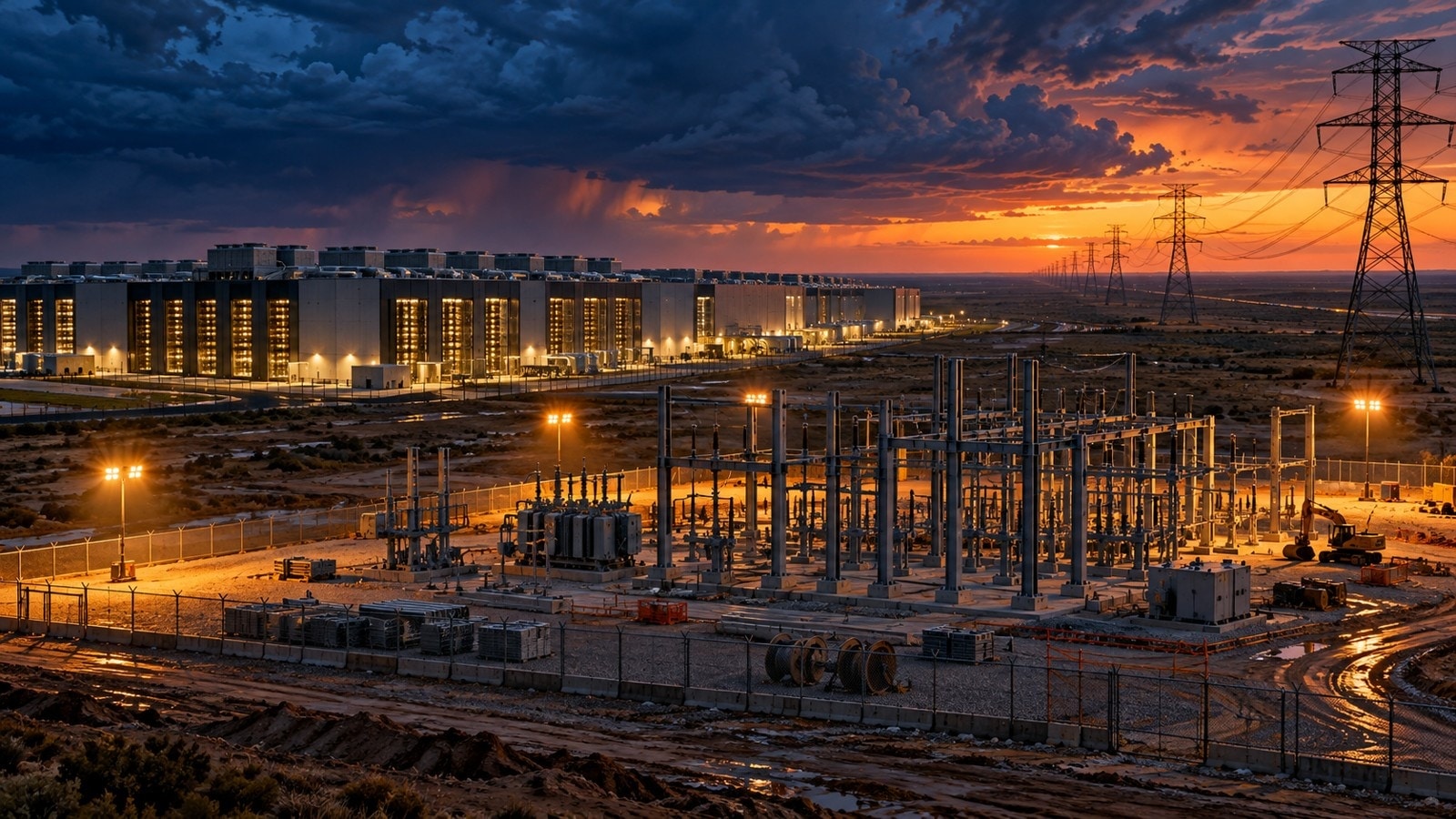
A request is not a power plant
A data-center developer can ask several utilities for possible service while still deciding where a project will be built. That behavior may be rational for the developer, but it makes the aggregate queue a misleading forecast of actual electricity consumption. Recent reporting citing Wood Mackenzie puts requested US data-center connections at about 1,066 gigawatts. The figure measures requests, not energized capacity or confirmed construction. Wood Mackenzie estimates utilities will commit to roughly 28 percent of that total.
This isn't evidence that artificial intelligence has no electricity problem. AI computing and data-center expansion create genuine demand for generation, transformers, substations, cooling and transmission. The problem is deciding which parts of the proposed buildout will arrive, where they will connect, and who pays for capacity reservations that never turn into operating facilities.
Contracts are becoming an engineering filter
Exelon's experience illustrates what happens when a queue must survive a financial test. Reported high-probability data-center load declined from roughly 18 to 11 gigawatts as the utility tightened requirements for binding agreements, collateral and financial protections. That shift is important, but it should not be interpreted as proof that the removed proposals were fraudulent. Some may have been duplicates, conditional developments, unfunded sites, or viable projects pursuing other service territories.
Utilities now have reason to demand proof of land control, project financing, expected ramp schedules and meaningful customer commitments. Those requirements help translate enthusiasm into a planning signal. They also create barriers for smaller developers; utilities and regulators must balance the need to discourage speculative reservations against the risk of favoring only the best-funded firms.
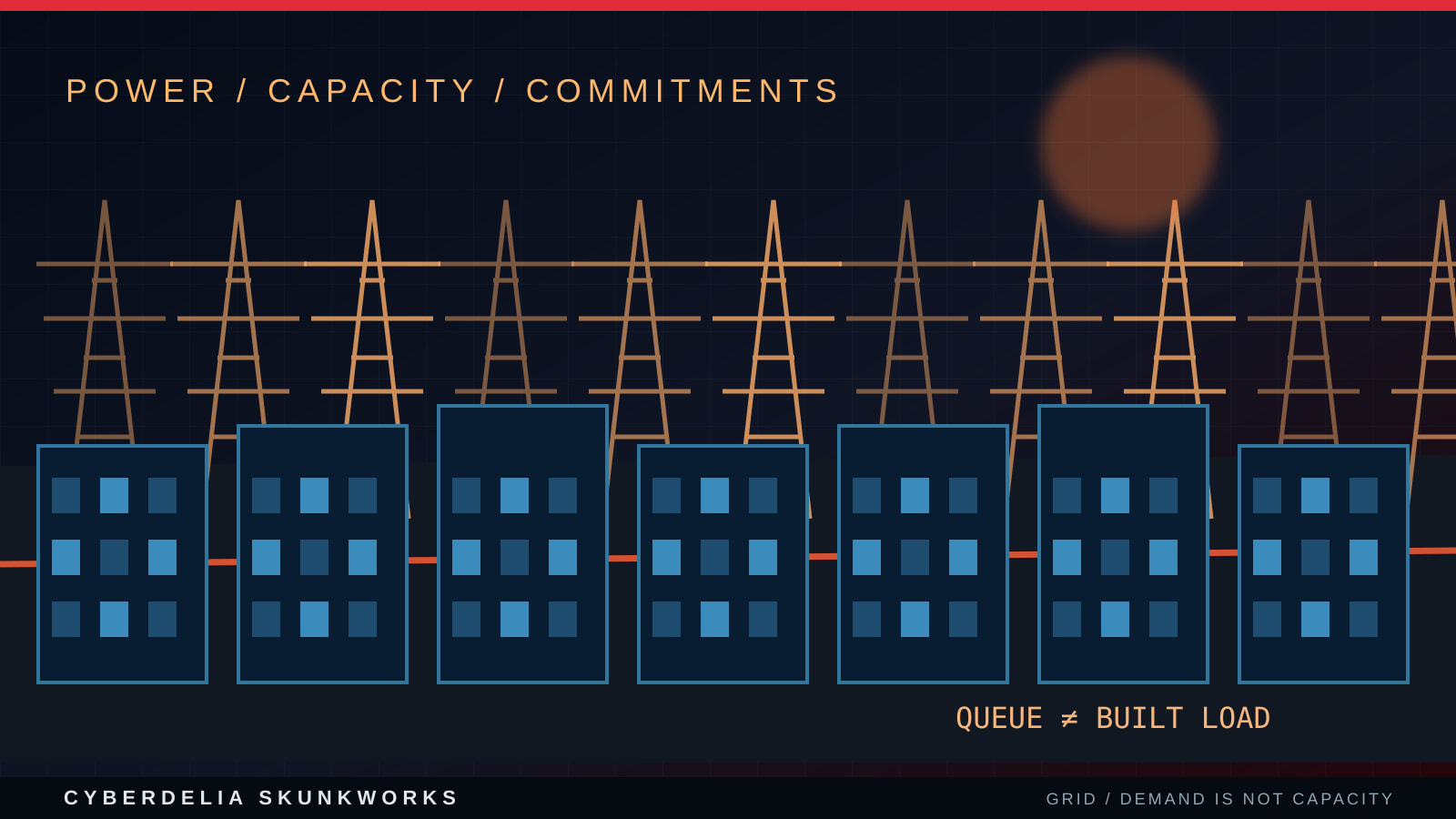
The ratepayer problem
Electric grids are paid for across many years. A utility may need to order long-lead equipment before a prospective data-center operator has installed a single rack. A speculative request can trigger spending on studies and facilities. If a project disappears and costs are socialized, households and existing industrial customers may end up carrying part of the burden. If utilities wait until certainty is absolute, legitimate projects can face years of avoidable delay. Neither outcome is free.
The defensible policy is not to presume every gigawatt will be built or every request is fictional. It is to tie construction and cost allocation to progressively stronger evidence: engineering studies, security deposits, signed agreements, credible dates and enforceable shortfall provisions. The emerging lesson is that in the AI economy, access to electricity is becoming a financing and contracting problem as much as a hardware problem.
What would change the assessment
The clearest test is future conversion from requested load to financed projects, constructed interconnections, and sustained metered demand. Researchers should compare those stages rather than repeating a single headline queue figure. Without such a conversion ledger, both bullish and bearish narratives can select whichever measure happens to support their conclusion.
A gigawatt requested on paper cannot run an accelerator. The operating grid is built of copper, steel, permits, transformers and contracts. That is where the next chapter of the AI boom will be decided.
Source trail
- Wood Mackenzie figures and Exelon reporting ↗
- Exelon investor presentation via SEC ↗
- Independent summary of the reported figures ↗
Editorial status: Infrastructure Dispatch. Reported estimates are attributed; implications are analytical inferences. This dispatch can be expanded when new primary evidence becomes available.