

Engineering culture loves identical parts. Identical parts simplify models, inventories, calibration and blame. Complex systems, inconveniently, may sometimes become more stable when the parts are not identical.
The mechanism
Northwestern University researchers developed a mathematical framework describing when heterogeneity, irregularity or asymmetry can improve stability in interconnected systems. The work spans examples including power grids, materials, ecological systems and neural networks.
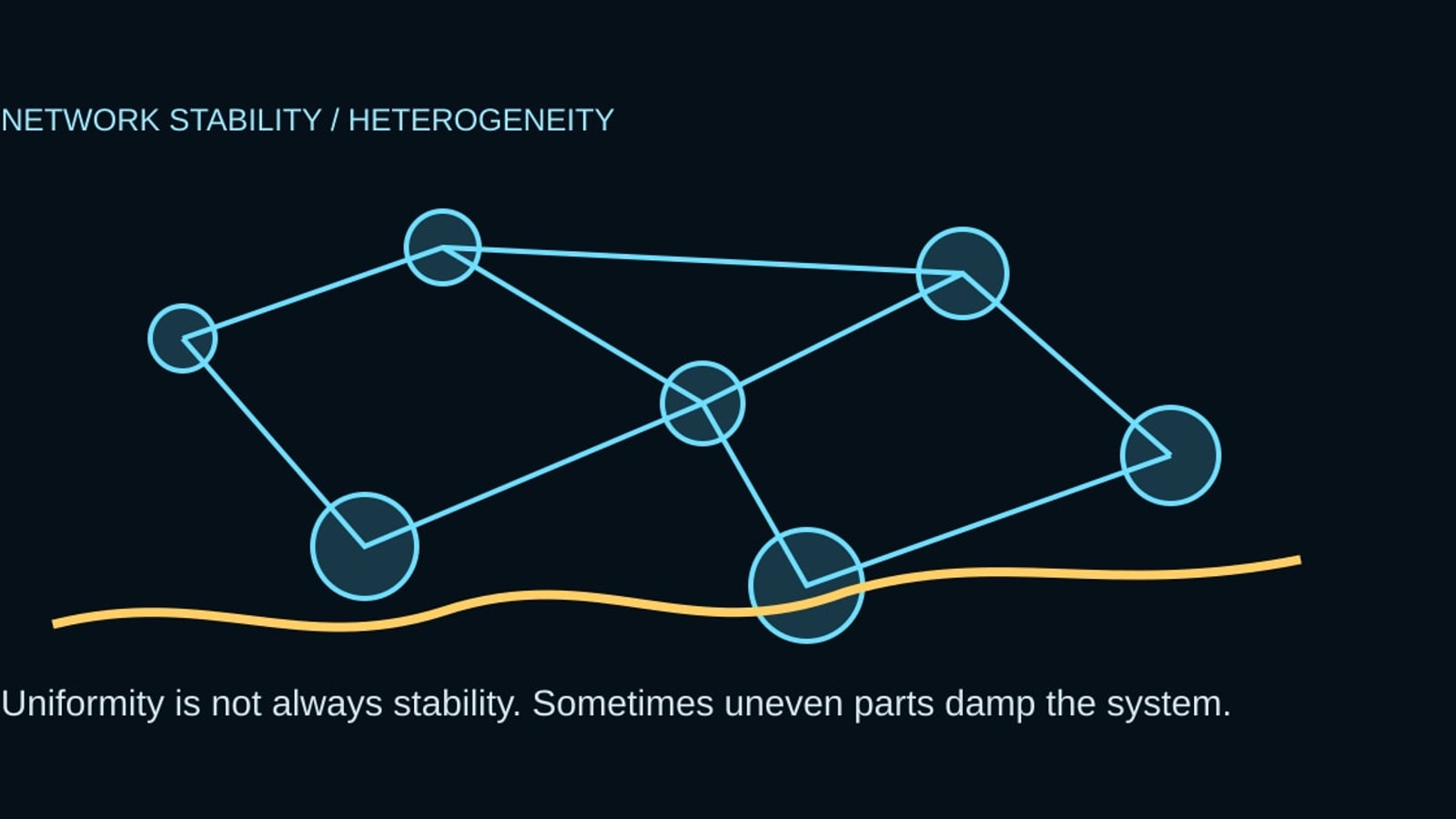
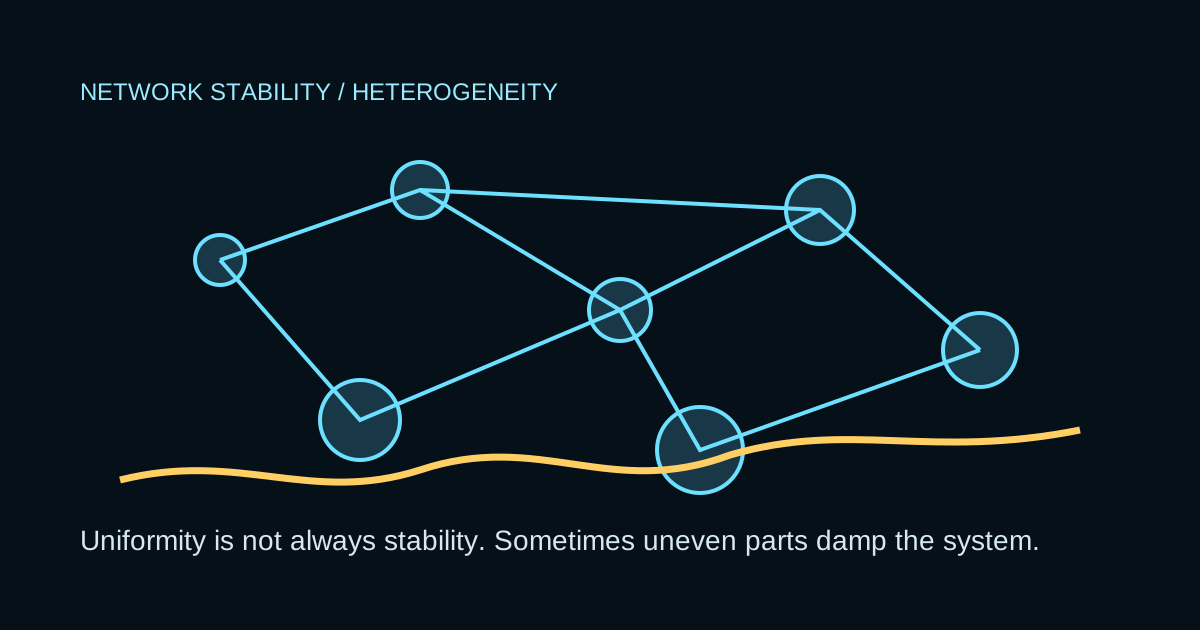
The key is not that randomness is magically good. It is that differences among nodes or interactions can change how disturbances propagate and how components synchronize. Under some conditions, variation prevents the entire system from responding in the same vulnerable way at the same time.
For grid engineering, that is a provocative idea. Large electrical systems already contain generators, loads, controls and transmission elements with different characteristics. Traditional simplifications often treat those differences as noise around an idealized uniform system.
Why it matters
The Northwestern framework suggests that some of those differences can be design variables rather than defects. That does not mean operators should intentionally make grids messy. It means the search for resilience may need to ask which kinds of nonuniformity damp failure instead of merely asking how to eliminate nonuniformity.
The same logic has relevance to cyber-physical systems. Homogeneous fleets are easier to manage, but they can also share failure modes. Diversity can complicate maintenance while limiting correlated failure.
Evidence boundary
What remains unknown: the framework does not automatically specify the correct amount or placement of disorder for a particular operational grid, network or material. Applying the theory requires system-specific modeling and validation.
resilience is not always produced by making every component better. Sometimes it comes from making sure they do not all fail the same way.