
SHOWCASE / ENGINEERING / SYSTEMS

Systems Under Pressure: Nine Stories from the Edge of the Machine

The interesting machines are not the ones posing for launch photos. They are the ones discovering that reality has drag, heat, dead satellites, bacteria, misalignment, waste, uncertainty and failure modes.

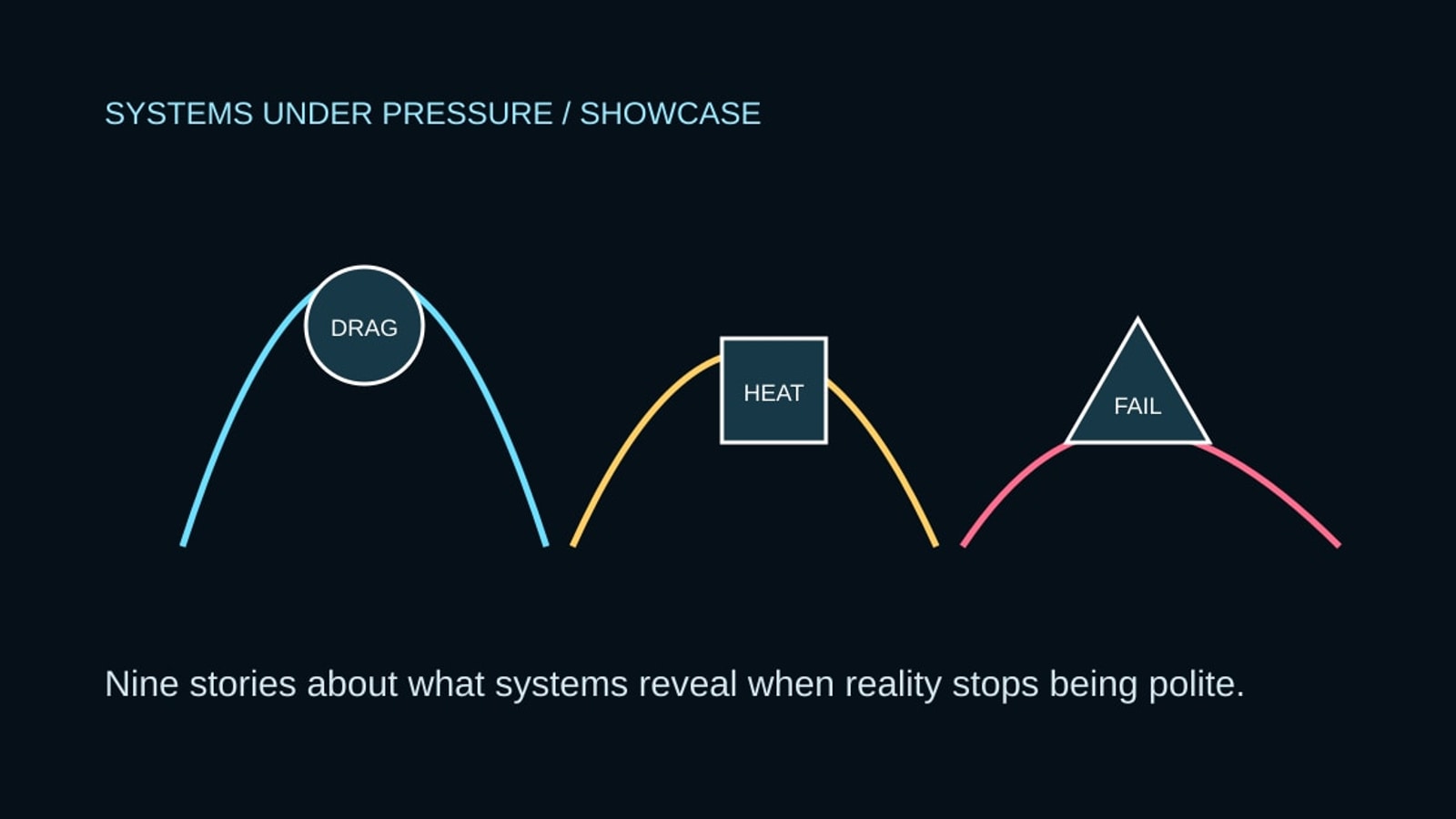
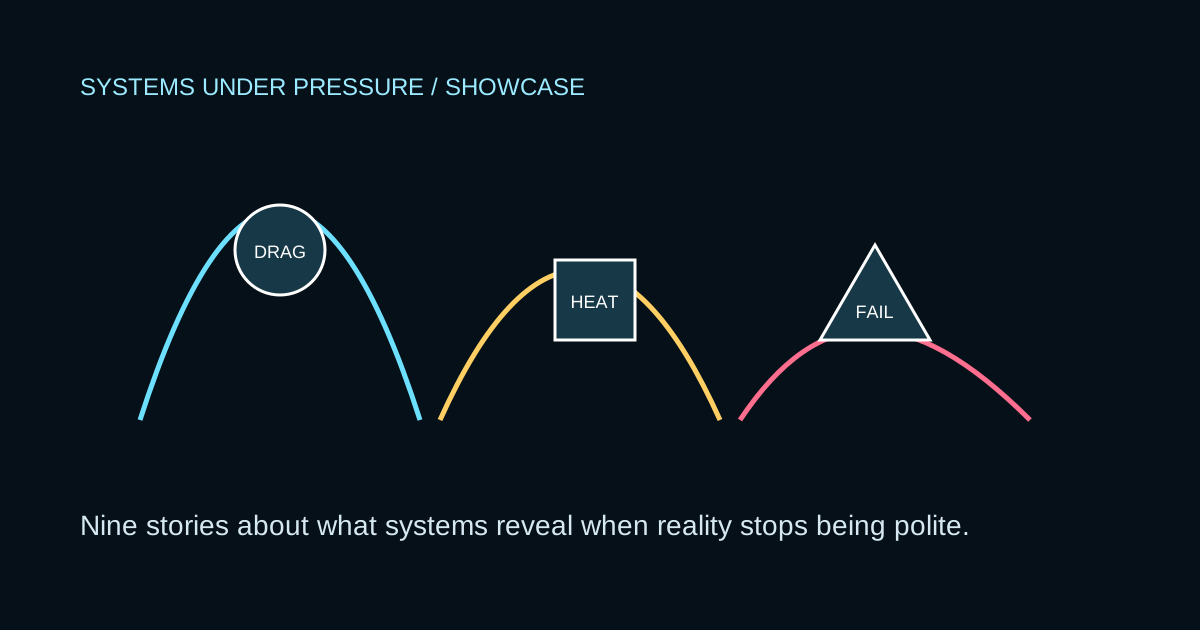
Systems Under Pressure nine-story Cyberdelia showcase graphic
Cyberdelia Skunkworks original editorial graphic. Source ↗
Systems Under Pressure showcase map
Cyberdelia Skunkworks original collection graphic.

This is the side of technology that disappears when coverage becomes a product-launch calendar. An orbital rescue can fail and still teach operations. A CubeSat can spend its first two days learning how not to become debris. A robot can replace motors with living muscle. A laboratory can physically rebuild itself. A battery can be designed to stop existing. A network can become stronger because its parts are less alike.

None of these stories needs science-fiction varnish. The actual engineering is stranger, and much more useful.

SPACE / SERVICING / AUTONOMY

The Dead Satellite Gets a House Call

A small commercial spacecraft launched with a job that sounds mundane until you remember the patient is dead, tumbling, and moving at orbital velocity: inspect inactive satellites closely enough to make future servicing less blind.

Read feature →

ROBOTICS / BIOHYBRID SYSTEMS / SOFT MACHINES

The Robot Grew Muscles

MIT built a paper-thin swimmer whose motors are living muscle cells. It is slow, delicate and far more interesting than another humanoid demo reel.

Read feature →

ROBOTICS / LAB AUTOMATION / PHOTONICS

The Lab Bench Became a Robot

MIT’s robotic optics bench can pick up mirrors and lenses, assemble a laser cavity, tune it, notice when alignment drifts and repair the experiment.

Read feature →

BIOMEDICAL ENGINEERING / INGESTIBLES / POWER

The Battery Is Supposed to Disappear

MIT researchers built a battery for swallowable electronics from materials designed to do something ordinary batteries are spectacularly bad at: stop being a foreign object.

Read feature →