

Swallowable electronics have always carried an awkward engineering contradiction: the device is temporary, but the battery chemistry often behaves like it plans to stay.
The mechanism
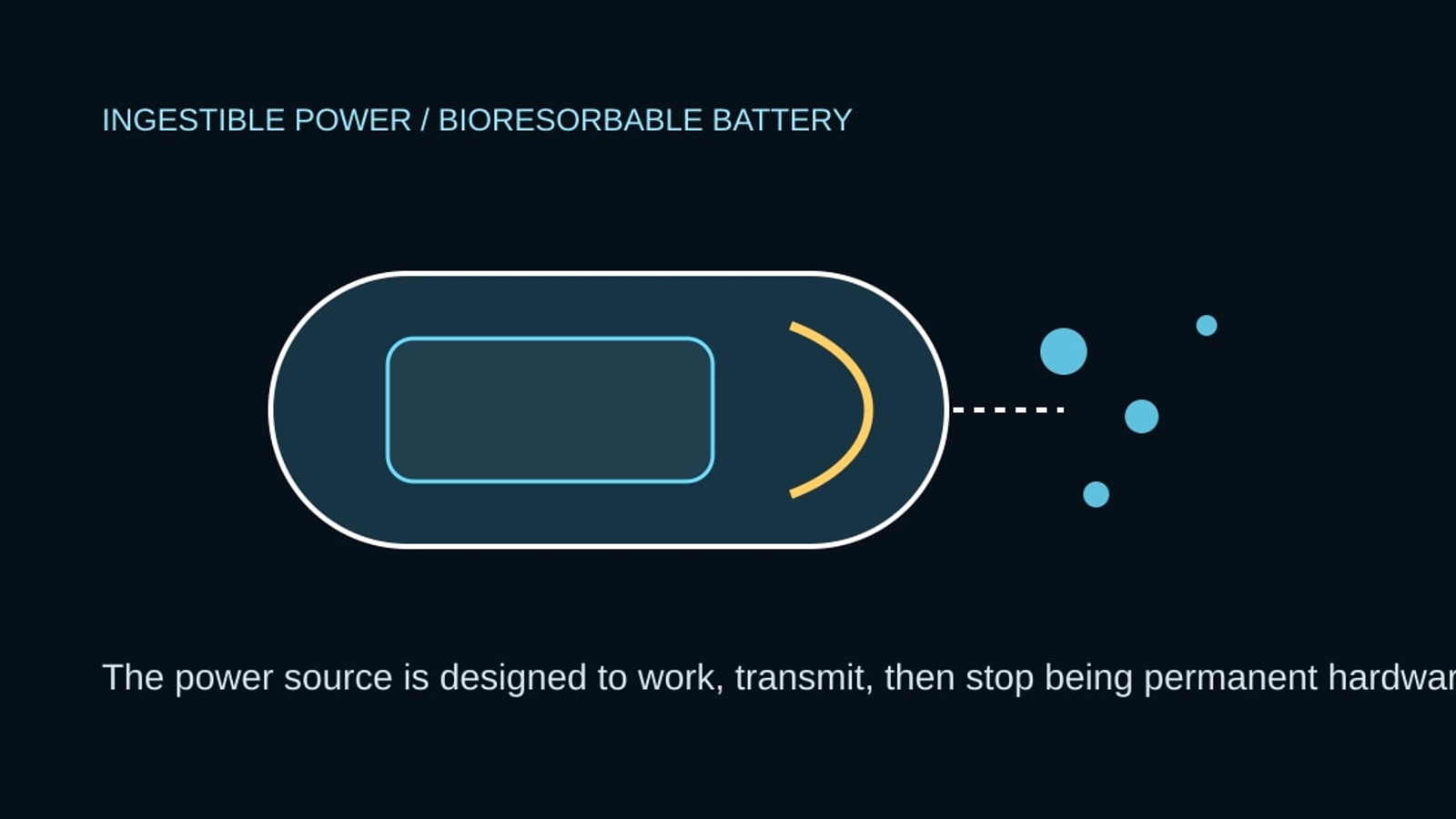
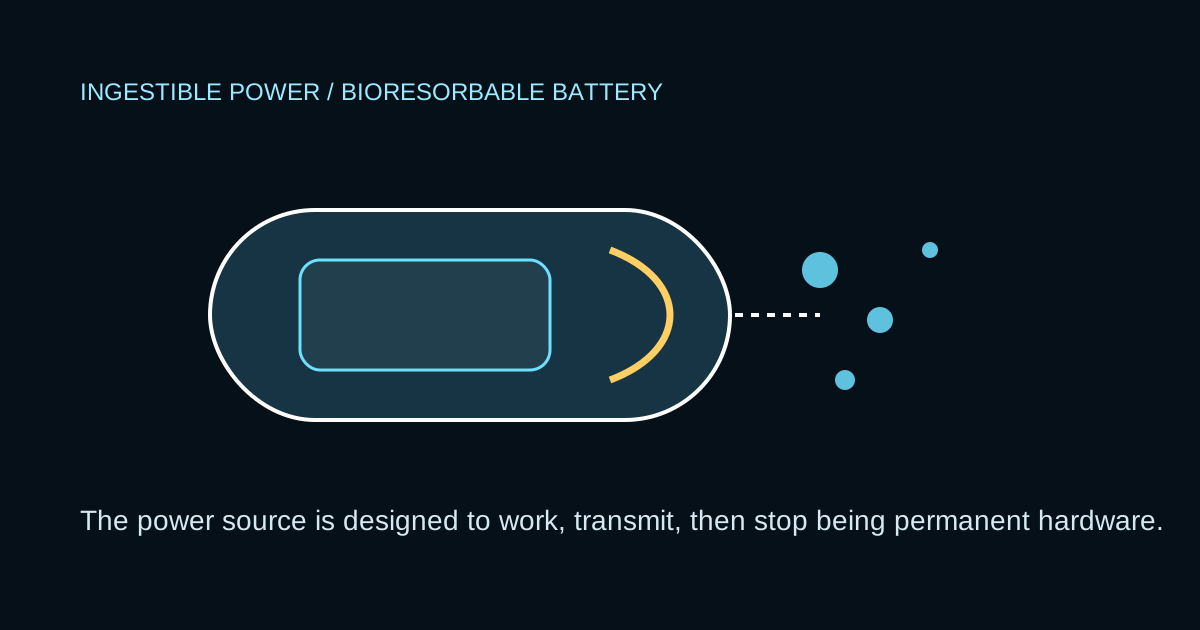
MIT researchers reported a small battery made from materials selected to be safer for ingestion and capable of breaking down in the gastrointestinal tract. The demonstrated cell produces 1.84 volts.
The team used the battery to power two example systems: an RFID tag able to transmit from the stomach and a capsule that delivers a small electrical current intended to stimulate production of ghrelin, a hormone involved in hunger.
The battery uses magnesium and molybdenum trioxide electrodes. The broader design goal is not simply miniaturization. It is to make the energy-storage layer compatible with the temporary nature of the medical device around it.
Why it matters
That changes the failure analysis. A conventional battery inside the body raises concerns about retention, casing integrity and what happens if the device does not leave on schedule. A bioresorbable architecture tries to make disappearance part of the design.
The applications could extend to sensing, drug delivery and other ingestible systems, but the work remains a research platform rather than a finished medical product.
Evidence boundary
What remains unknown: the reported experiments do not establish long-term human safety, manufacturing scale, shelf life, regulatory approval, or performance across the wide chemical and mechanical variation of real gastrointestinal systems.
ingestible electronics become more credible when every subsystem shares the same lifecycle. A temporary medical device should not be powered by the most permanent object in the package.