

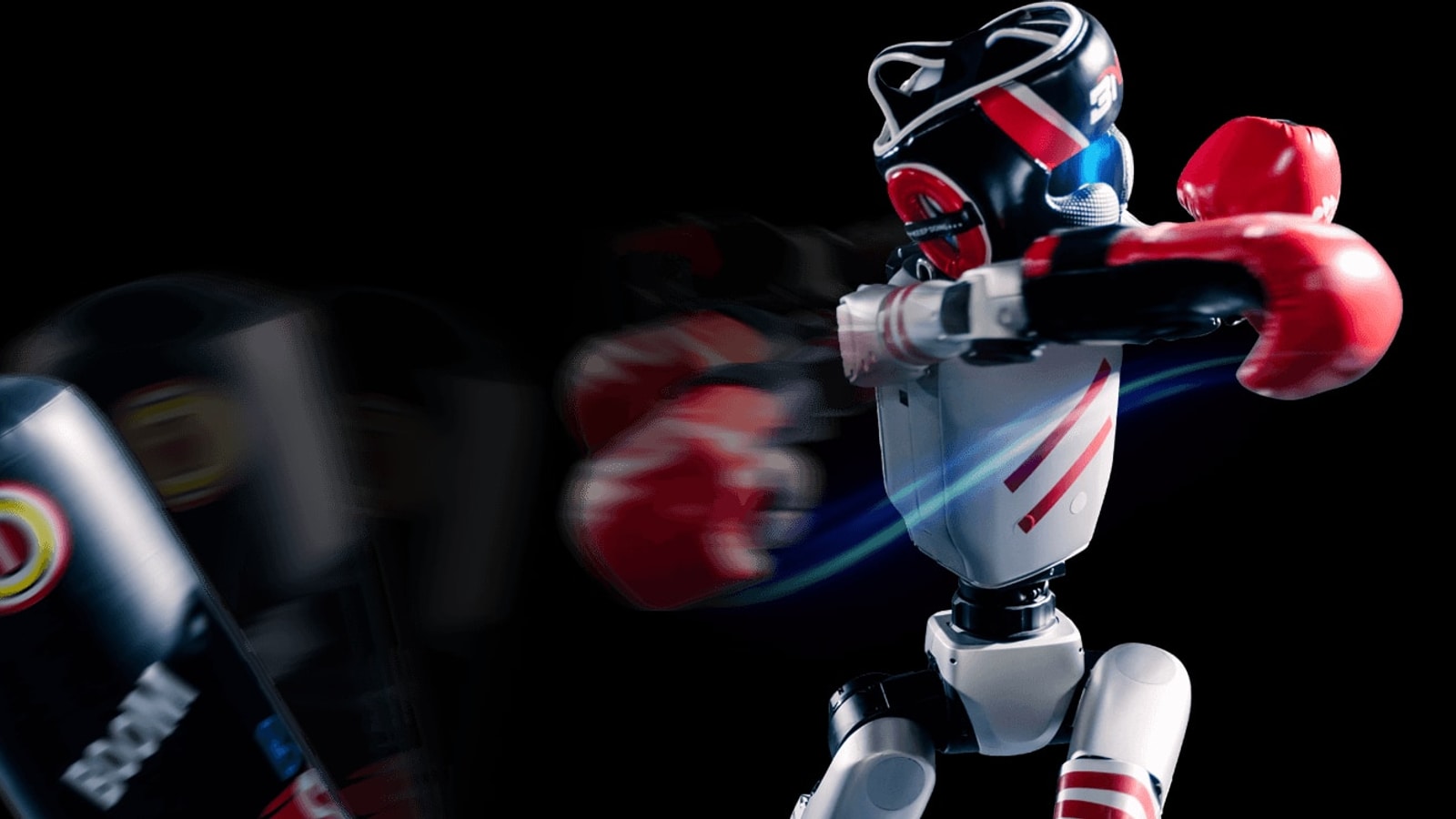
The most useful robot-boxing collaboration may look strange from either side of the room: a veteran boxing coach watching a humanoid fight while engineers record what the coach says before translating any of it.
The order matters. If engineers explain the control system first, they risk teaching the coach what to notice. If the coach speaks first, the observations arrive in the compressed vocabulary the sport has developed through generations of adversarial experience.
Put the coach and engineer in separate rooms first.
Have the coach analyze a complete fight as boxing. Have the robotics team analyze the same fight as a machine. Then compare.
Where both identify the same moment for different reasons, there may be a domain-invariant principle. The coach says “he's falling in.” The engineer sees center-of-mass excursion and poor recovery margin. Those are two descriptions of one failure.
Where they disagree, the disagreement is valuable. It may reveal a robot-specific constraint or a boxing heuristic tied to human anatomy that does not transfer.
Build a fight card engineers can use.
Traditional fight statistics count outcomes. Robot statistics should also count mechanisms: effective reach, strike latency, post-strike recovery, lateral stability, fall rate, autonomous recovery rate, intervention time, battery consumption, thermal derating and repair events.
Then add tactical measures: ring-control percentage, successful counters, distance-band control, forced resets and whether feints actually changed the opponent's behavior.
A single bout becomes a multi-layer record: sport on the surface, control experiment underneath.
The corner becomes a diagnostic station.
In human boxing, the corner has one minute to turn observation into correction. Robot competition can make that process instrumented. A team can compare the coach's diagnosis with telemetry between rounds.
“You're getting squared” can be checked against torso orientation and stance geometry. “You're waiting on him” can be checked against response latency and initiation frequency. “He's timing the jab” can be checked against action predictability.
The point is not to replace the coach with numbers. The point is to discover what the coach is actually detecting.
Robot boxing is a useful AI benchmark because the opponent refuses to stay still.
Static benchmarks are eventually gamed. A fighting opponent adapts. The policy must deal with another policy that is actively trying to create failure.
This makes combat a difficult but clean research environment for strategic co-adaptation, provided safety and rules constrain the physical problem. The score gives an outcome; telemetry explains how the outcome emerged.
The corner can become a robotics laboratory if human coaching knowledge is captured before it is translated away. The best experiment is simple: independent coach read, independent engineering read, synchronized telemetry, then reconciliation. Where those maps overlap, robot fighting may expose formal structure hidden inside the sweet science.
Part 5 of 8 — The Sweet Science