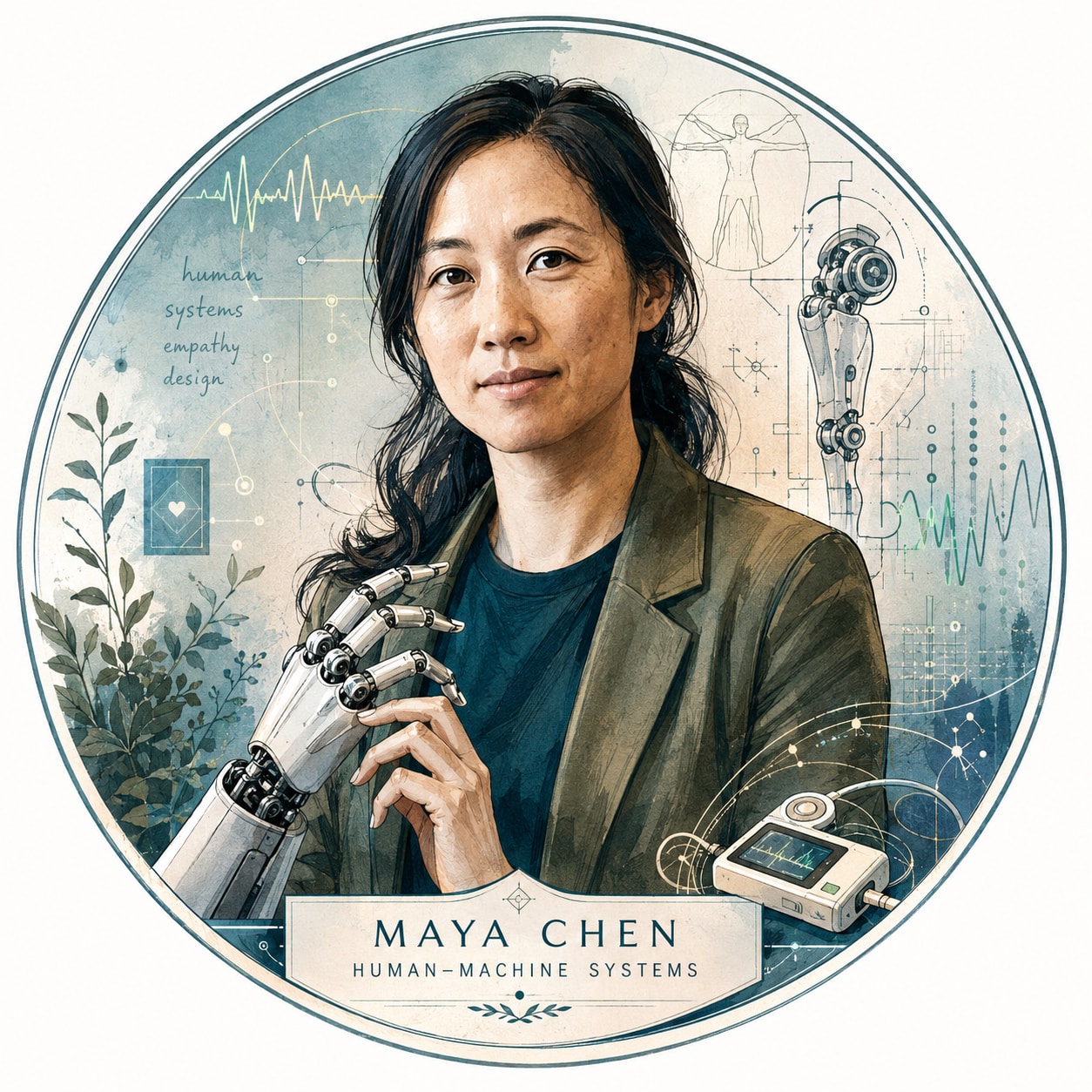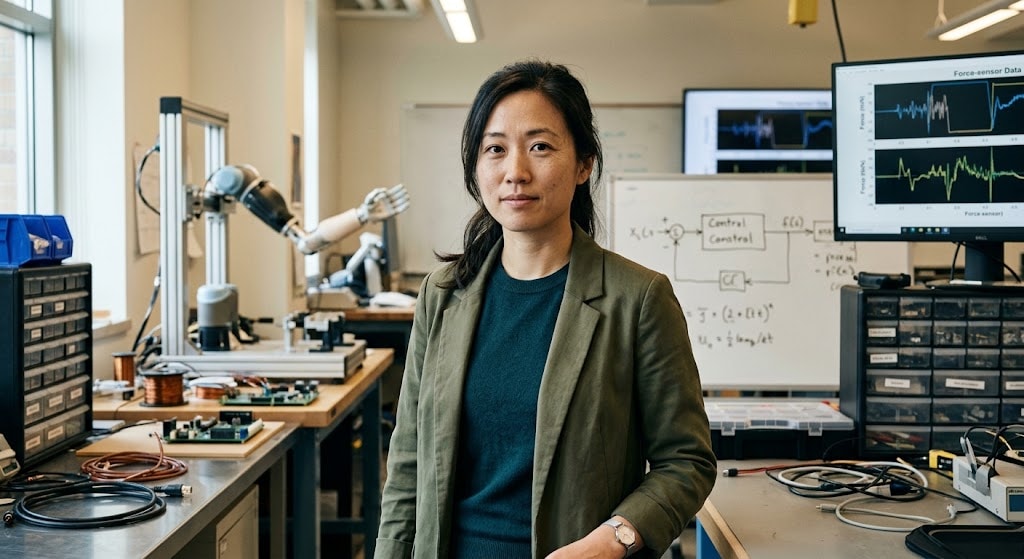
Maya Chen covers the seam between biology and machinery: prosthetics, neural interfaces, rehabilitation robotics, sensors, augmentation, assistive technology, autonomy, and the design choices that determine whether a technical system actually helps a human being.
Her reporting treats performance and human consequences as the same engineering problem. A device can be mechanically impressive and still be exhausting, inaccessible, difficult to calibrate, unsafe around other people, or useless outside a controlled trial.
Chen is interested in agency. Who controls the system? What happens when intent and machine behavior diverge? Can the person override it? Does the interface communicate uncertainty, failure, and limits clearly enough for a human to make a good decision?
Chen grows herbs badly but persistently, keeps a sketchbook full of interface ideas that have nothing to do with current assignments, and is happiest around workshops where people actually use the devices being discussed. She has strong opinions about chairs, handles, and every other object designers forget is touched by a human body.
LATEST DISPATCH / BIOTECHNOLOGY + OPTIC NERVE
Can Partial Epigenetic Reprogramming Restore Damaged Vision?
ER-100 has entered human testing. Chen separates the OSK mechanism, nonhuman-primate evidence, FDA IND clearance, Phase 1 safety questions, and the larger rejuvenation claims the human data have not yet earned.
CURRENT ASSIGNMENT / BEIJING ROBOT GAMES
Humanoid Is a Shape, Not a Safety Case
Question: What do the competition tasks reveal about how humanoid robots perceive, approach, touch, assist, and work around people?
Focus on human-robot interaction, force control, fall behavior, emergency stops, supervision, handoffs, accessibility, and whether a robot designed to look familiar actually behaves predictably enough to earn trust.