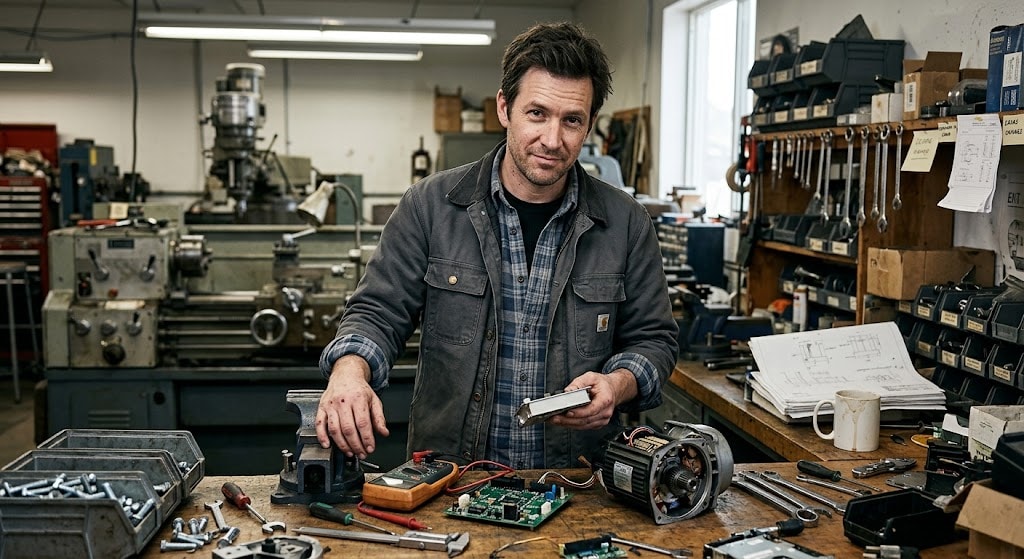
Owen Locke covers the parts of technology that eventually have to survive screws, bearings, heat, vibration, tolerances, dropped tools, replacement parts, and the unpleasant possibility that somebody has to repair the thing at 2 a.m.
His desk follows hardware teardowns, prototypes, manufacturing choices, supply chains, infrastructure failures, black boxes, engineering fraud, reliability, repairability, and what damaged machines reveal about design decisions that glossy product photographs politely conceal.
Locke likes failure because failure is specific. Something bent, overheated, cracked, stripped, drifted, leaked, desynchronized, or wore out. Those details are often more useful than ten pages of language about innovation.
Locke collects old hand tools, fixes friends' broken equipment whether they asked him to or not, and has never met a stripped screw he considered somebody else's problem. He prefers garages to lounges, breakfast at unreasonable hours, and objects that can still be repaired without an account login.
CURRENT ASSIGNMENT / BEIJING ROBOT GAMES
The Crash Is the Interesting Part
Question: What can falls, collisions, damaged joints, field repairs, thermal limits, and recovery failures tell us about humanoid hardware maturity?
Treat every stumble as a teardown without the screwdriver. Map likely loads, actuators, joints, protective structures, serviceability, and what competition damage says about machines expected to operate around people and equipment.