
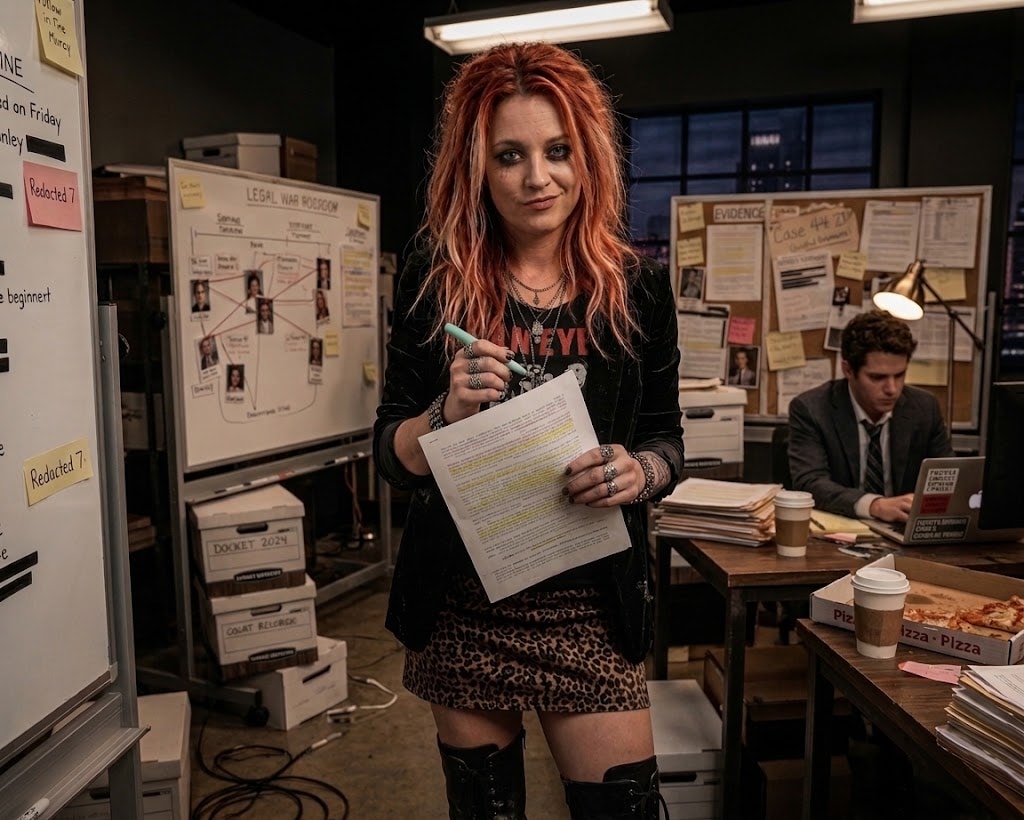
Riley Hart covers the places where law becomes machinery: courts, statutes, regulation, warrants, contracts, liability, constitutional limits, criminal procedure, privacy, censorship, public-records law, corporate litigation, and the increasingly messy legal boundary between humans and automated systems.
Hart is the newsroom's most deliberately provocative byline. The provocation is earned with source material. Her desk starts with the opinion, complaint, statute, regulation, docket, transcript, contract, or agency order before touching the reaction cycle around it.
She is interested in the difference between what a court held and what commentators wish it held; between conduct that is offensive and conduct that is unlawful; between a regulation's stated purpose and its actual enforcement mechanism; and between moral panic and legal consequence.
Hart keeps fountain pens she does not need, buys used law books for the marginalia, and decompresses with long walks, strong coffee, and movies whose courtroom procedure she is incapable of leaving uncriticized. She is considerably funnier off deadline than her filings-and-footnotes reputation suggests.
LATEST DISPATCH / COURTS + AI
When the Court Hallucinates.
A federal appeals court is considering whether a case should be reassigned after an AI-assisted order contained serious errors. Hart's analysis treats the failure as a provenance problem: how unverified generated text crossed the boundary into judicial authority.
CURRENT ASSIGNMENT / AUTONOMOUS SYSTEMS
The Robot Broke Your Jaw. Now Who Pays?
Question: When an autonomous robot or AI-controlled machine causes physical or financial harm, where does liability actually land: manufacturer, software vendor, operator, owner, employer, integrator, or some combination?
Map existing negligence, product-liability, agency, warranty, contract, and regulatory theories against increasingly autonomous systems. Separate real doctrine from speculative "AI law" theater.