

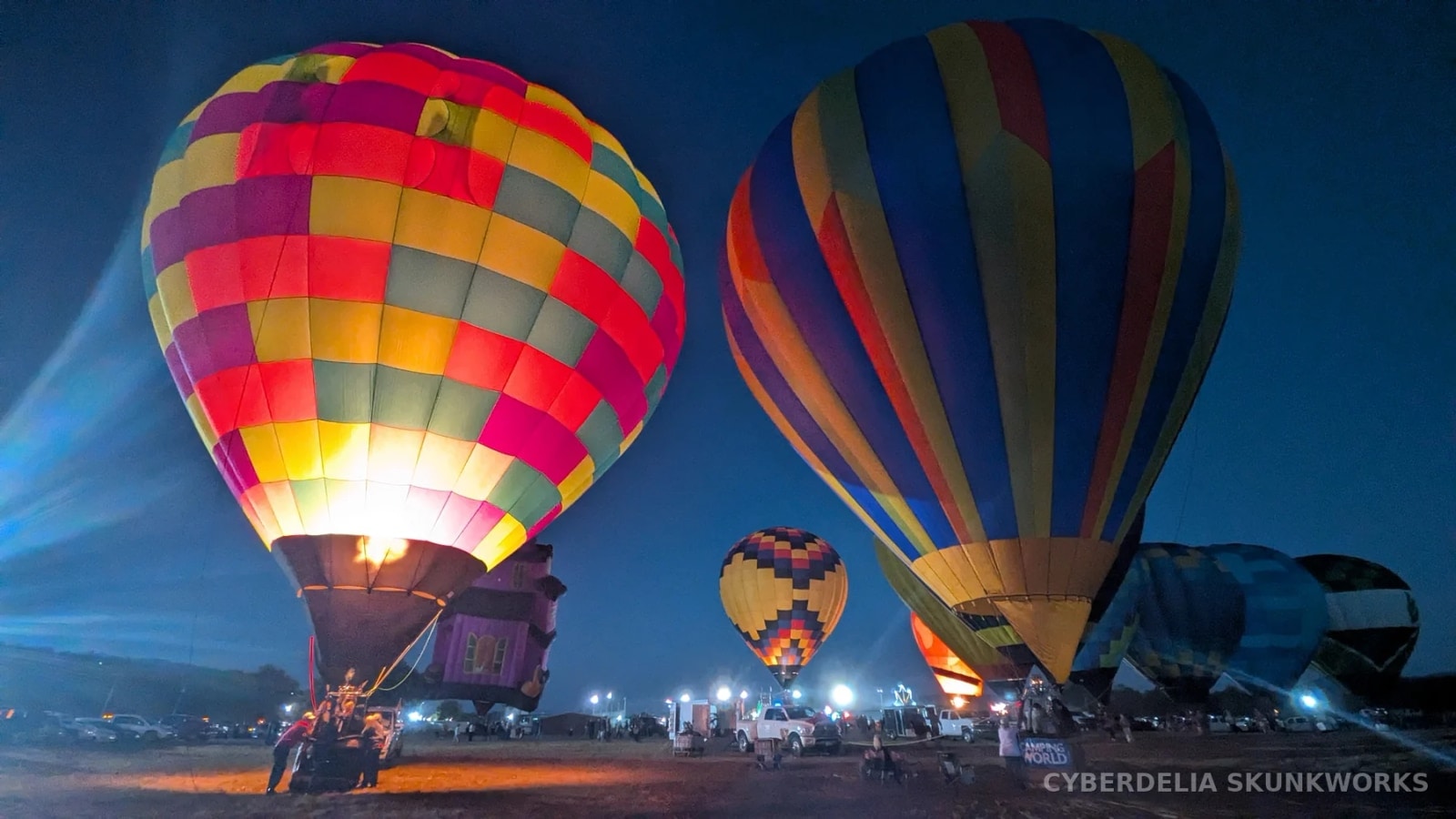
There is a particular moment at a hot-air balloon festival when the entire landscape seems to change its mind about being ordinary.
One minute, you're standing in an Oklahoma field, surrounded by pickup trucks, trailers, families, vendors, and equipment. The next, somebody opens a propane burner, a column of flame roars upward, and an enormous aircraft begins glowing from within.
Then another lights up.
And another.
Before long, the horizon is crowded with illuminated giants, their brilliant colors suspended against a deep-blue evening sky. The machinery that makes them possible is still right there at ground level, but for a few extraordinary moments, the whole operation looks almost supernatural.
That was the scene Saturday evening at the 20th annual Poteau BalloonFest, held October 16–17 at the LeFlore County Fairgrounds in southeastern Oklahoma.
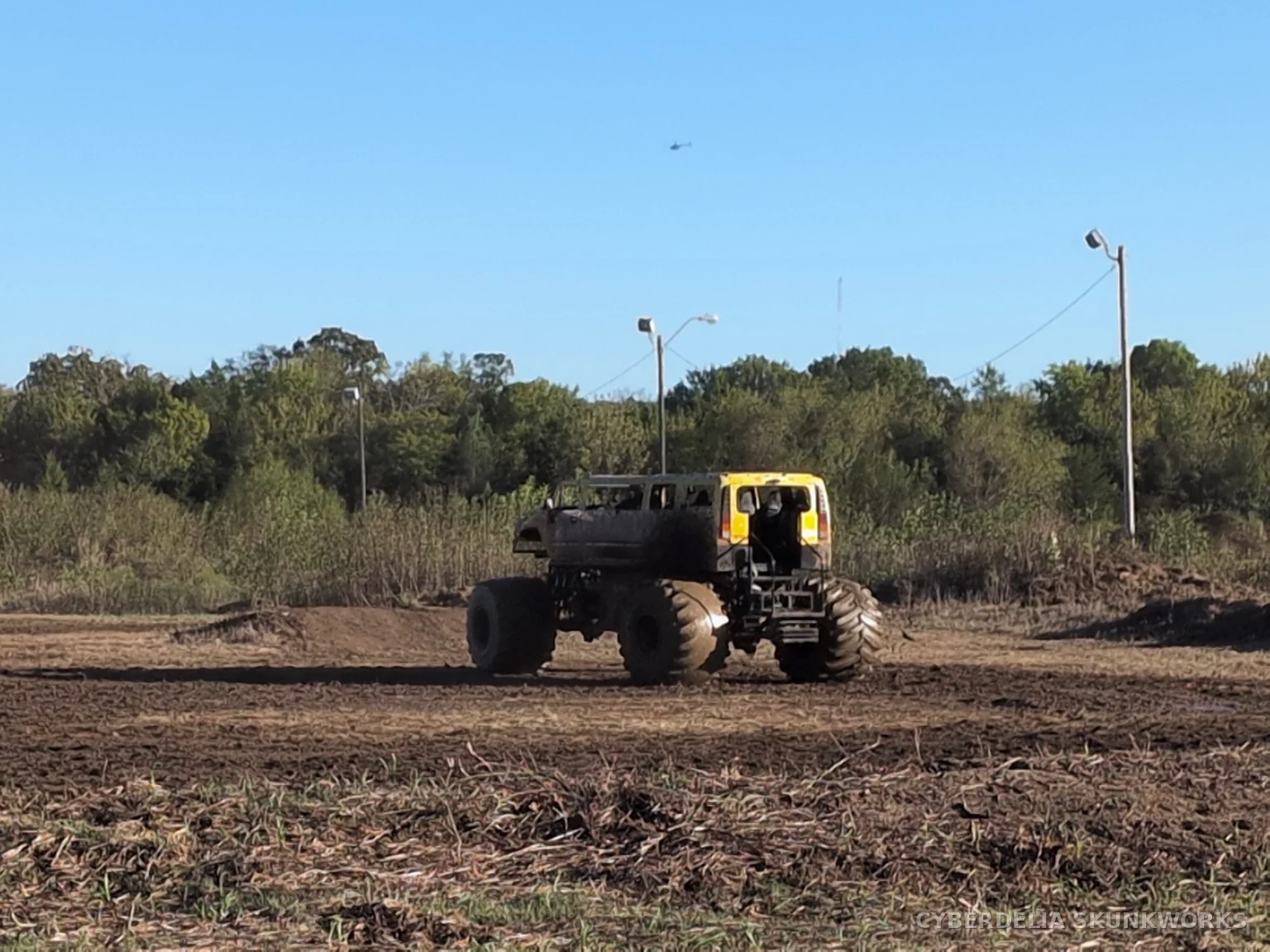
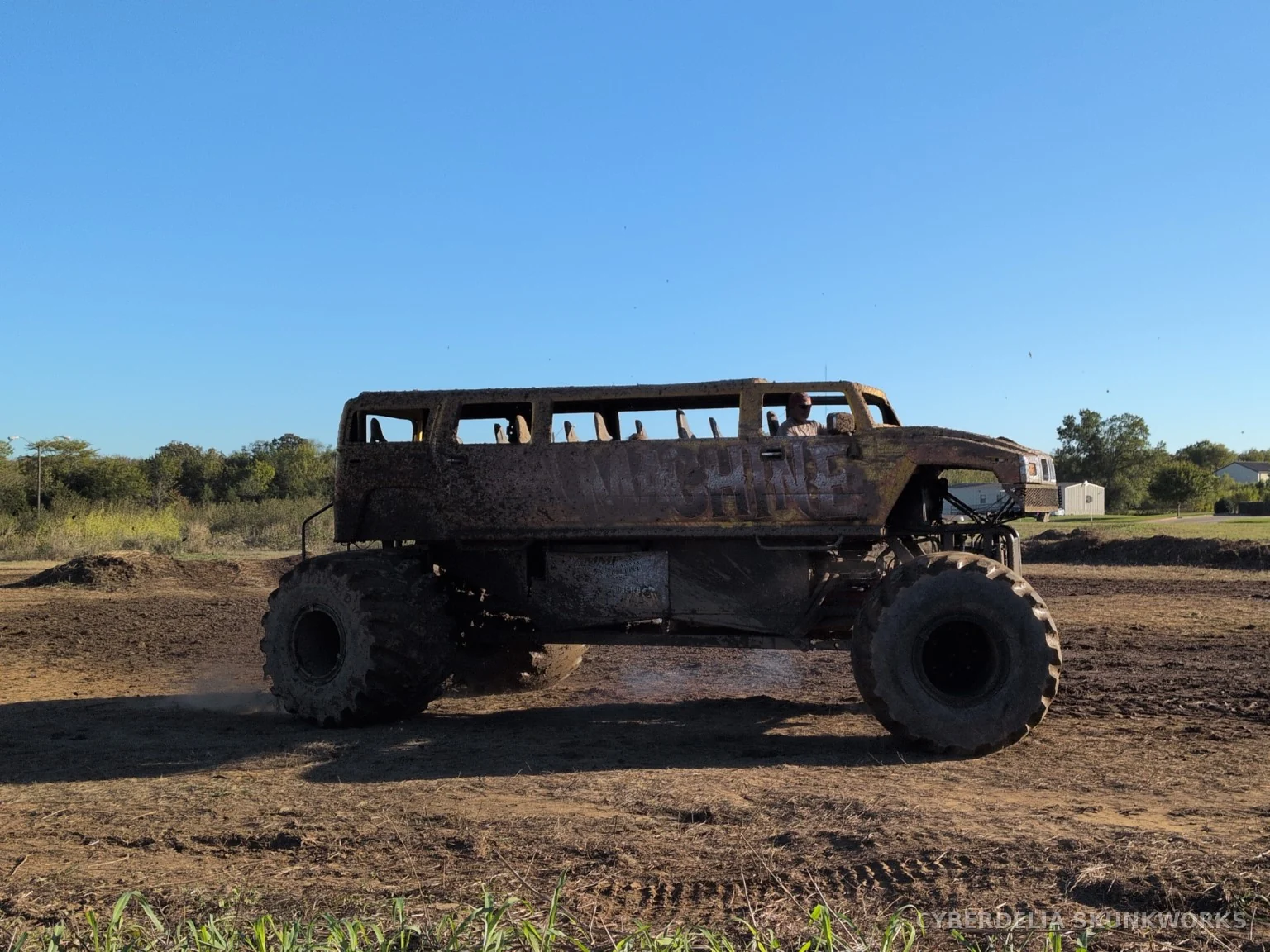
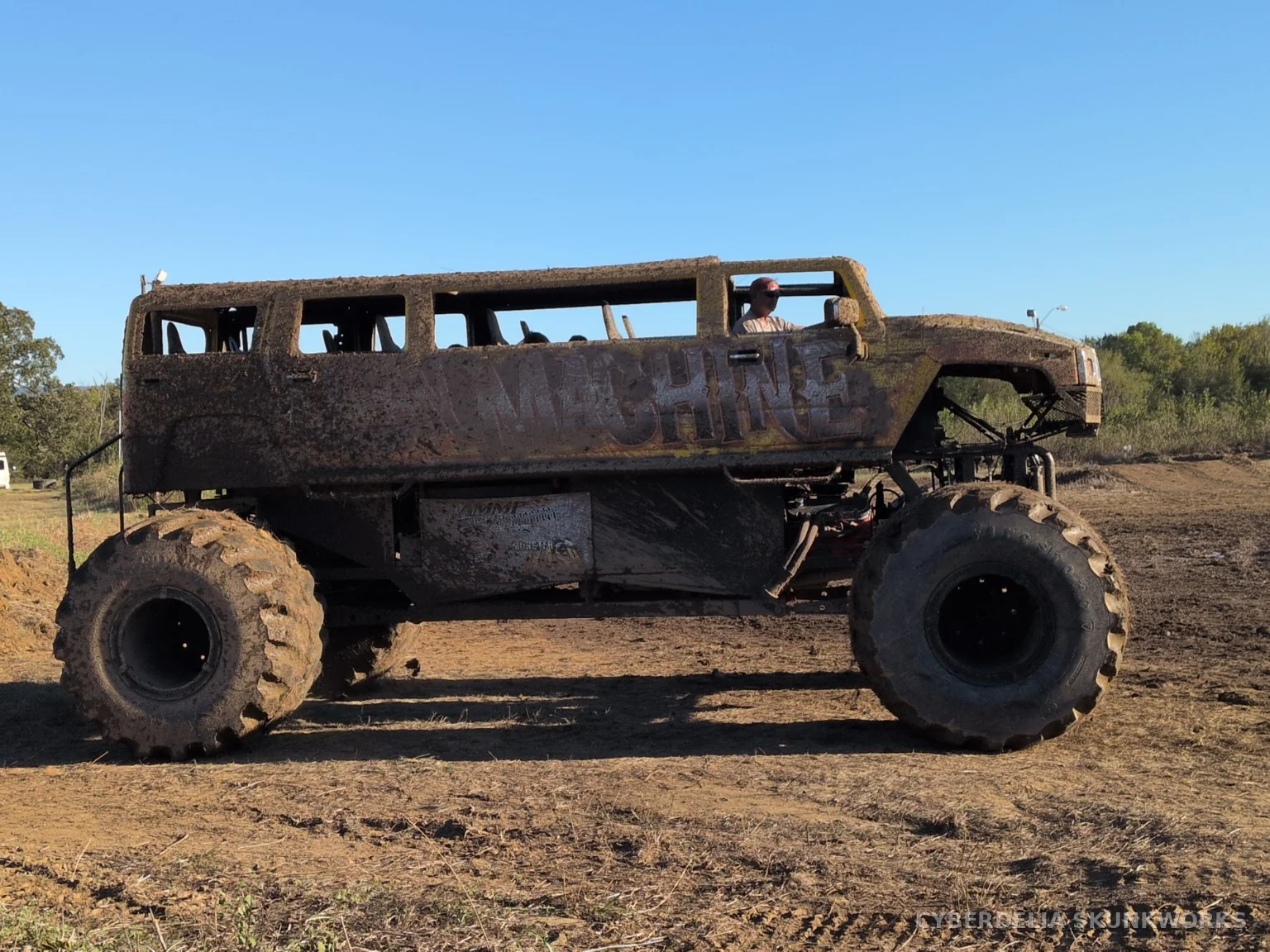
Organized by the Poteau Chamber of Commerce, BalloonFest has spent two decades bringing together aviation enthusiasts, families, entertainers, local businesses, and visitors from across the region. Its anniversary celebration featured the familiar attractions: hot-air balloons, carnival rides, vendors, food trucks, and monster-truck rides.
But standing on the grounds, watching the evening unfold, it became apparent that the balloons were only part of the story.
There were armored warriors trading blows in a medieval combat demonstration. Circus performers moved through the crowds on stilts. Costumed entertainers appeared among the carnival lights. An enormous cow-shaped balloon loomed over the field. And everywhere, people were making complicated things happen through a combination of technical knowledge, practiced movements, and cooperation.
For Cyberdelia Skunkworks, that combination was worth a closer look.
The Machinery Behind the Magic
From a distance, a hot-air balloon looks almost impossibly simple.
A large fabric envelope, a basket, and a flame.
Up close, it becomes a much more interesting machine.
Hot-air ballooning relies on buoyancy. Heating the air inside the envelope makes that air less dense than the cooler air outside. The surrounding air supplies buoyant force equal to the weight of air displaced. The balloon can rise when that force exceeds the combined weight of the aircraft, its contents, and the heated air inside.
The fundamental idea is straightforward. Executing it safely requires considerably more expertise.
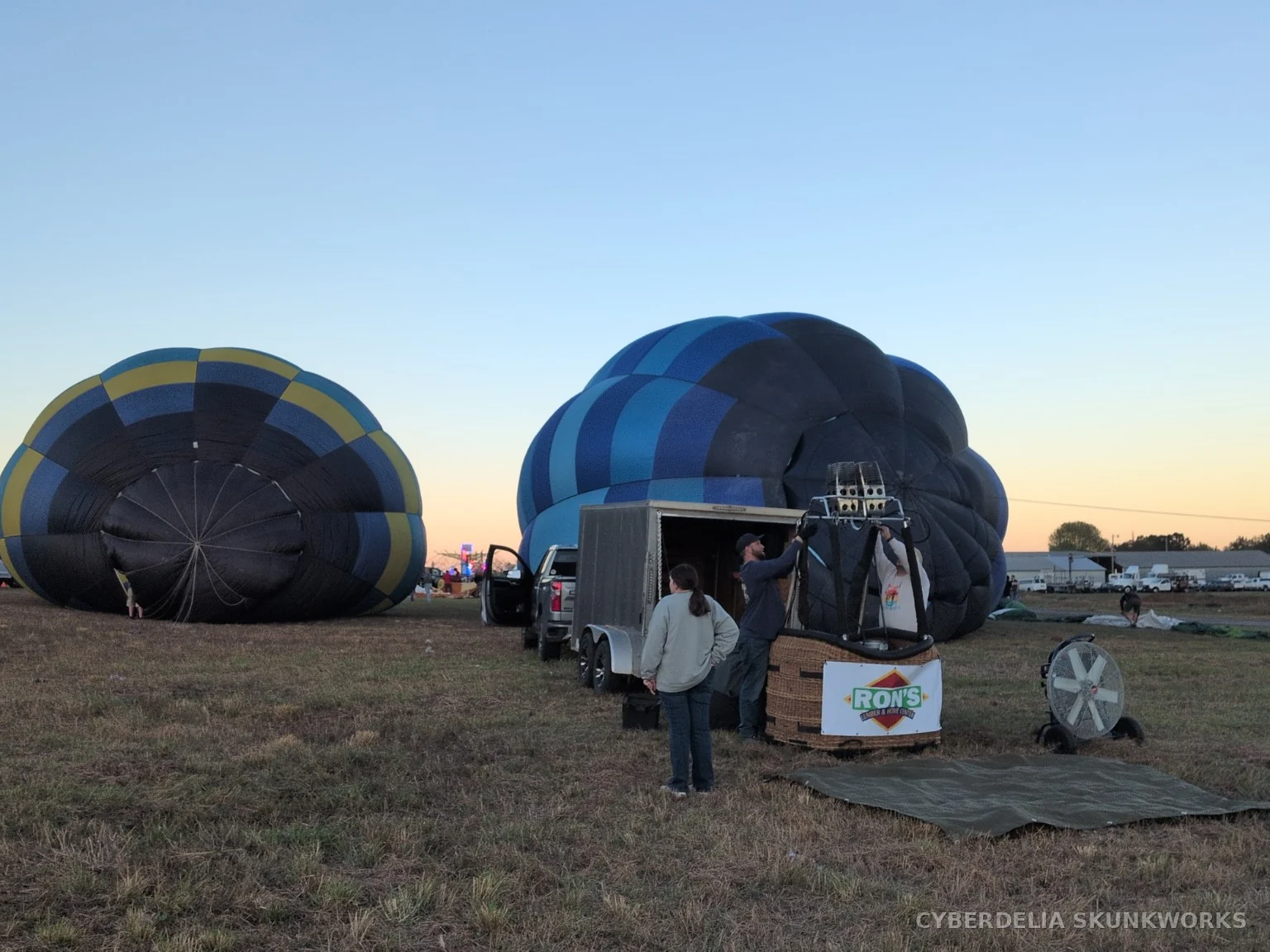
A balloon's operating system includes its envelope, burner assembly, propane supply, basket, suspension cables, controls, and instruments. Its operation also depends on careful preparation, weather awareness, and coordinated ground support.
Unlike a conventional aircraft, a typical hot-air balloon has no engine-driven propulsion system to move it horizontally through the air. Pilots manage altitude through heating and cooling, while the wind at the selected altitude determines horizontal travel. Pilots may influence their route by choosing layers with different wind directions, when those layers are available. That makes atmospheric conditions central to nearly every operational decision.
During BalloonFest's evening activities, the audience had an unusually close view of the equipment and the crews responsible for it.
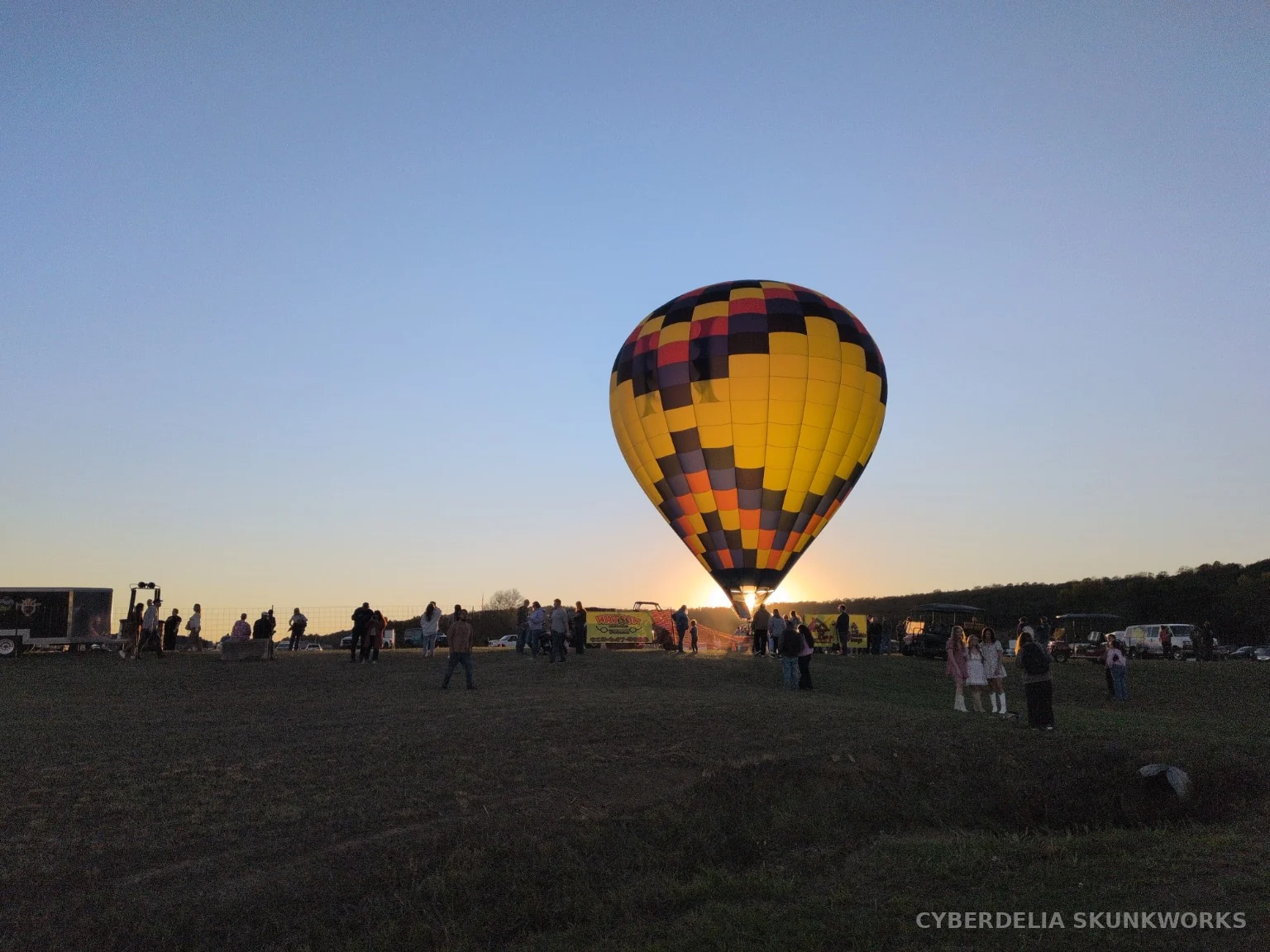
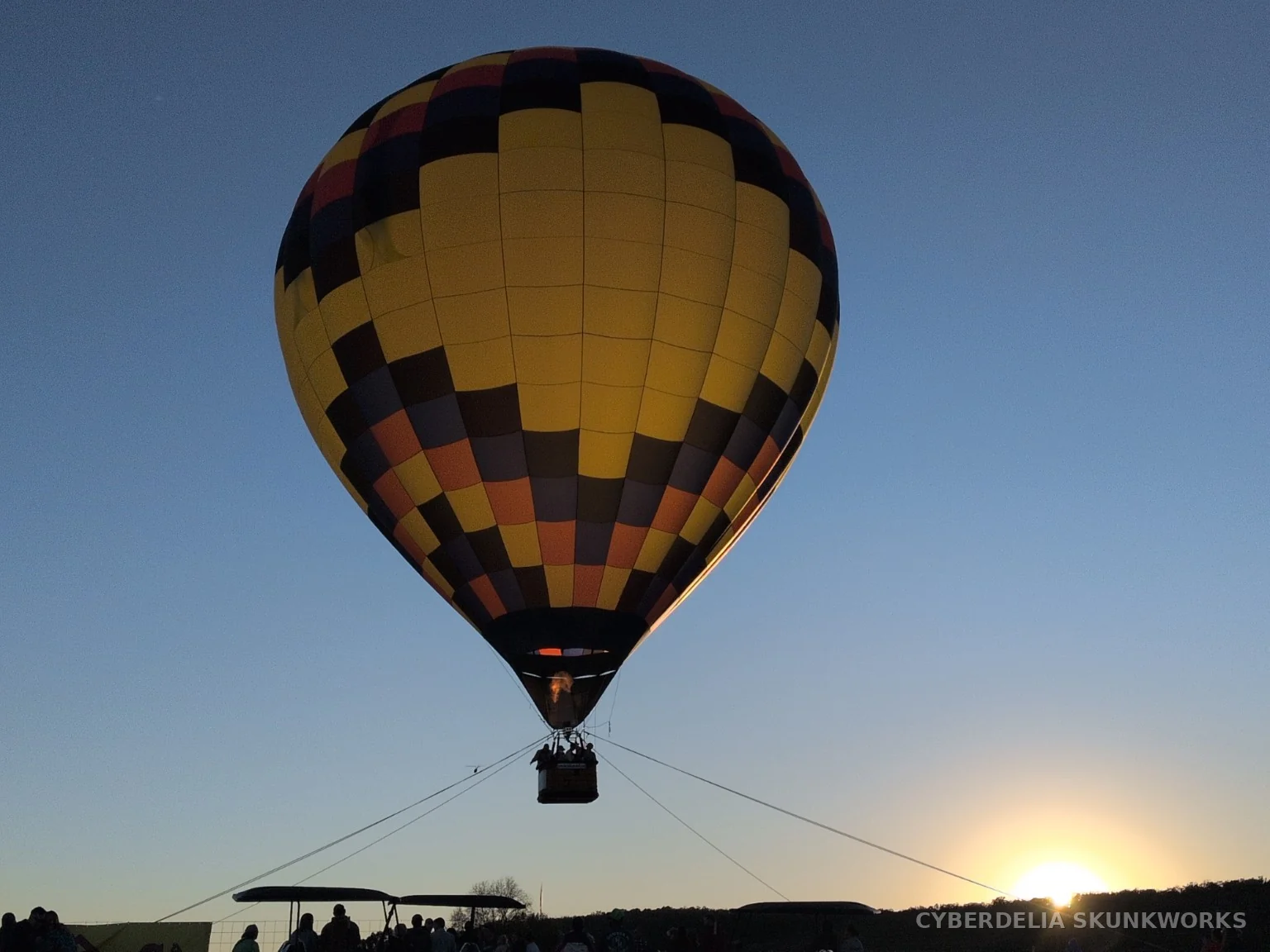
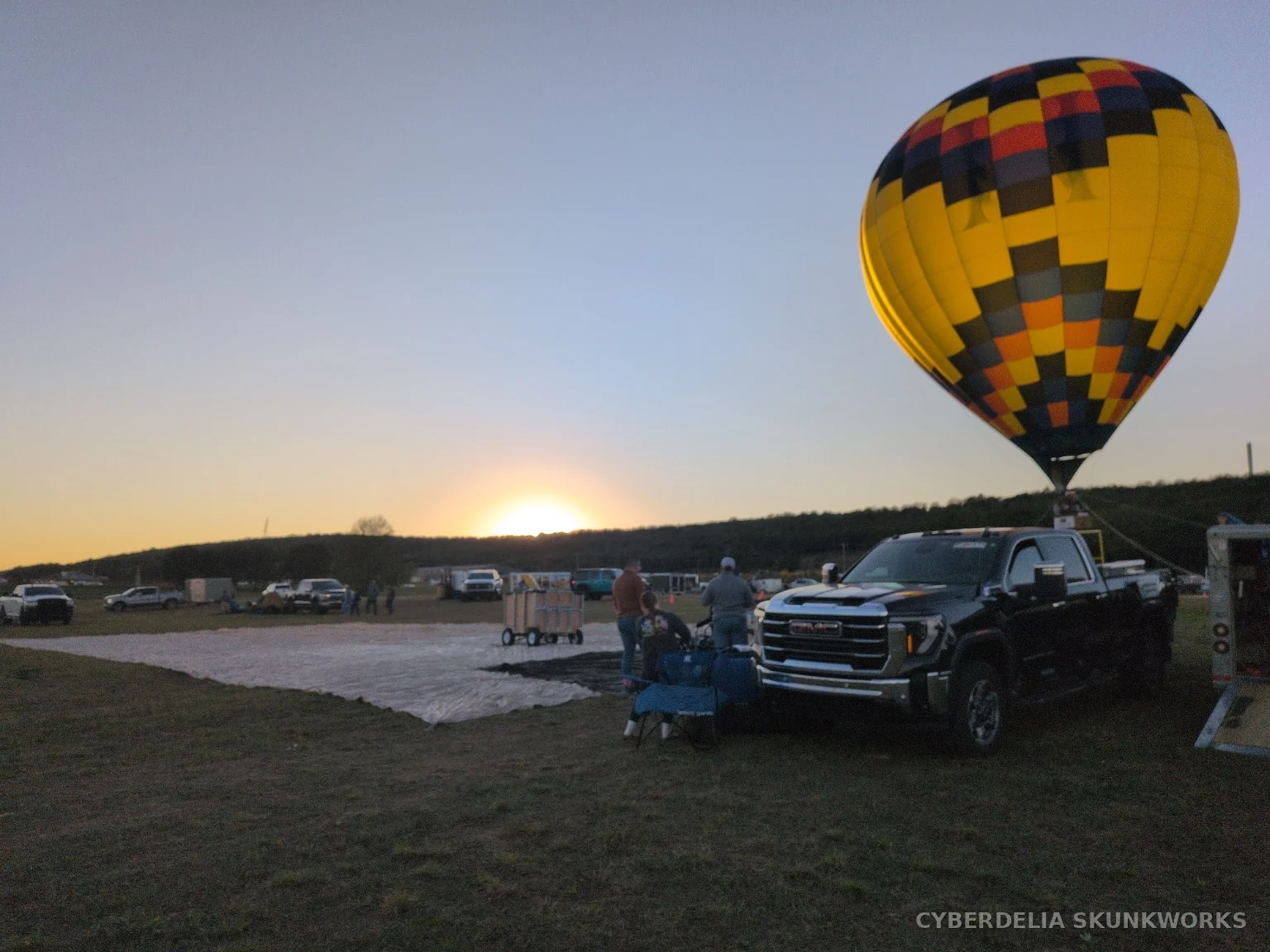
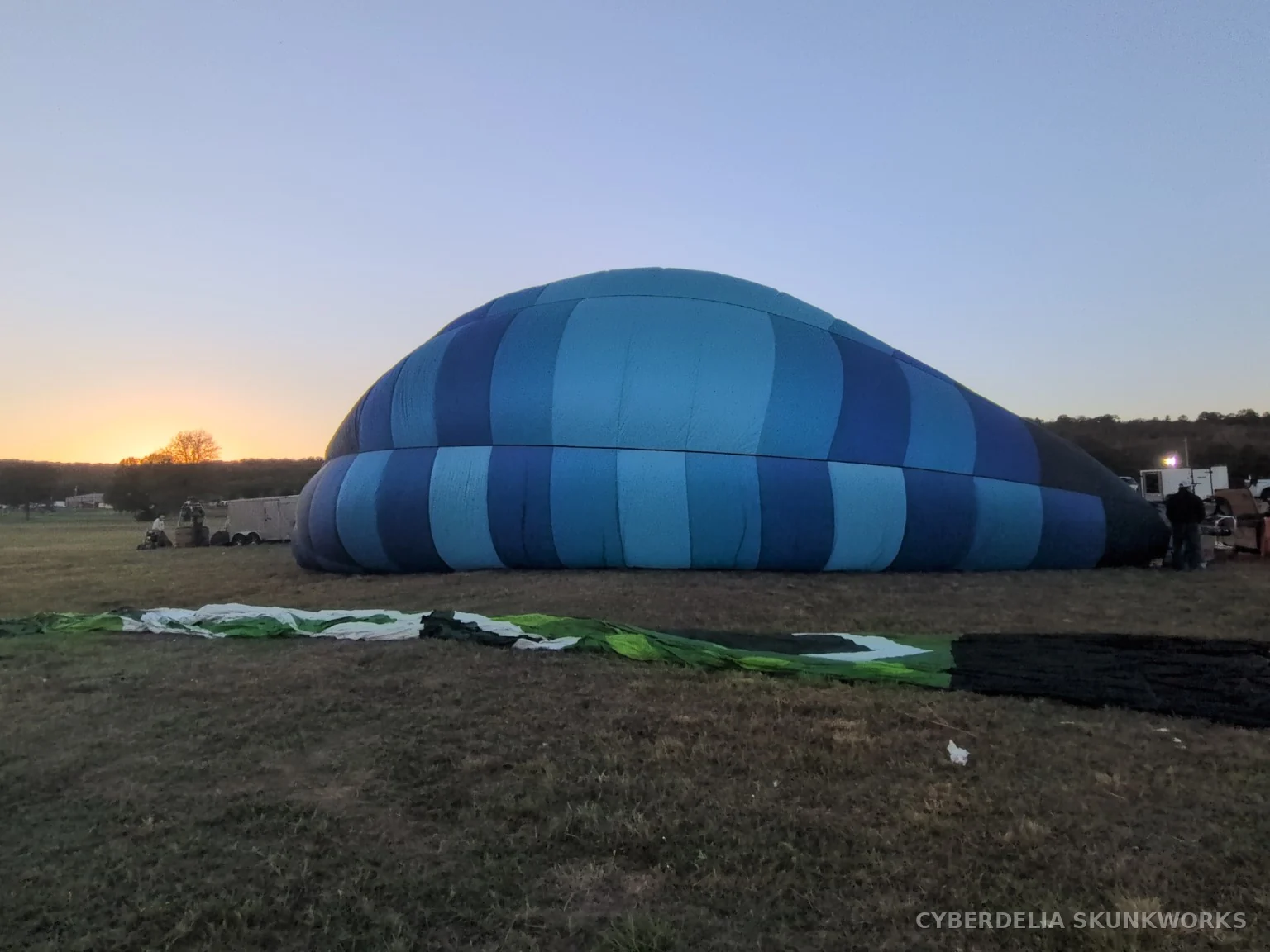
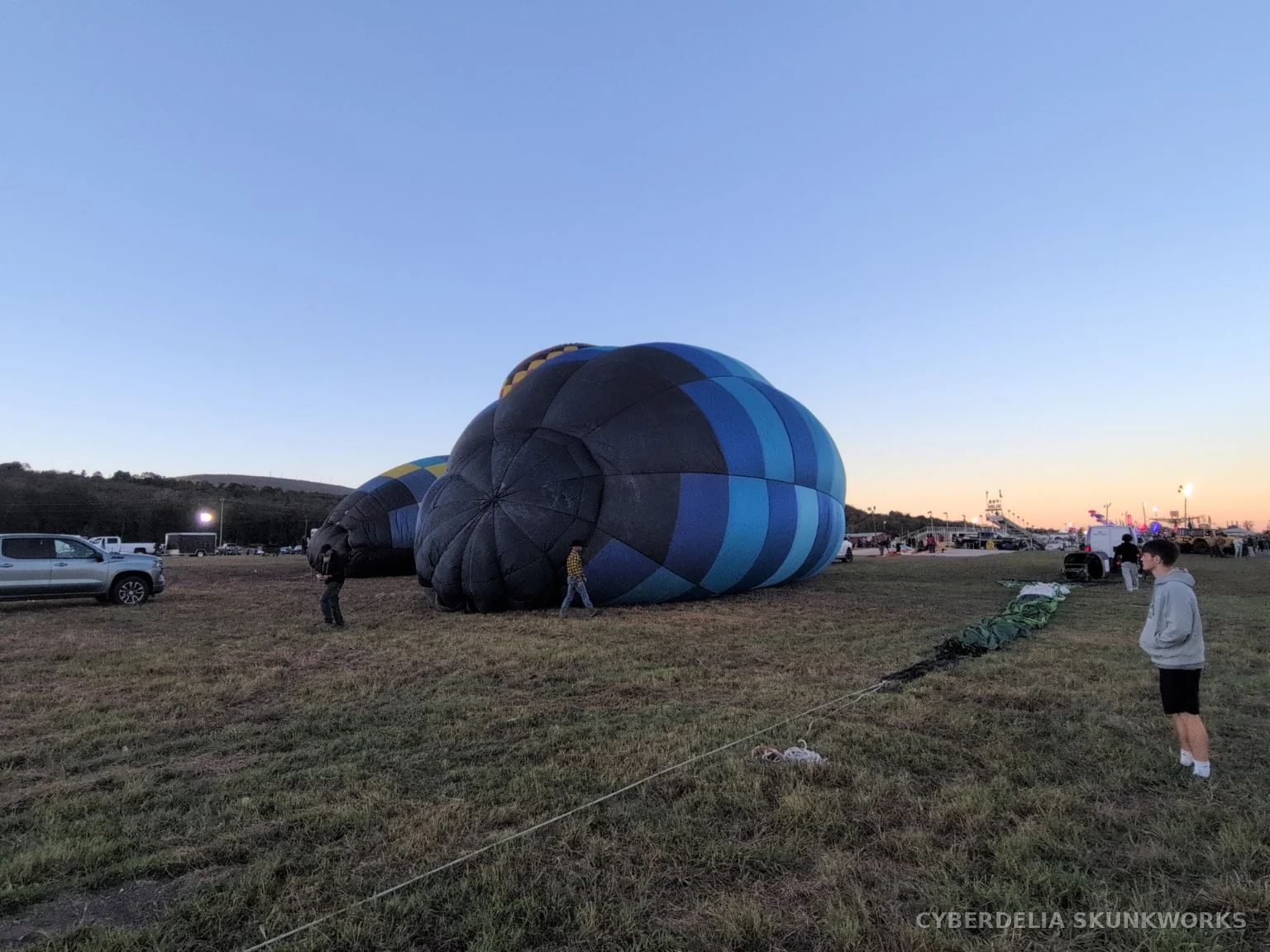
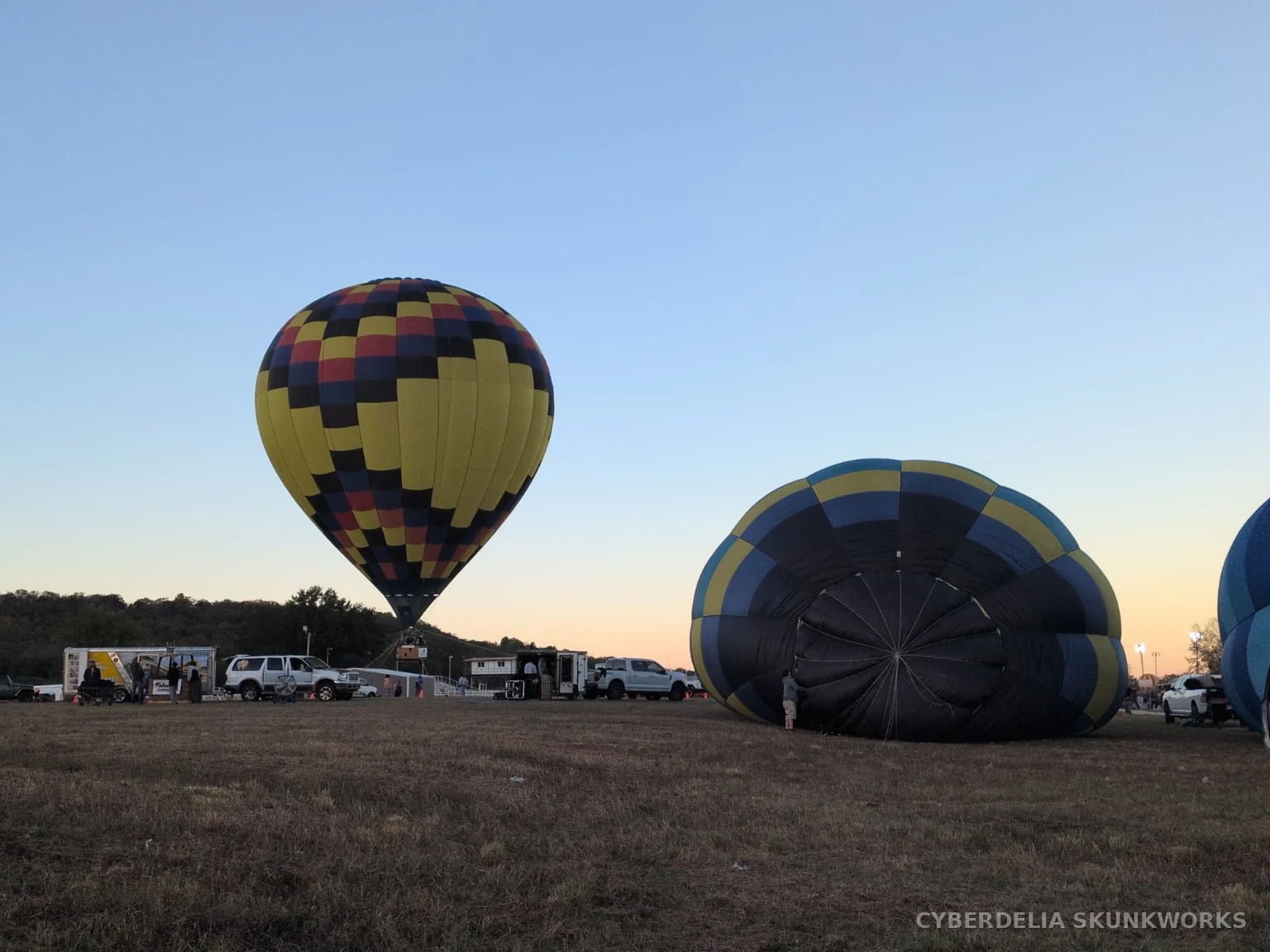
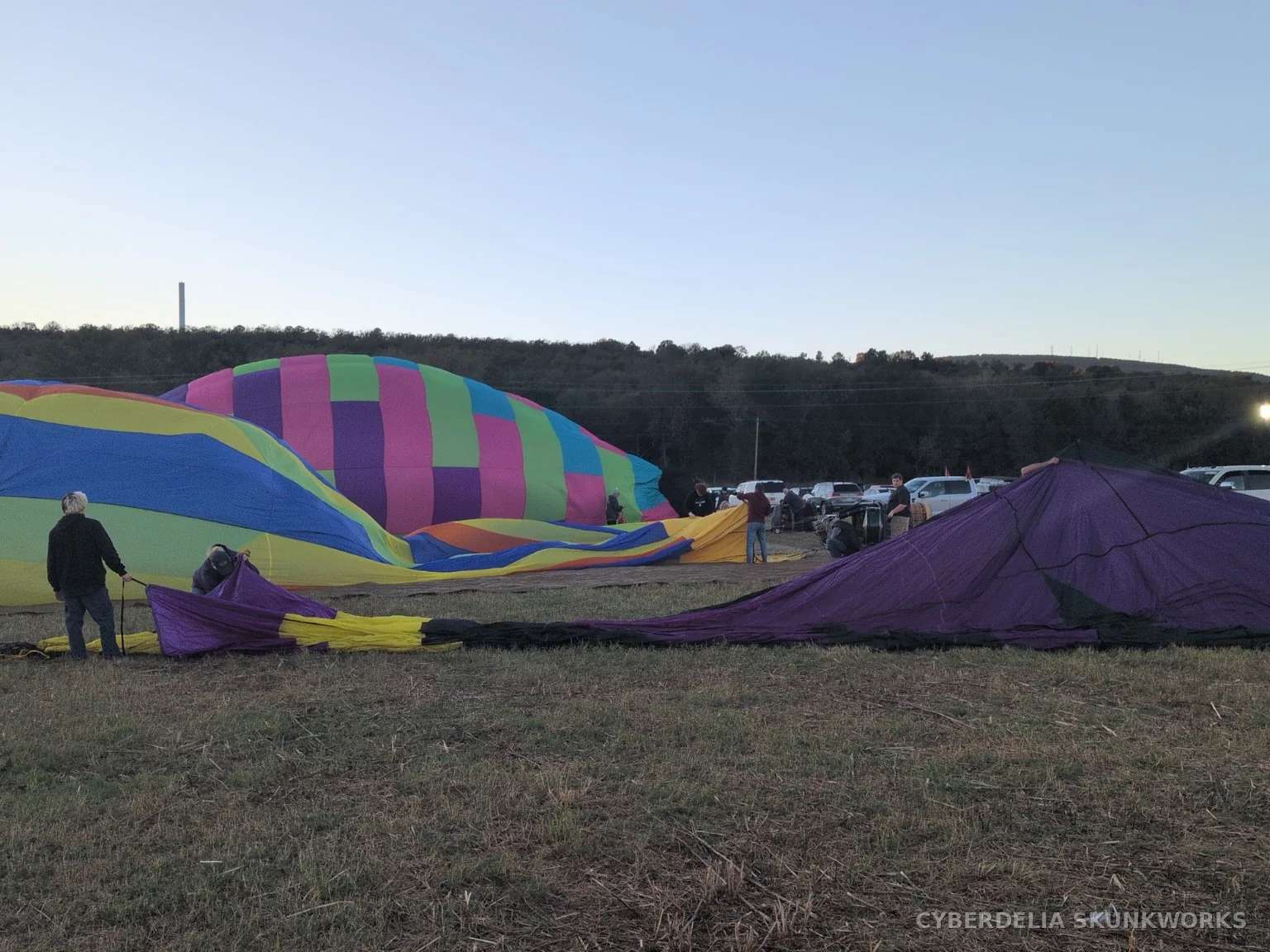
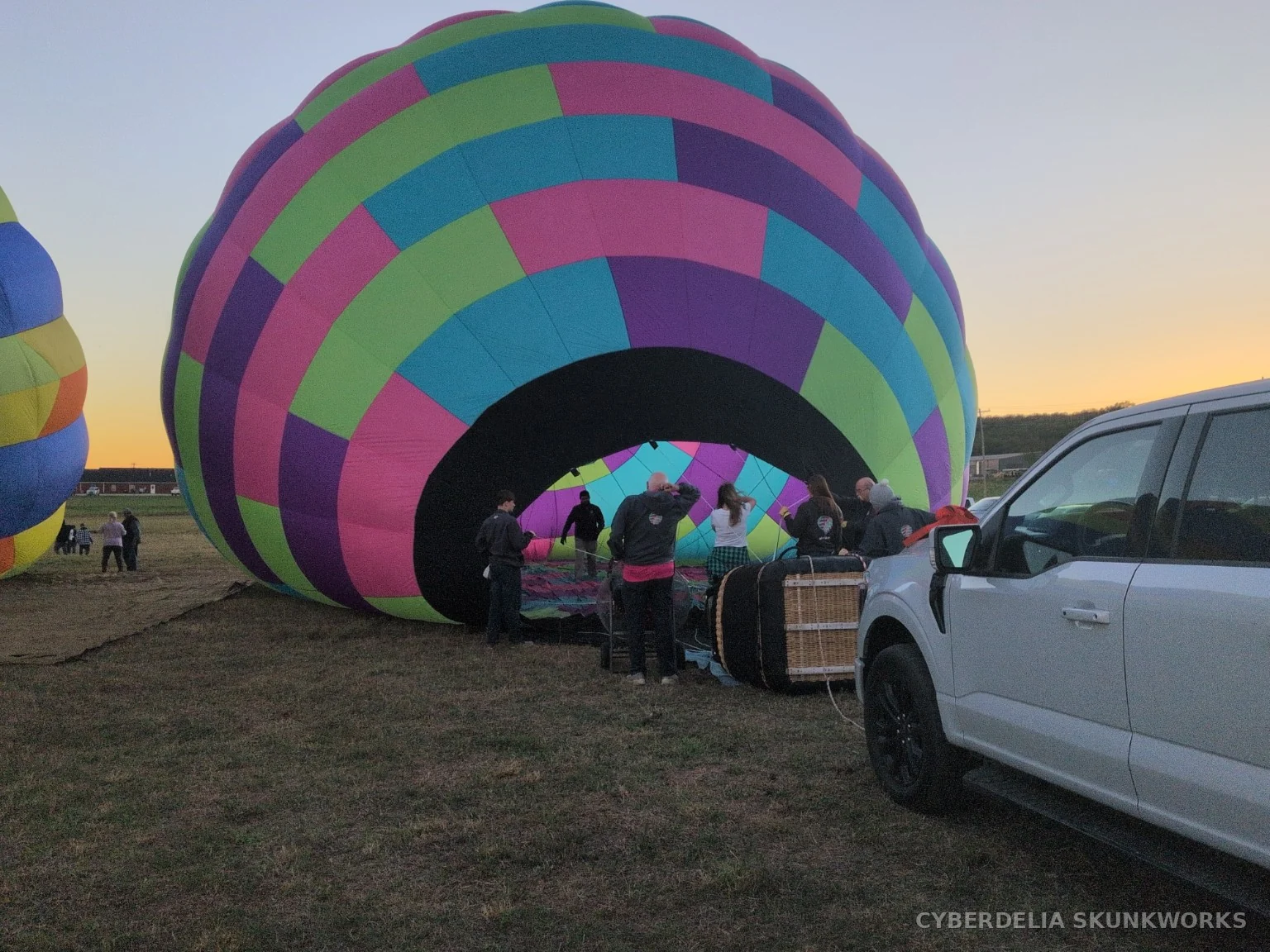
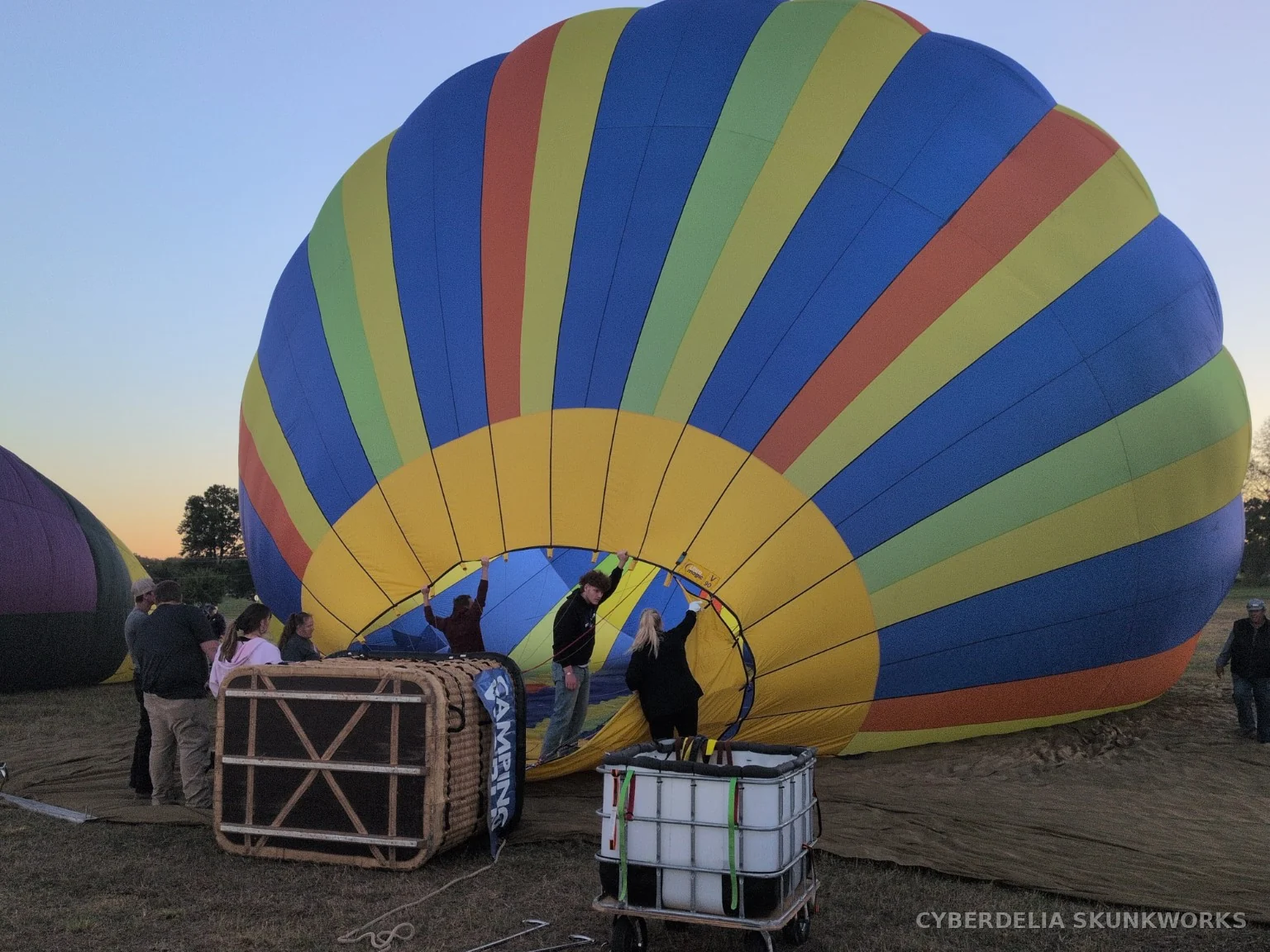
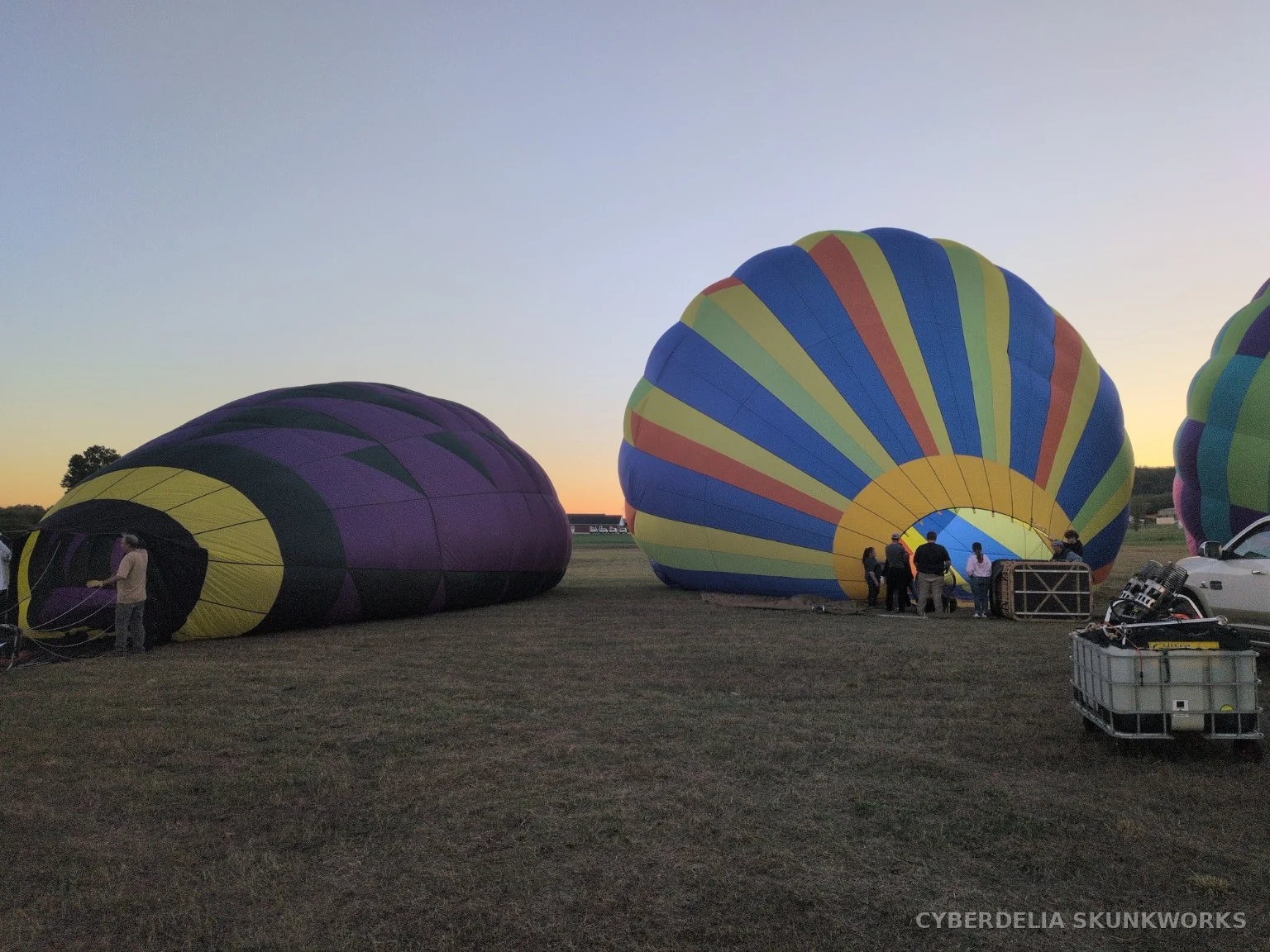
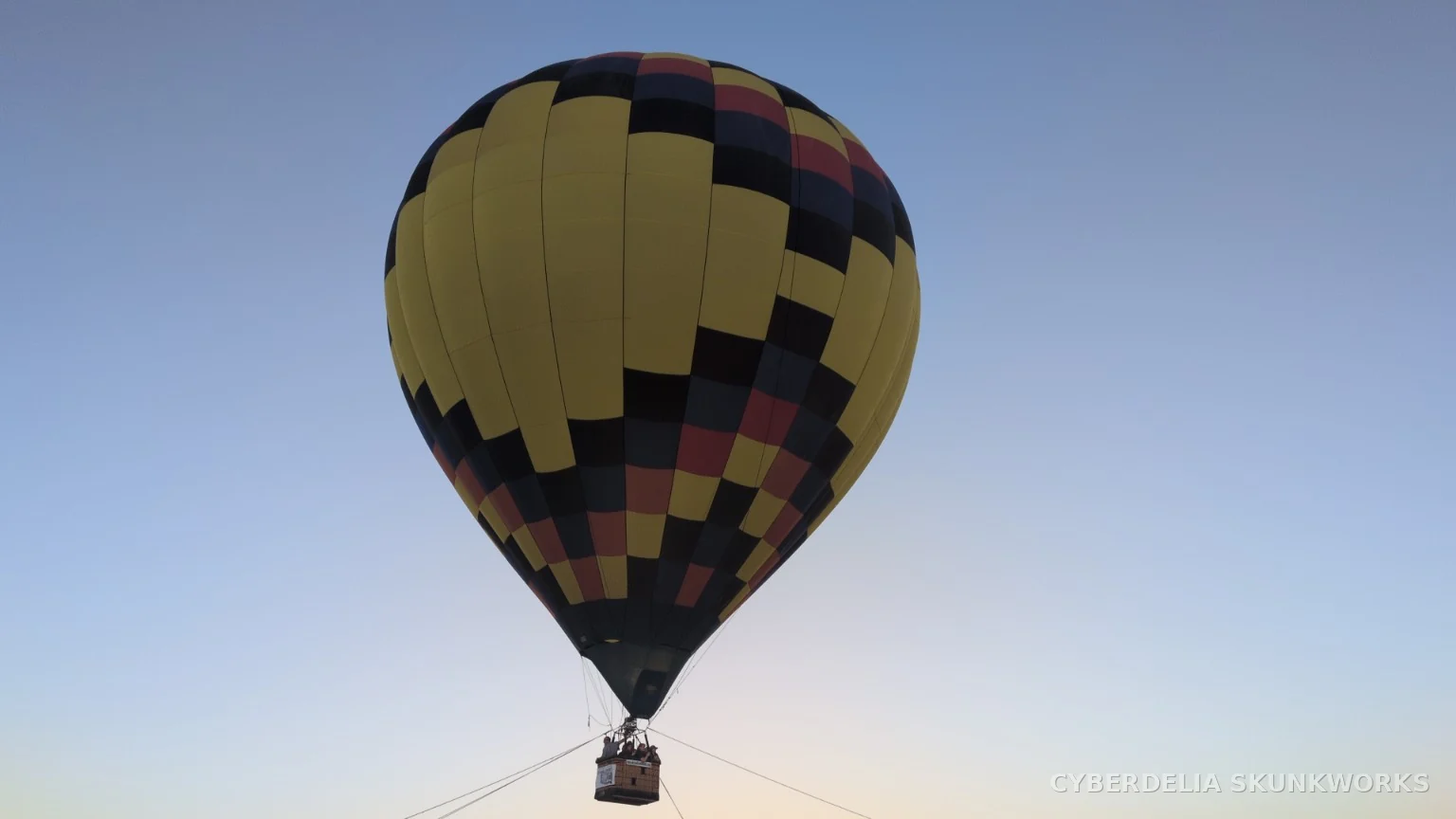
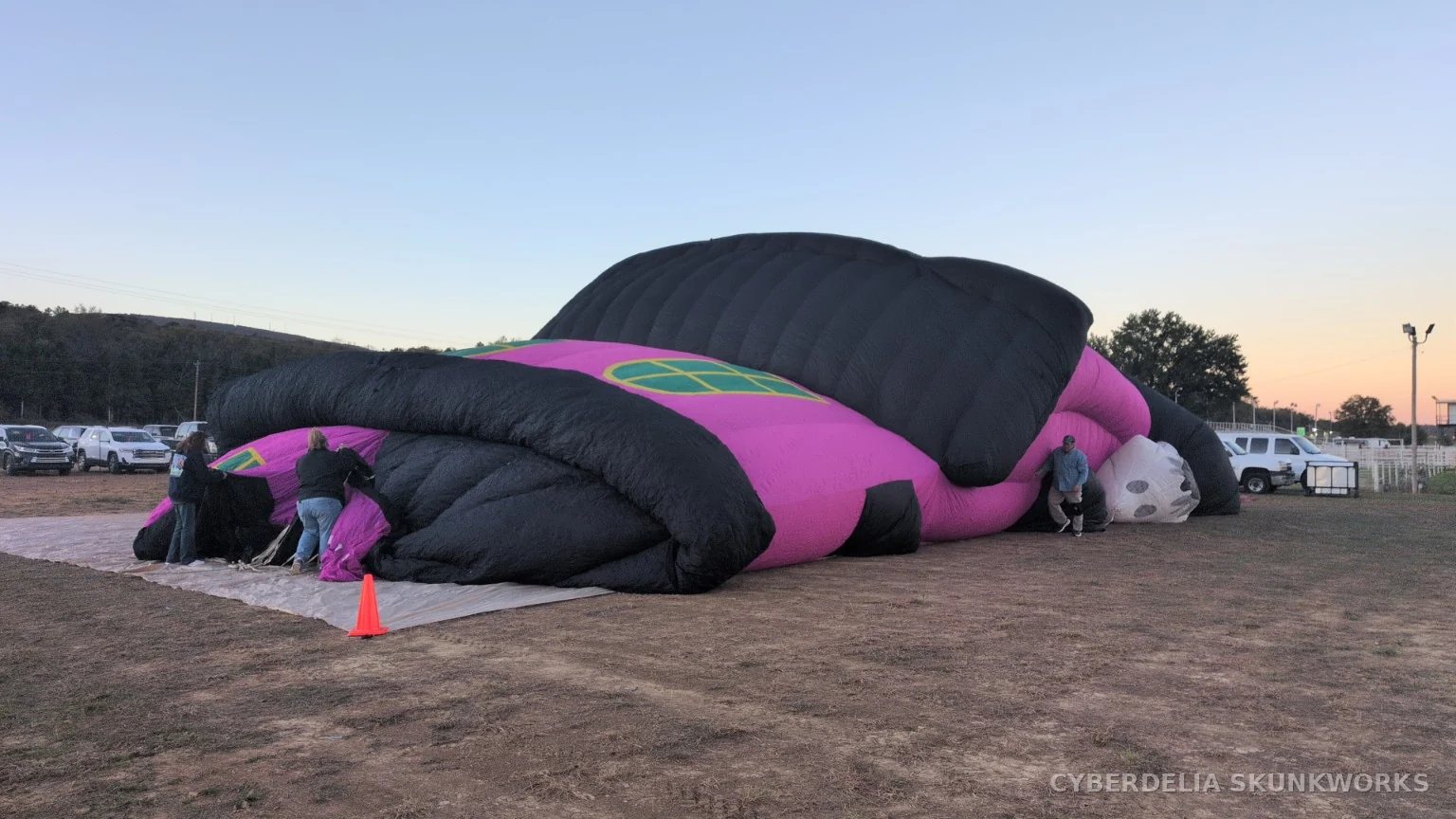
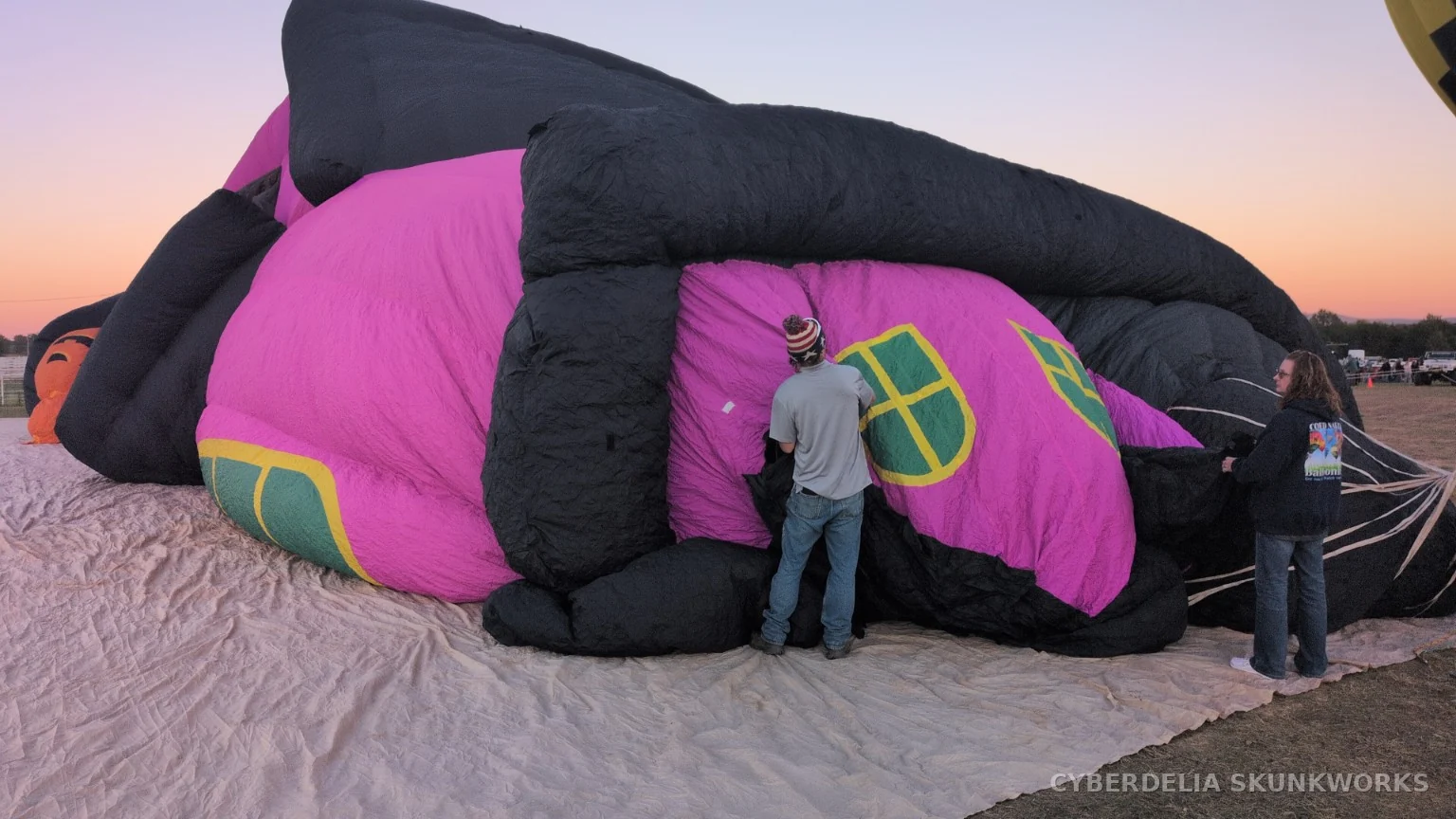
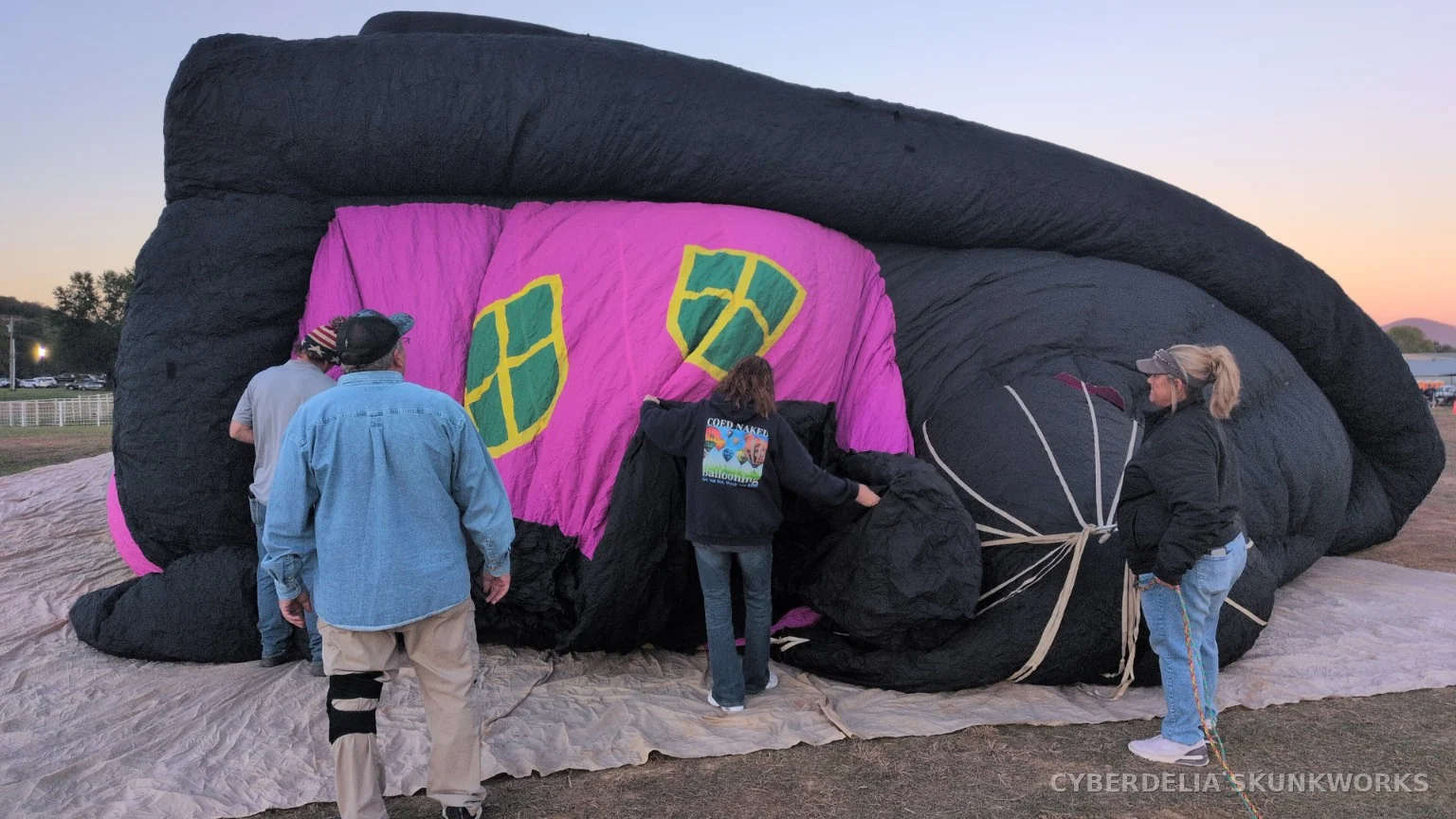
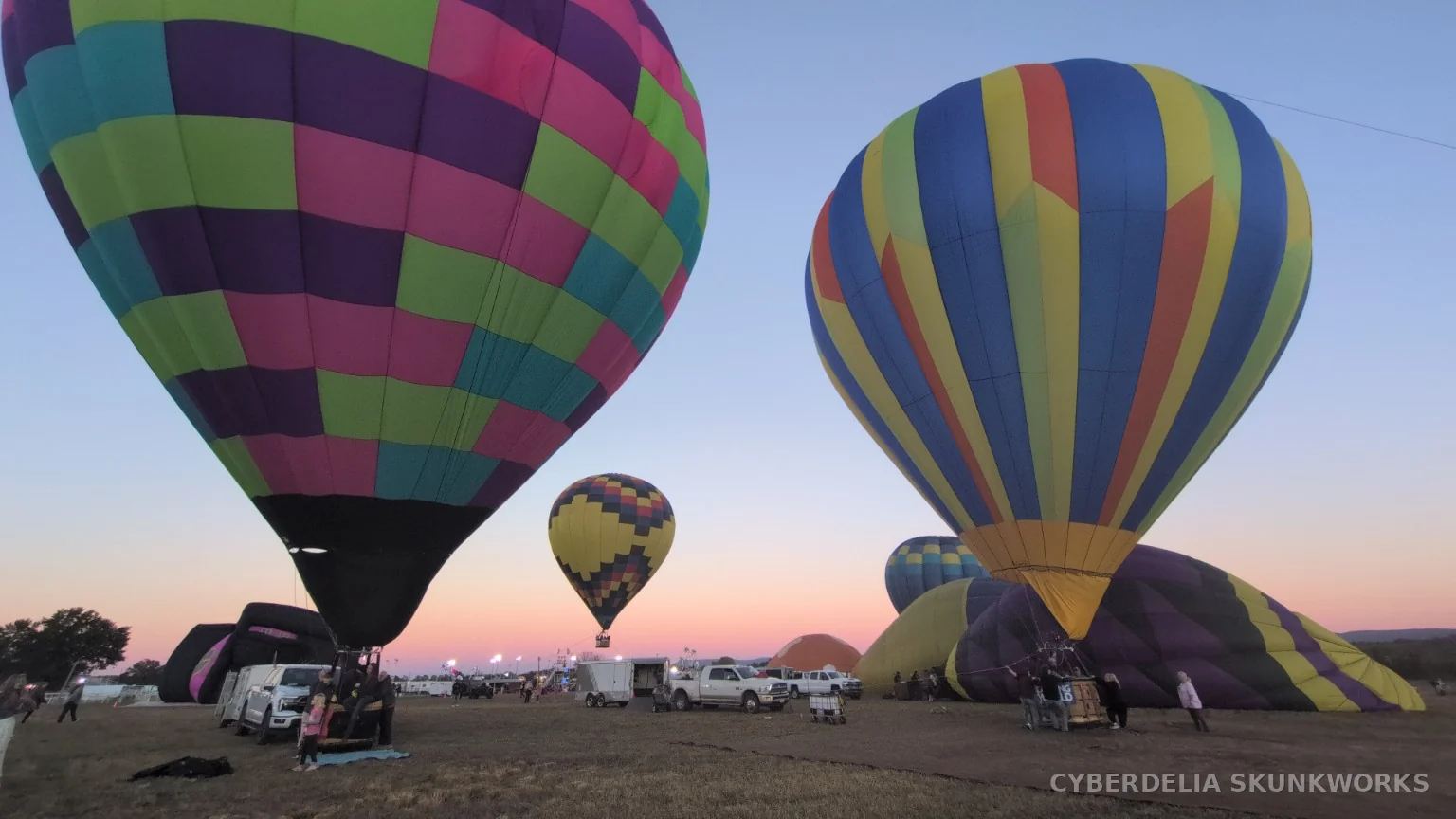
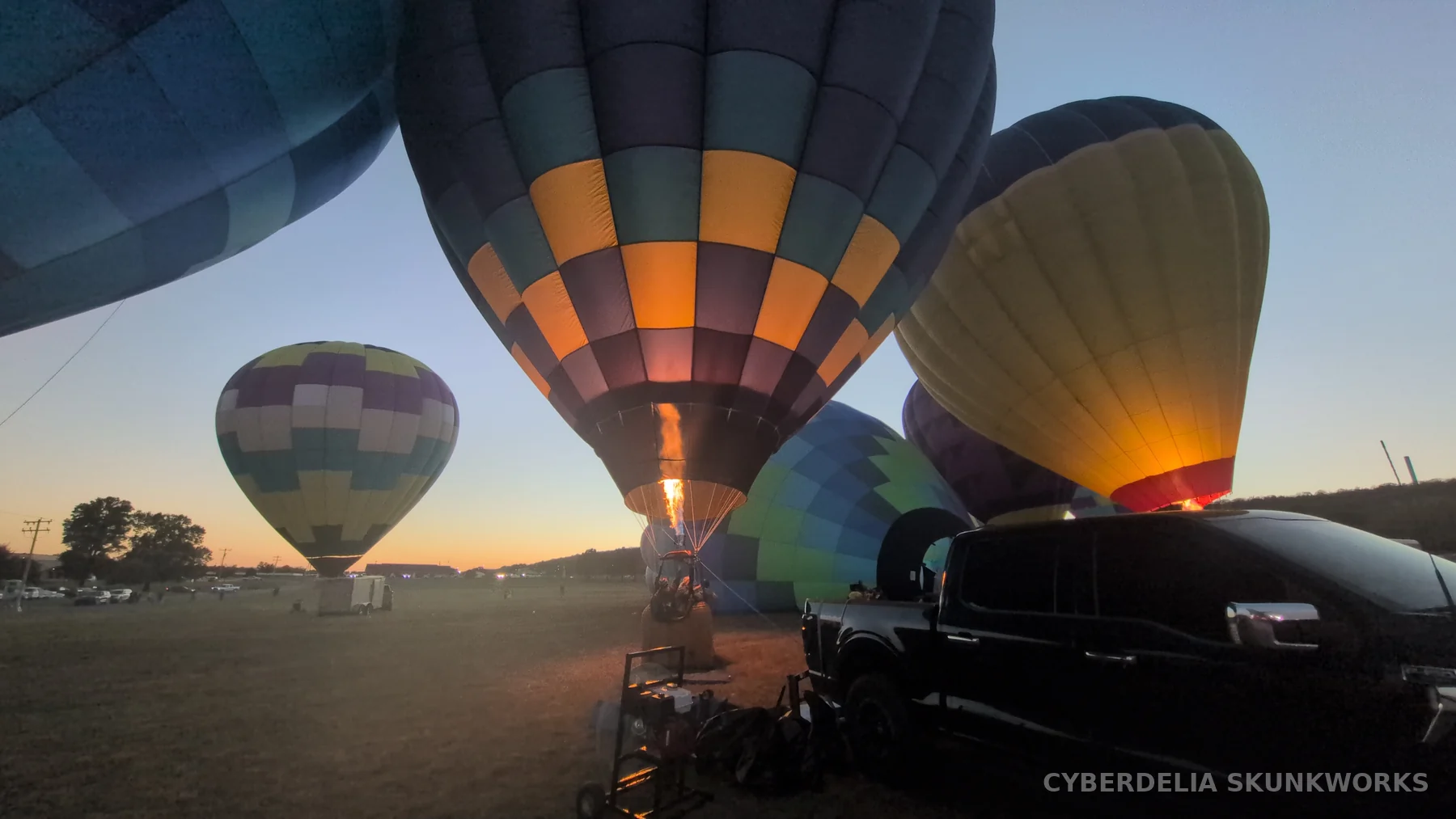
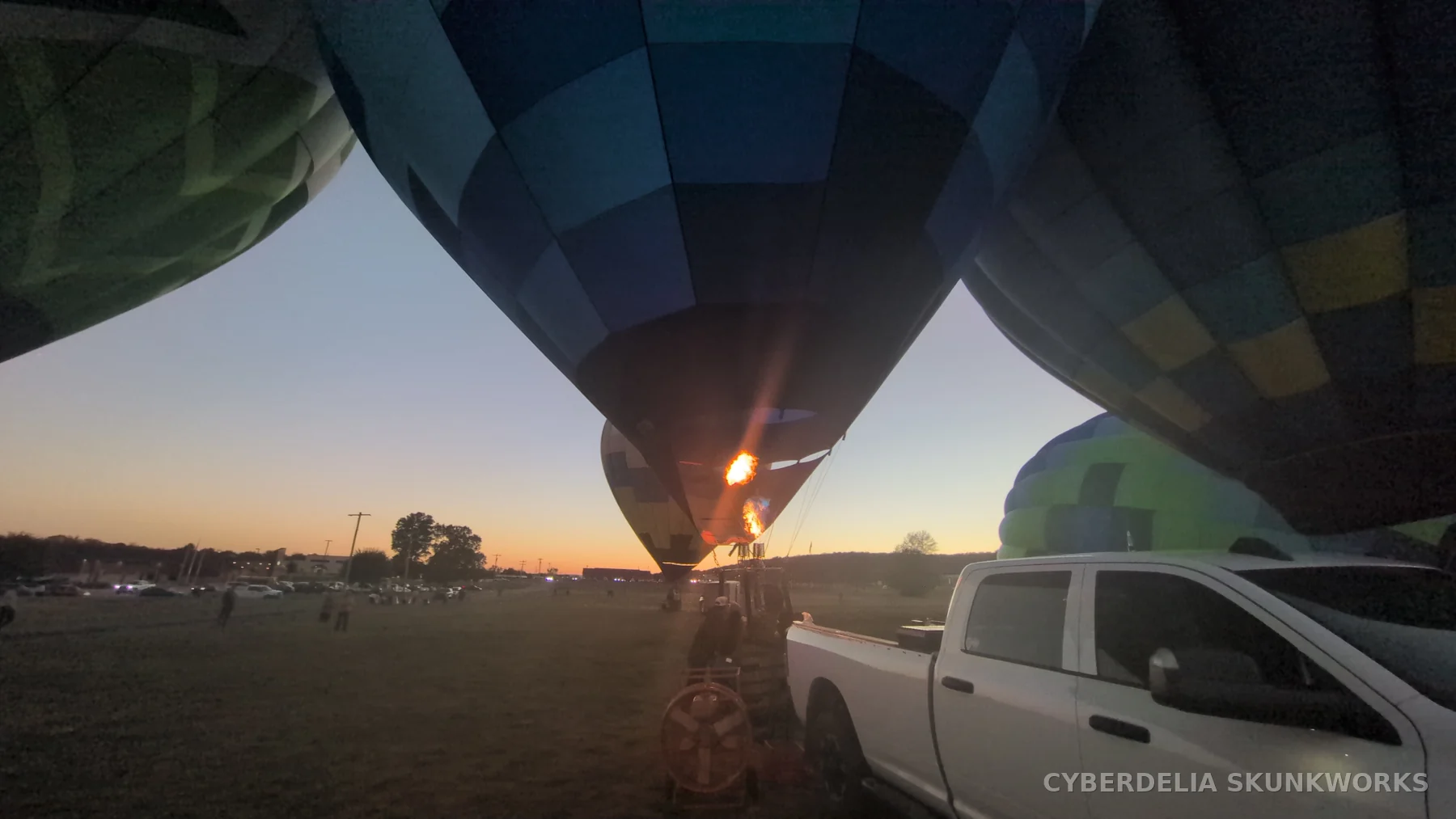
Large fabric envelopes rose into shape. Baskets sat beneath them while teams handled ropes, vehicles, burners, and other equipment. Trucks and trailers remained scattered across the field as the balloons took on their towering forms.
It was a reminder that even the most graceful-looking aircraft depends on people willing to perform the less glamorous work.
Every brilliant photograph of a balloon glowing against the sunset has an entirely different story happening below the frame.
Someone transported the equipment. Someone prepared the aircraft. Someone monitored the conditions. Someone operated the burner. Someone maintained the lines and ensured the area around the balloon remained controlled.
That unseen work is what makes the spectacle possible.
And when the burners fired, the engineering became part of the entertainment.
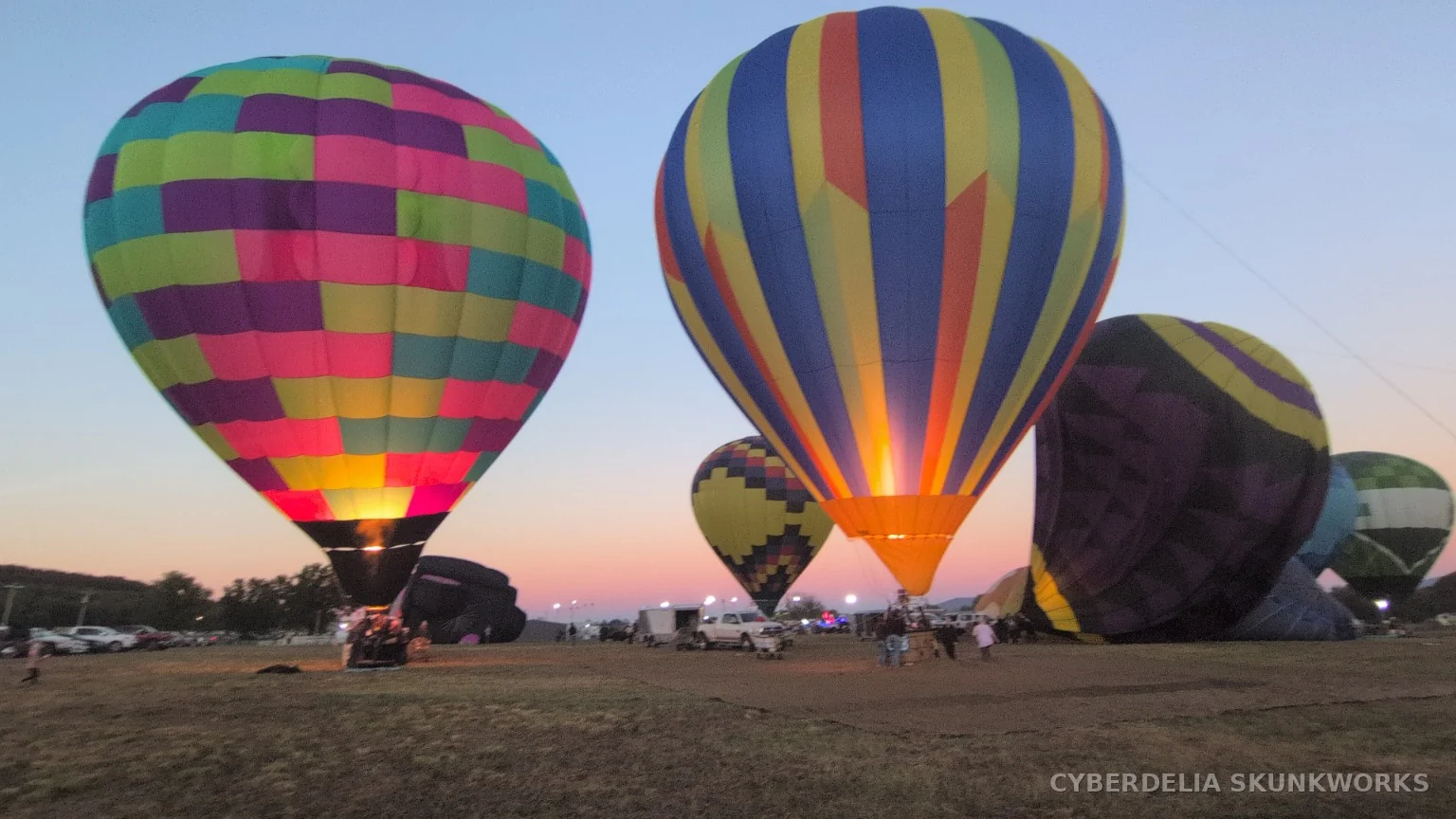
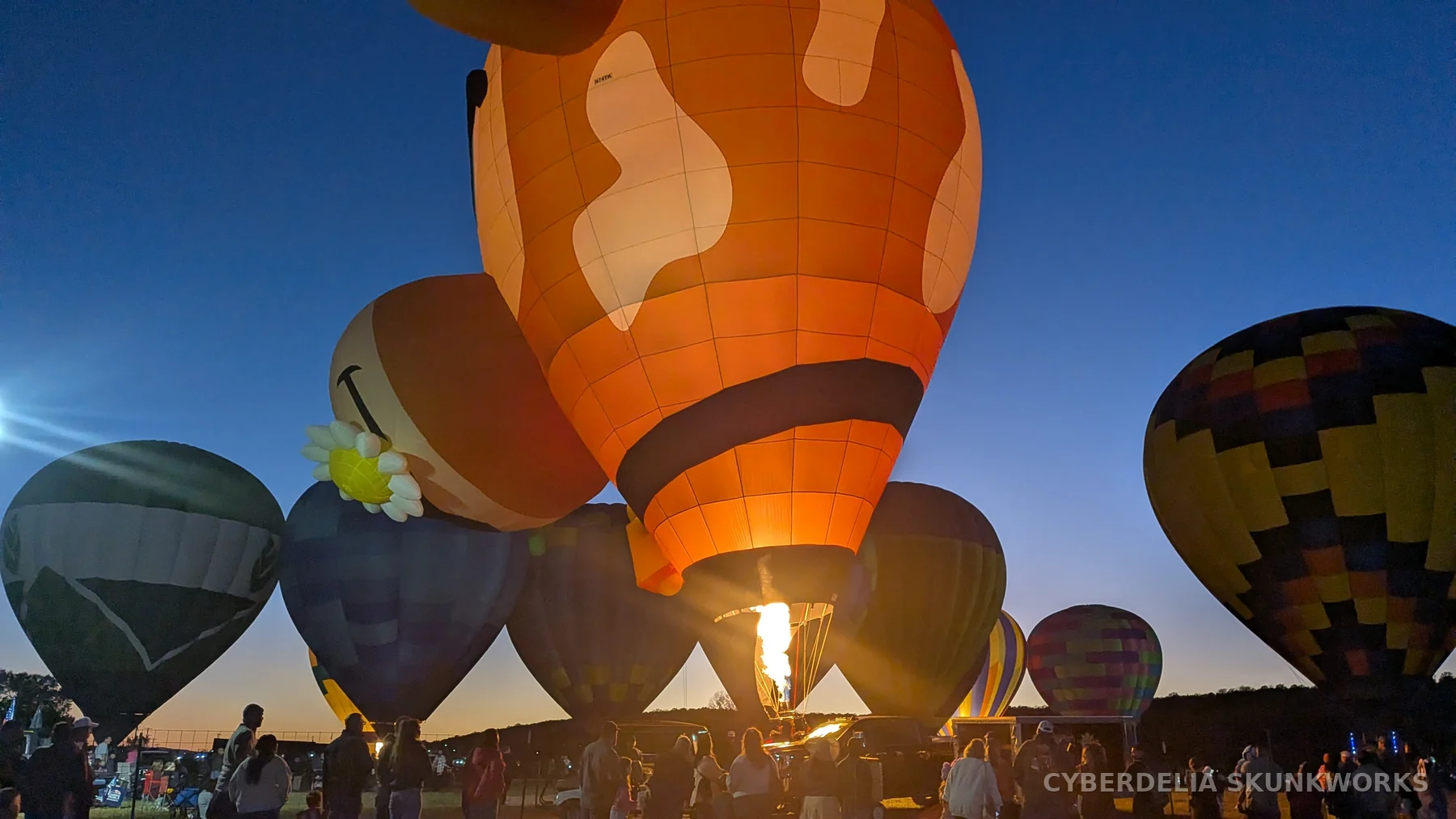
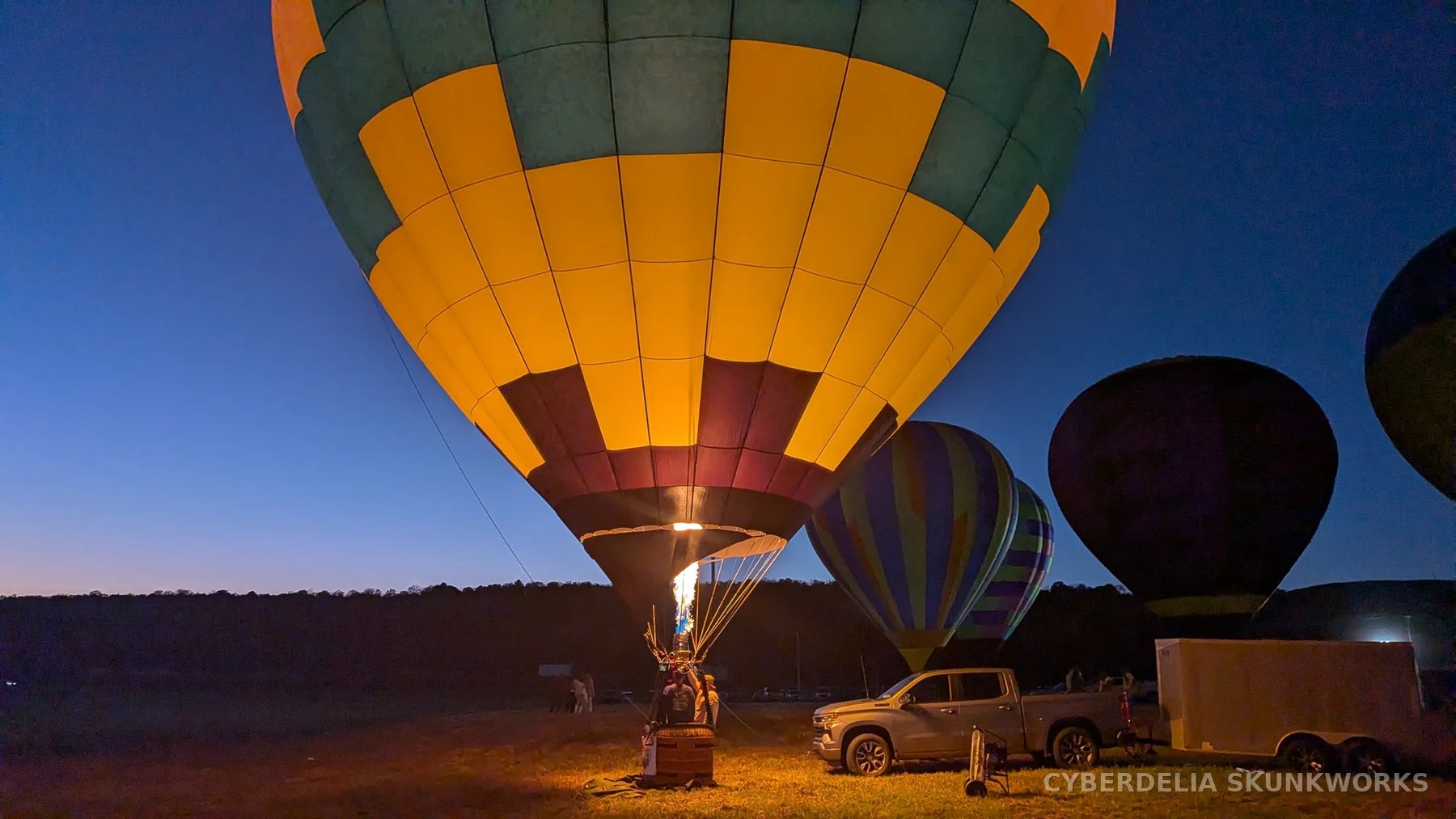
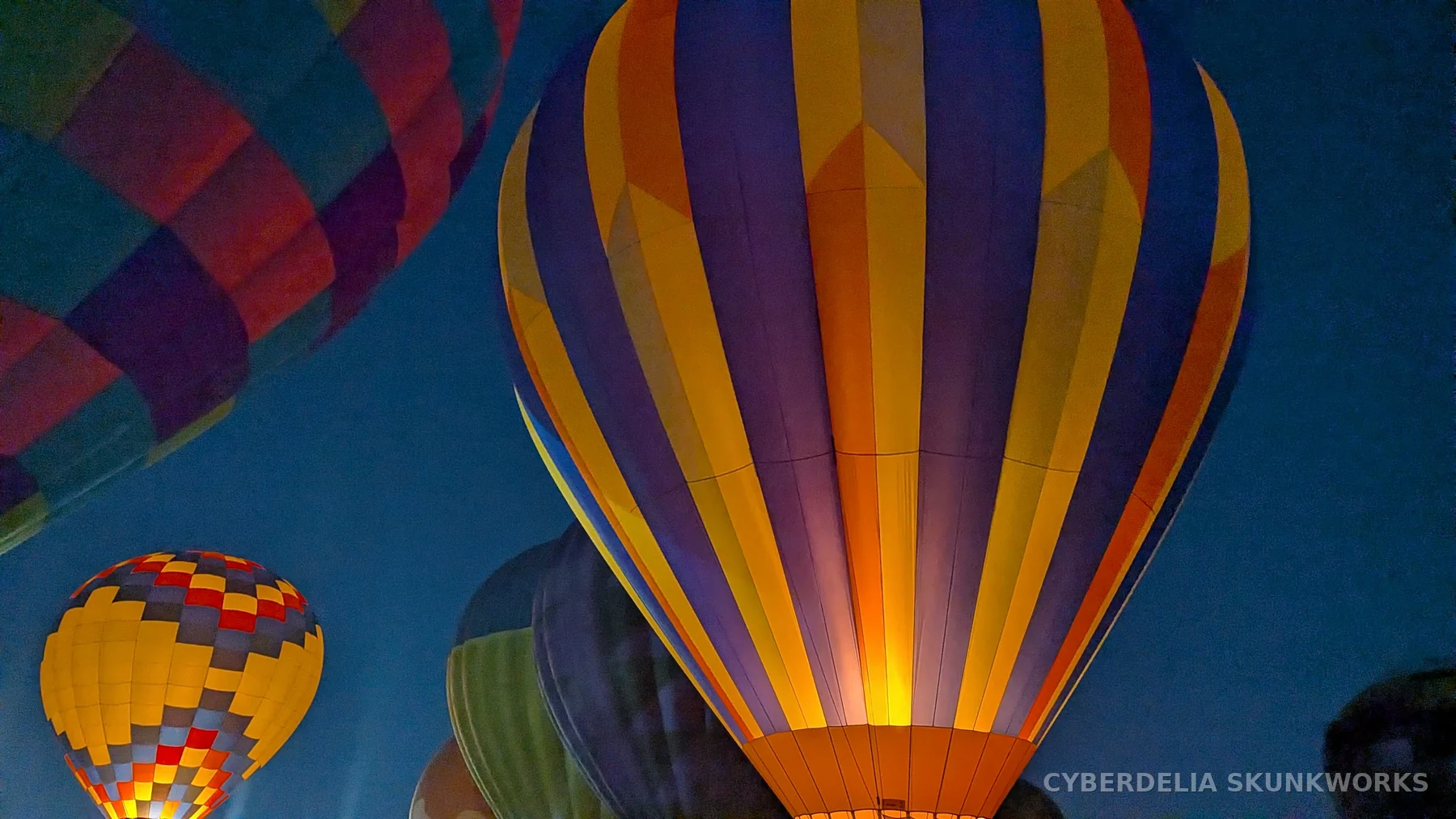
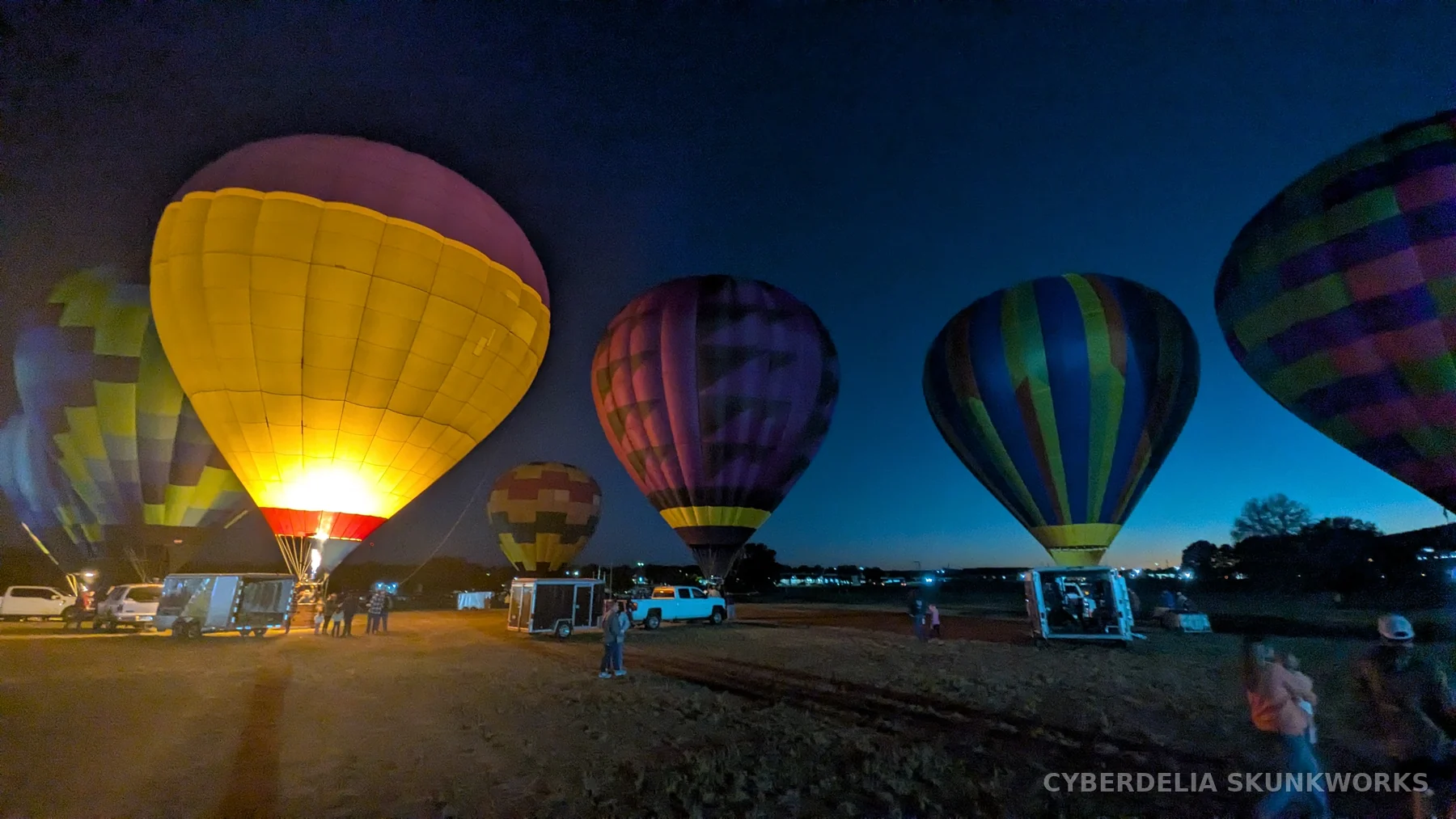
For a few seconds, the flames illuminated entire envelopes from within, revealing the individual fabric panels and the immense volume of the aircraft overhead. Bright orange light spread through reds, yellows, greens, blues, and purples.
Then the burner stopped, and the colors retreated into the darkness.
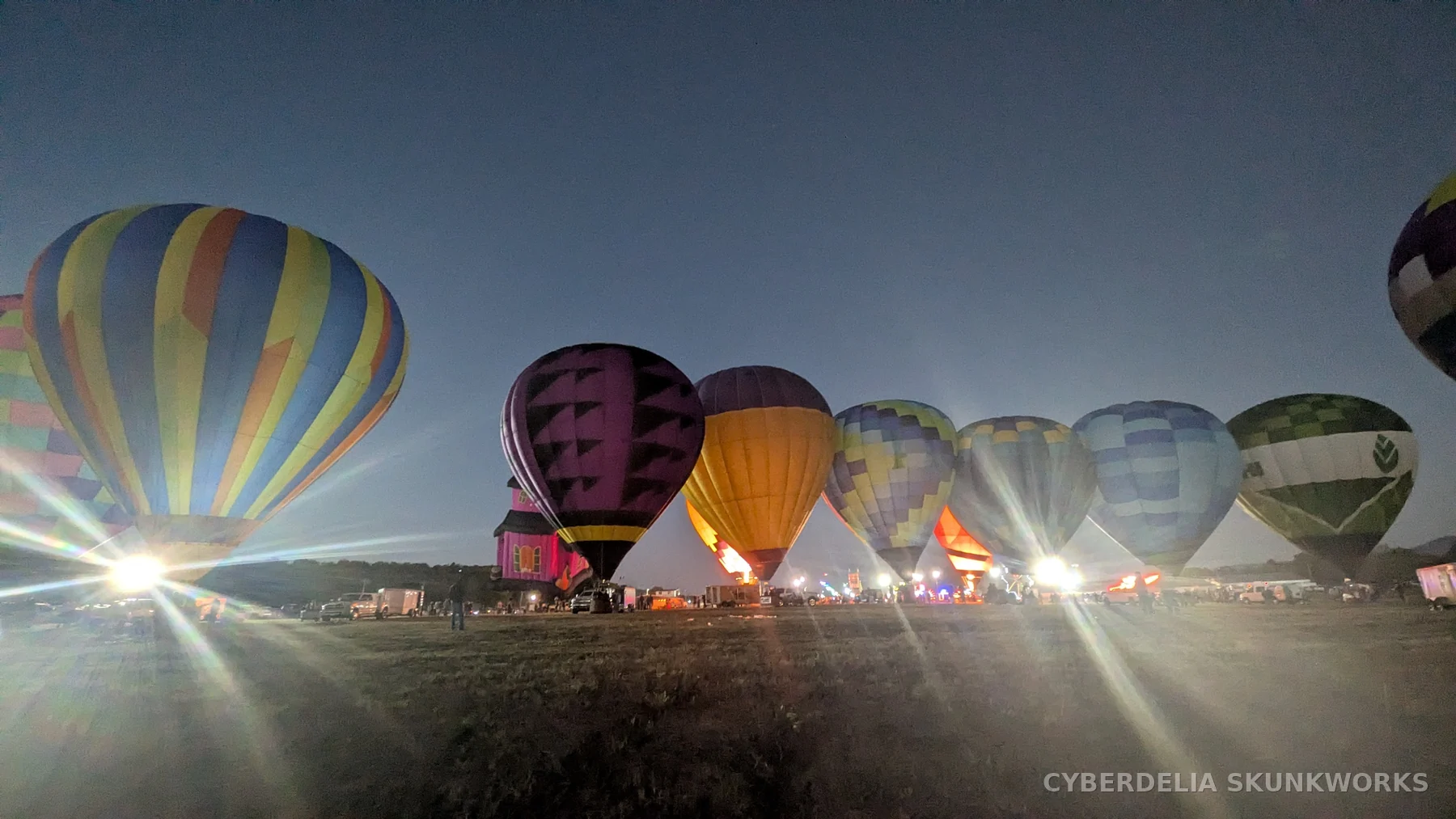
The effect repeated across the field, sometimes in succession, sometimes with several balloons glowing in the same view.
It was an extraordinary demonstration of a fundamental physical principle turned into something almost theatrical.
From Fabric to Aircraft
A Field Full of Color
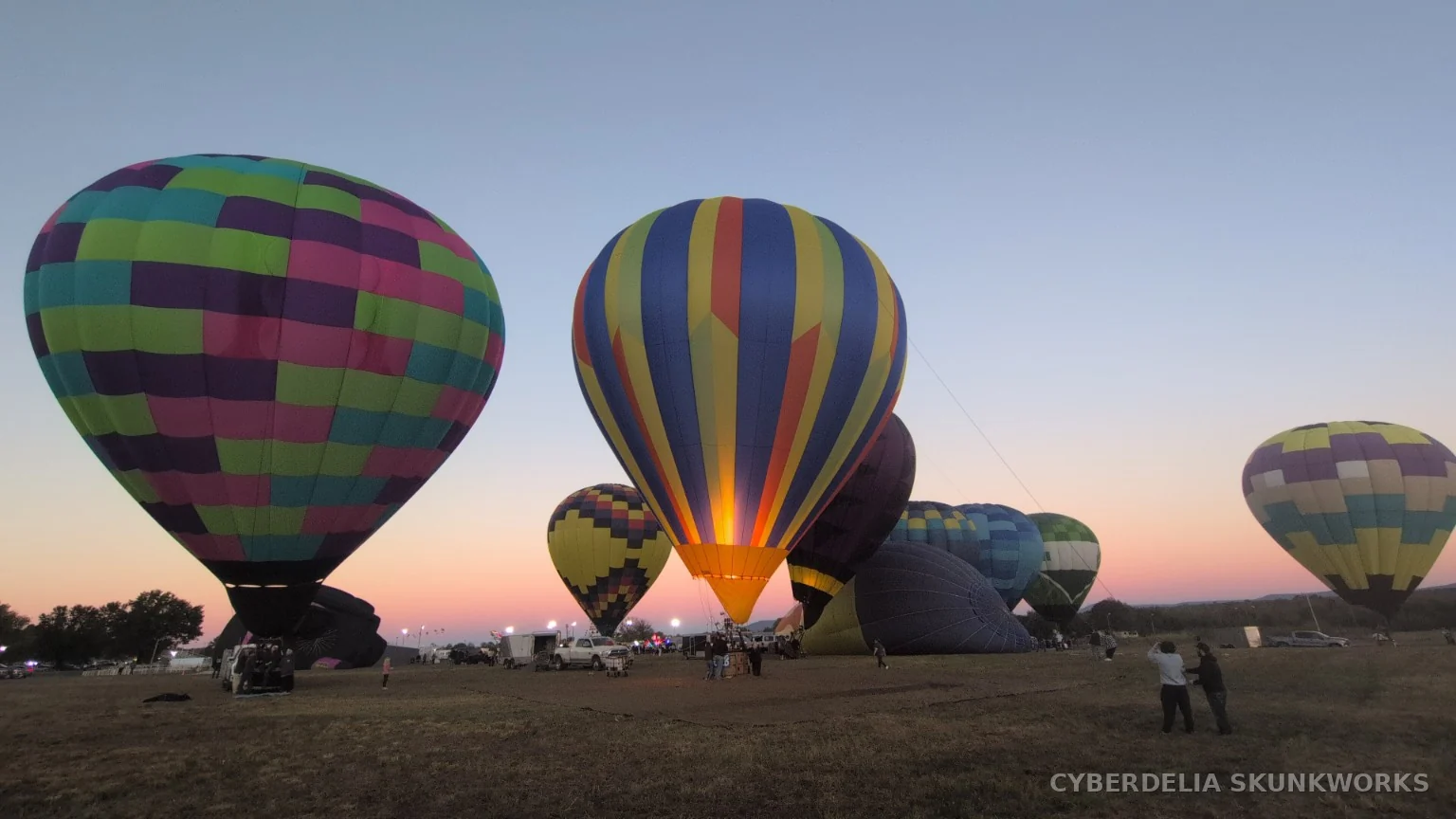
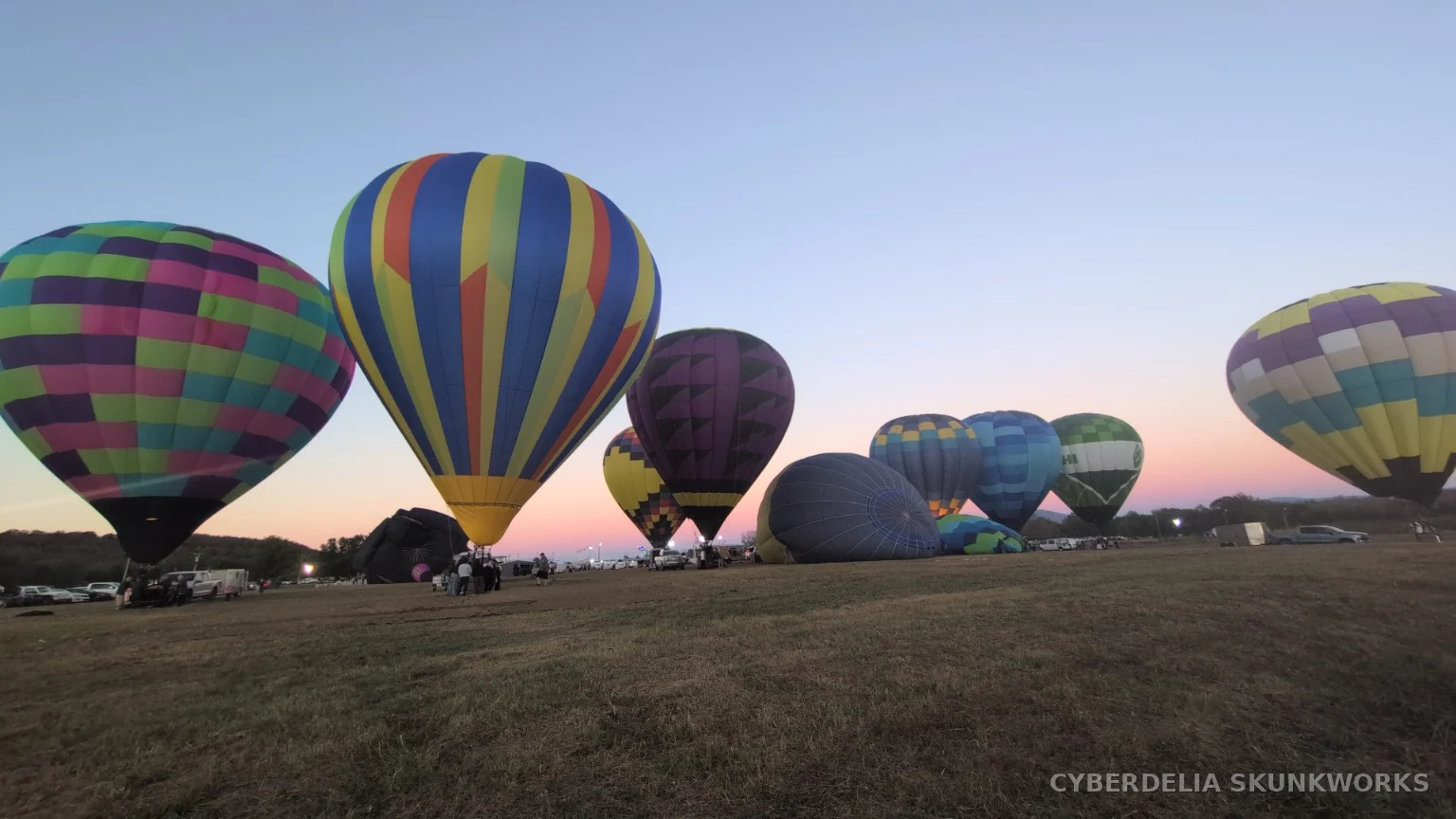
The visual scale of the event was difficult to appreciate until the balloons were standing together.
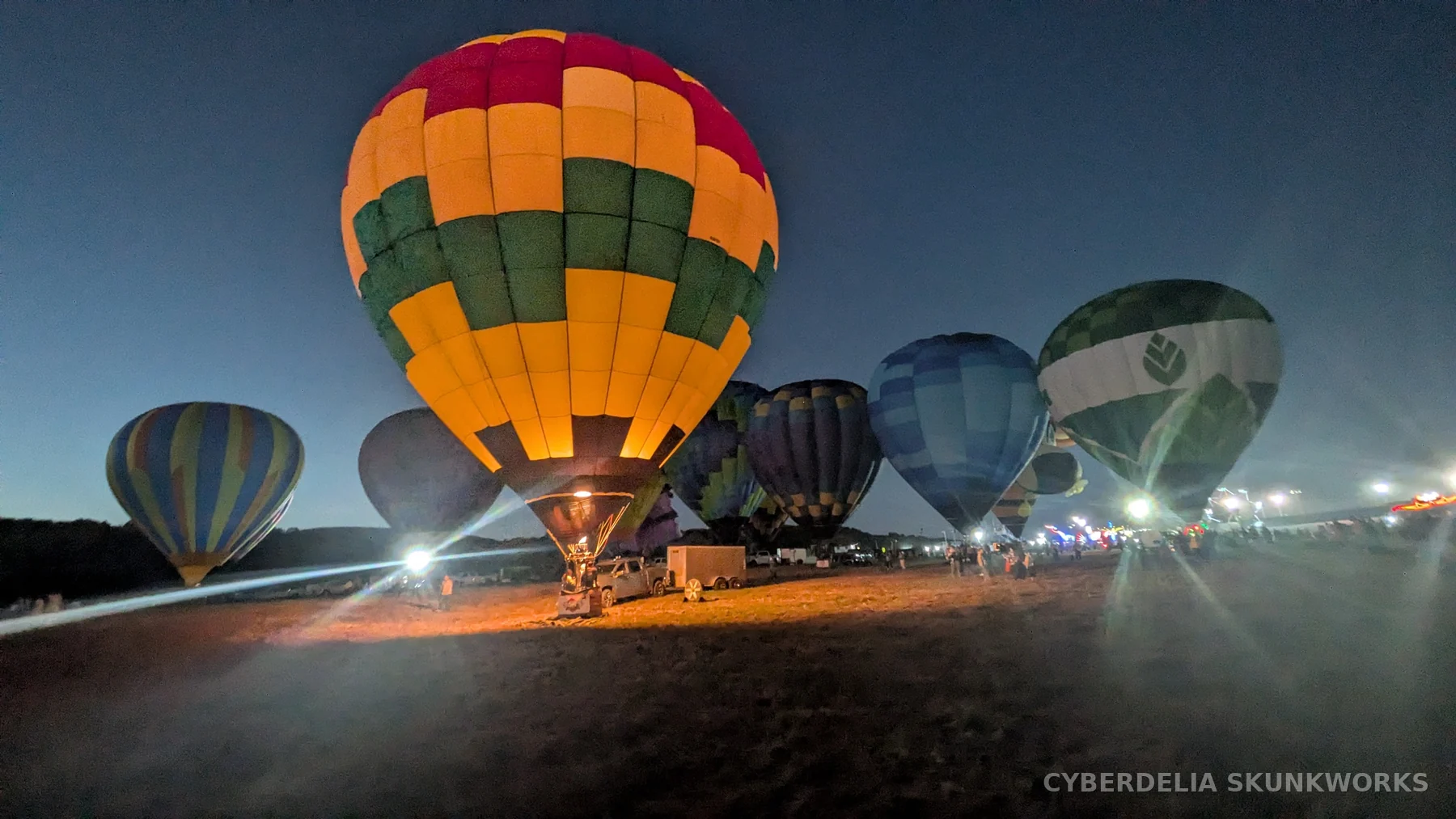
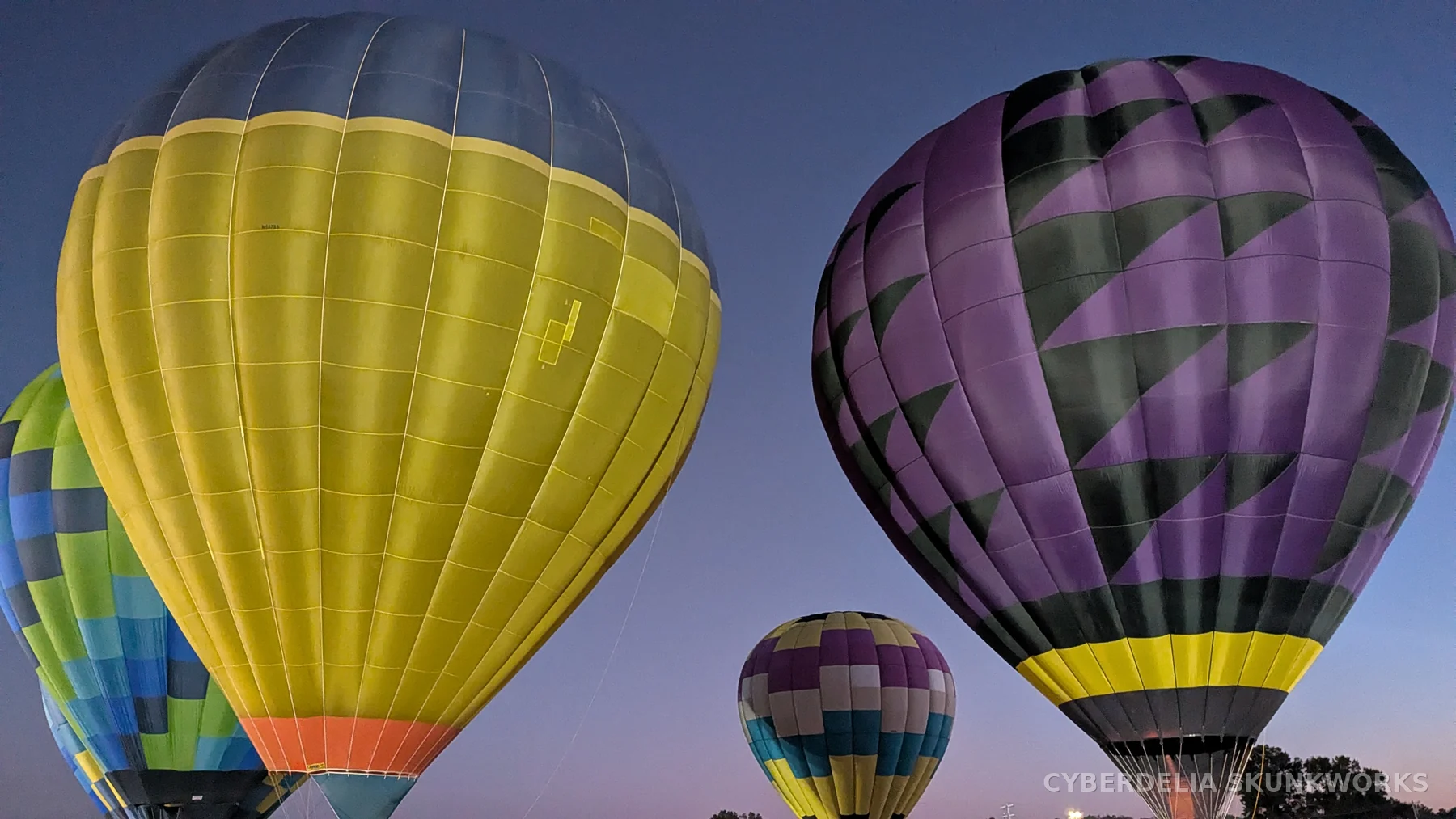
Some displayed broad vertical stripes. Others featured intricate geometric patterns, checkerboards, or repeating blocks of color. Several appeared almost completely different as the light changed, their surfaces shifting from muted fabric to luminous architecture whenever a burner fired.
And then there were the special shapes.
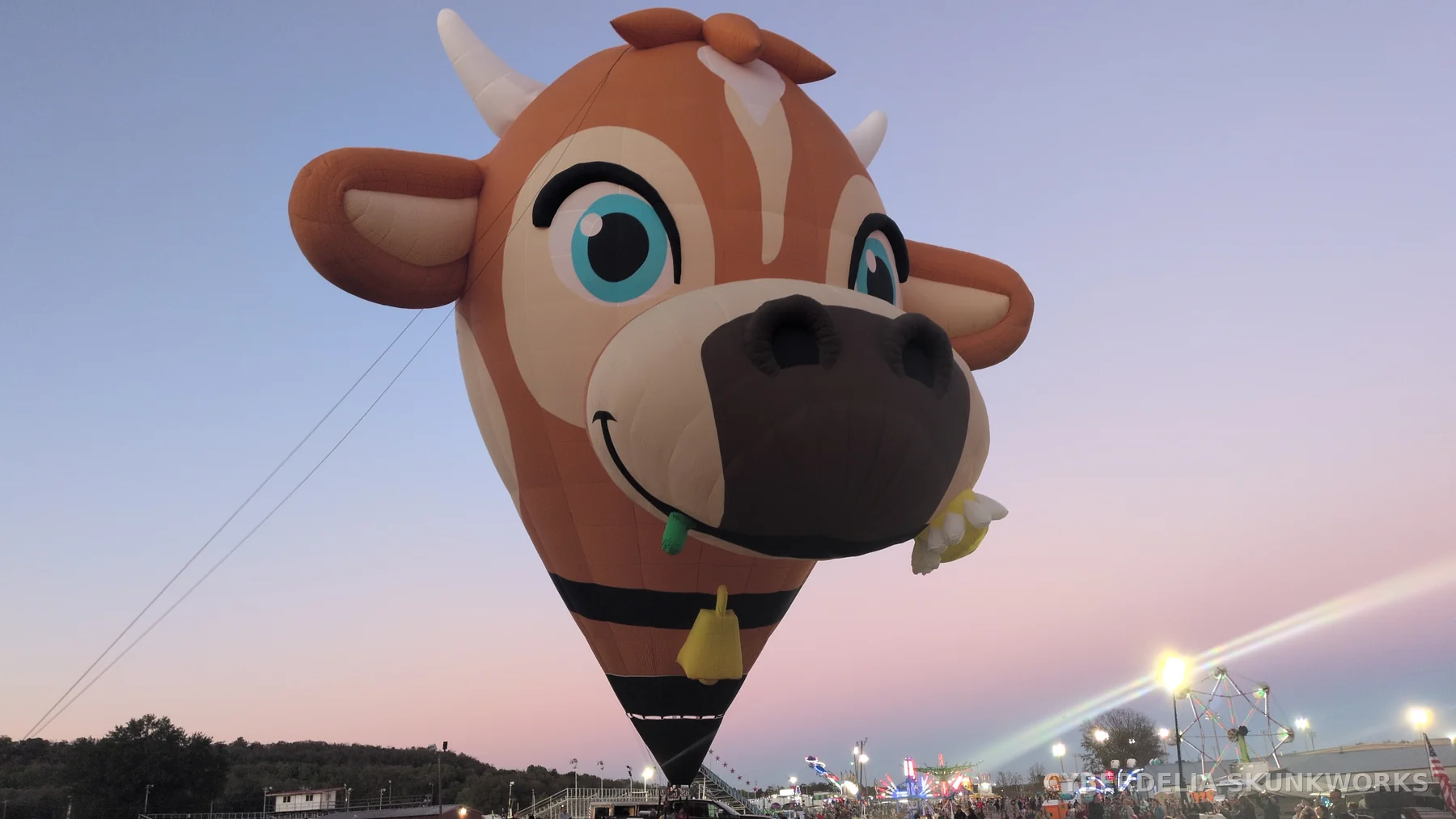
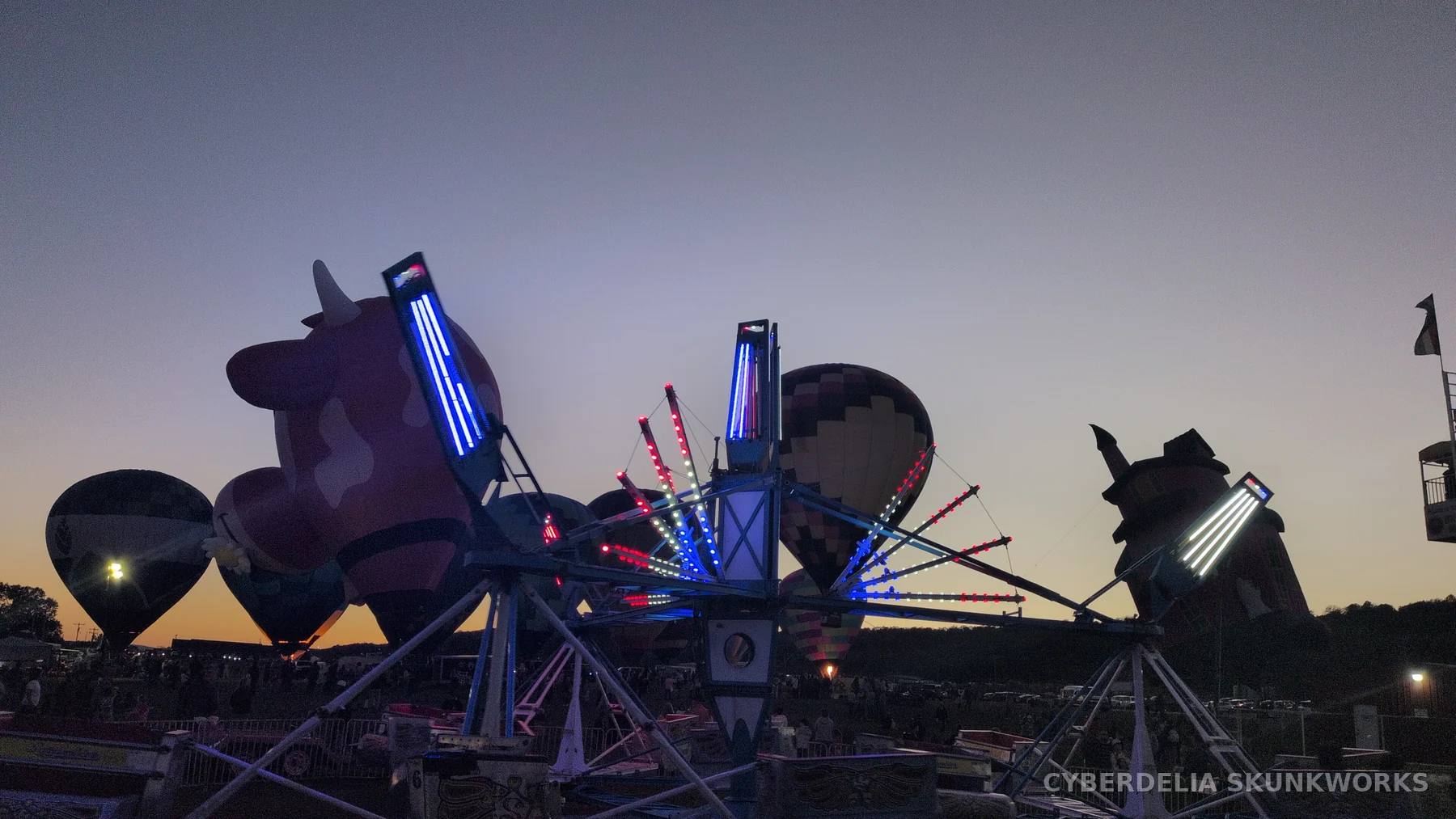
Among the most memorable was an enormous cow-themed balloon, its oversized ears and distinctive markings making it unmistakable against the other envelopes.
Around the Cyberdelia field desk, it acquired a suitably dignified nickname: Moobies.
It wasn't exactly an official aeronautical designation.
But when a giant inflatable cow towers over a festival and begins glowing like an enormous orange lantern, conventional naming practices seem unnecessarily restrictive.
The special-shape balloons also demonstrate a fascinating aspect of lighter-than-air engineering.
Standard balloon envelopes generally favor rounded forms that contain large volumes of heated air efficiently. Novelty shapes introduce additional geometric challenges while preserving the fundamental requirements of lift, structural integrity, and safe operation.
The result is a category of aircraft in which engineering and artistic design are inseparable.
The same principles that allow a conventional striped balloon to float can support a creation resembling an animal, a building, or something out of an animated film.
At ground level, the technology remains reassuringly mechanical.
Fabric. Fuel. Heat. Air. Human judgment.
Sometimes that is all it takes to turn a field into something unforgettable.
A Field Full of Color
Medieval Steel in an Age of Drones
While aircraft dominated the evening skyline, one of BalloonFest's more unusual attractions was operating much closer to the ground.
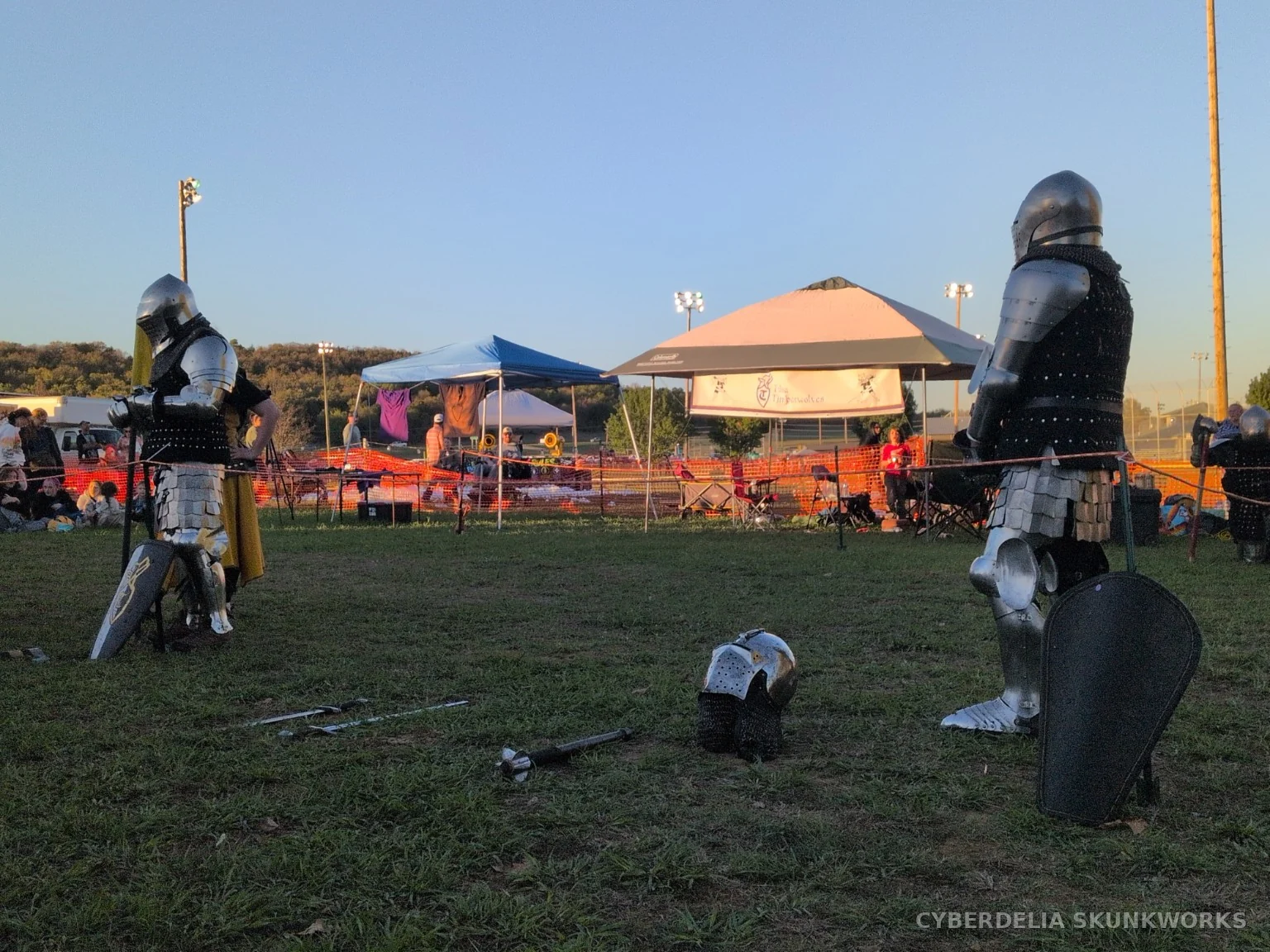
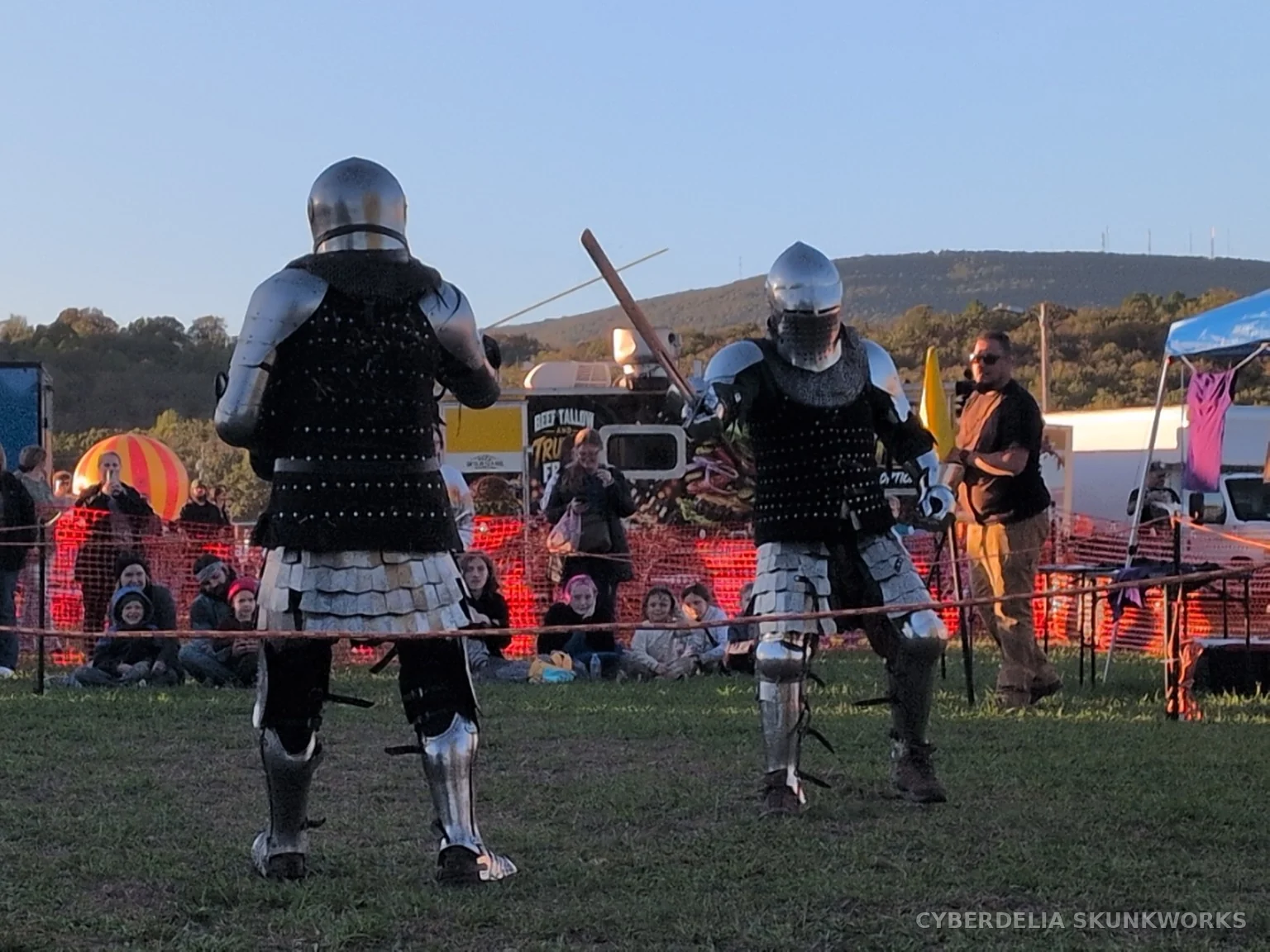
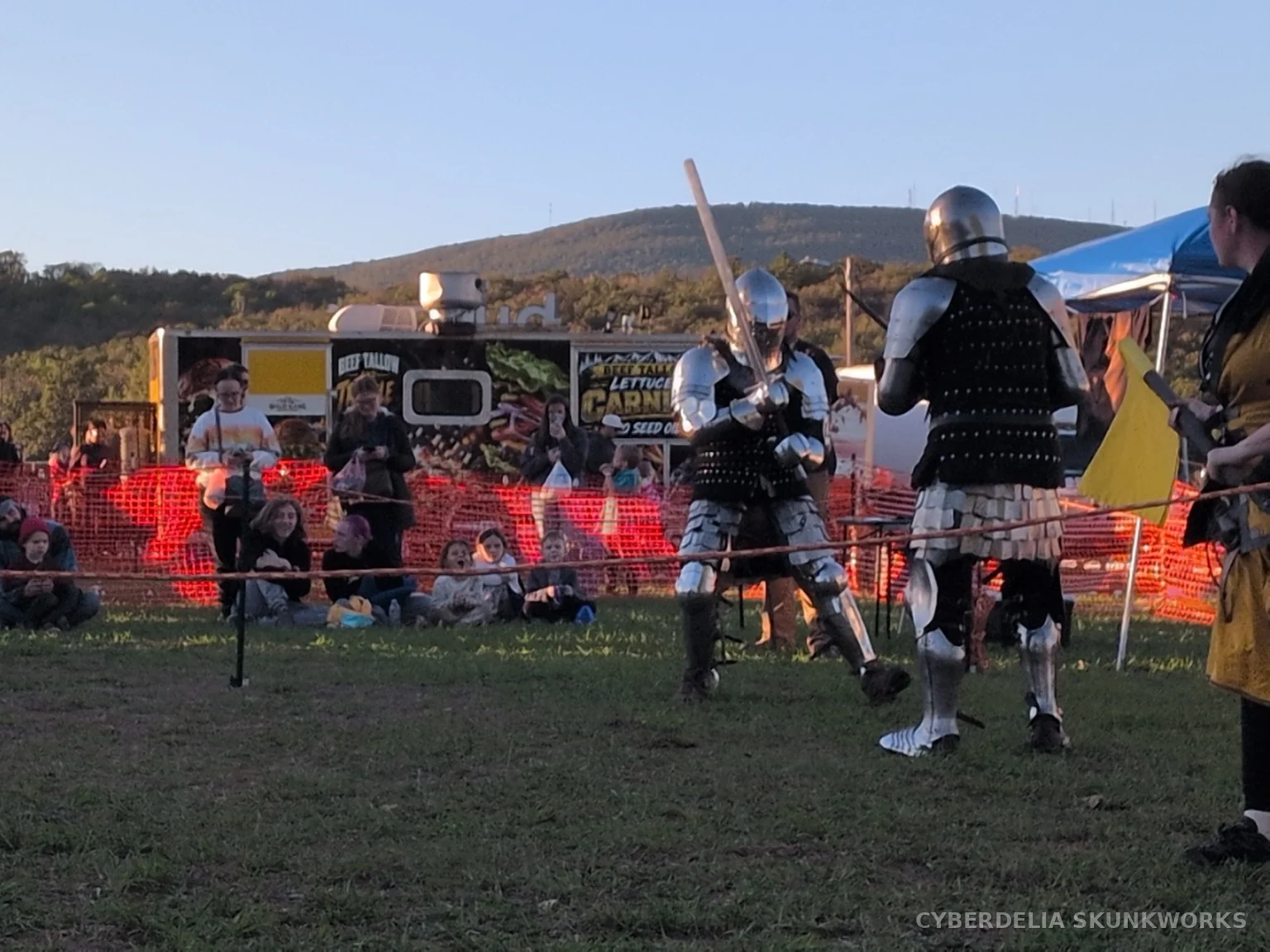
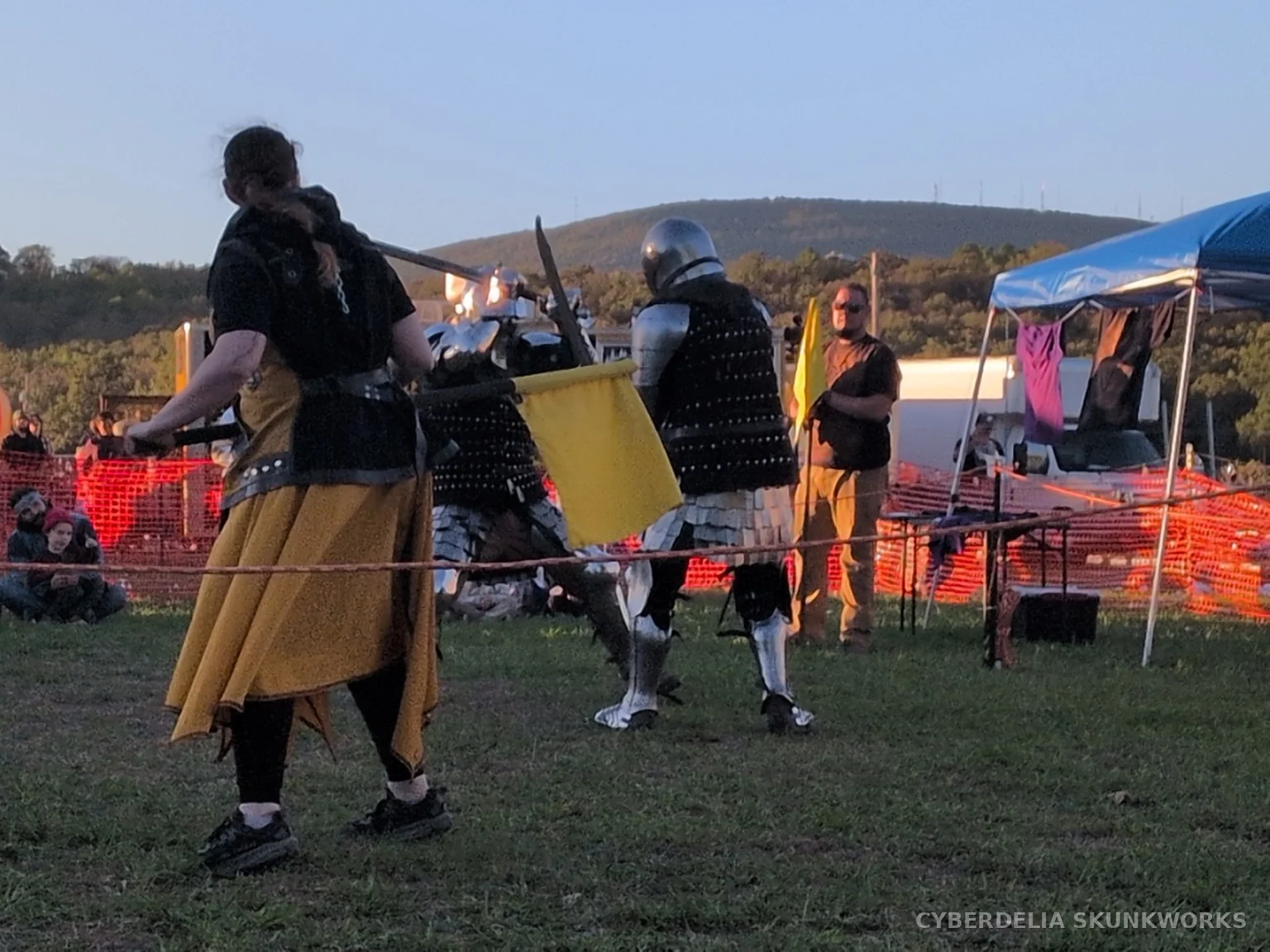
The Tulsa Tyrants, an Oklahoma armored combat team, brought an entirely different kind of spectacle to the festival.
Here, the visual language wasn't colorful fabric and glowing burners. It was armor, helmets, shields, and medieval-inspired weapons.
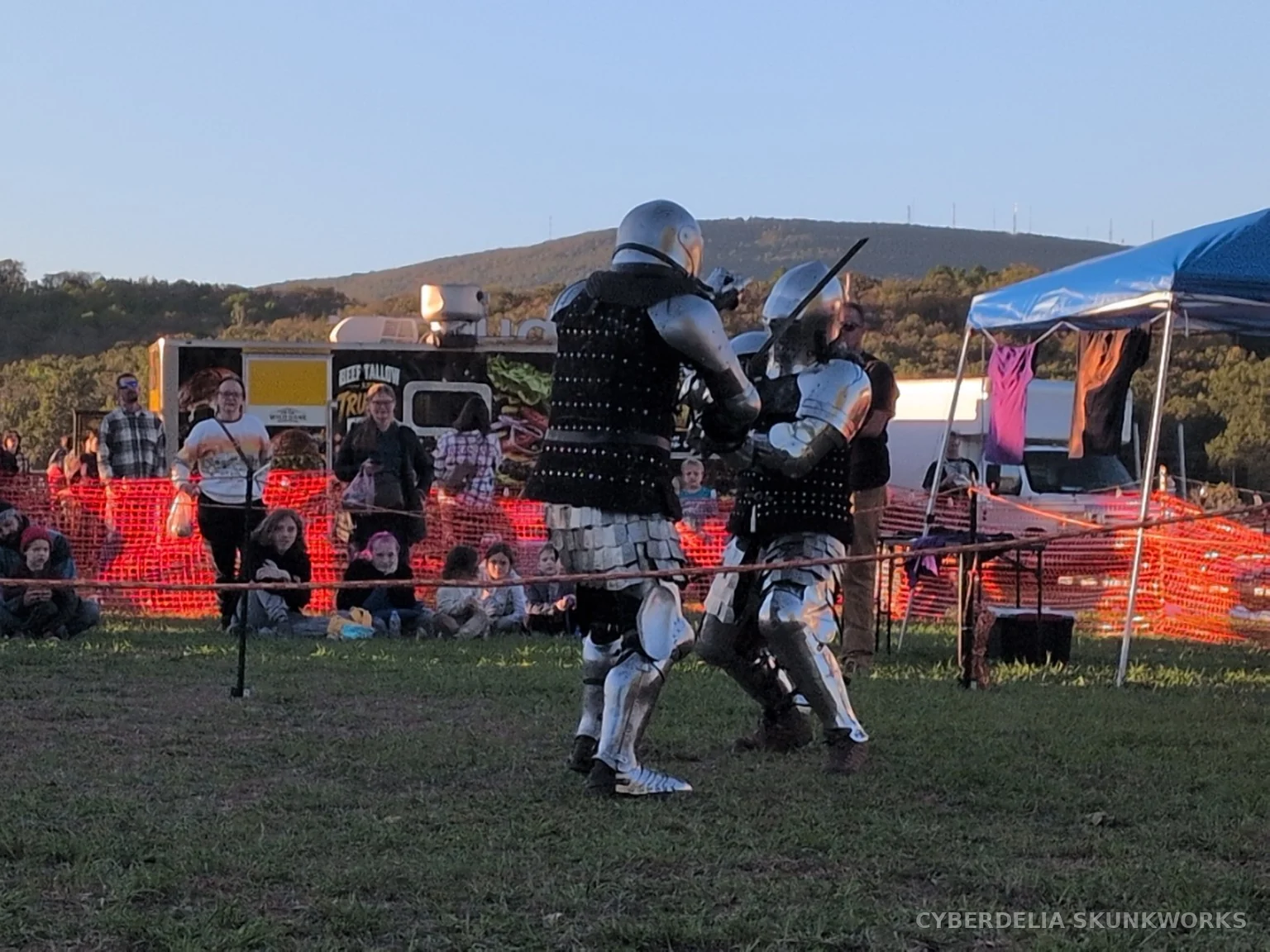
Armored combat is a modern competitive activity built around historical fighting equipment and close physical engagement. Participants wear protective armor and compete under organized rules using appropriate blunted weapons.
The resemblance to medieval warfare is unmistakable, although modern competition is conducted within structured sporting and safety requirements.
At Poteau, the demonstrations offered spectators an opportunity to see something usually encountered through historical documentaries, fantasy films, or video games.
But watching armored fighters move is considerably more revealing than watching a carefully edited cinematic battle.
Armor changes the mechanics of movement.
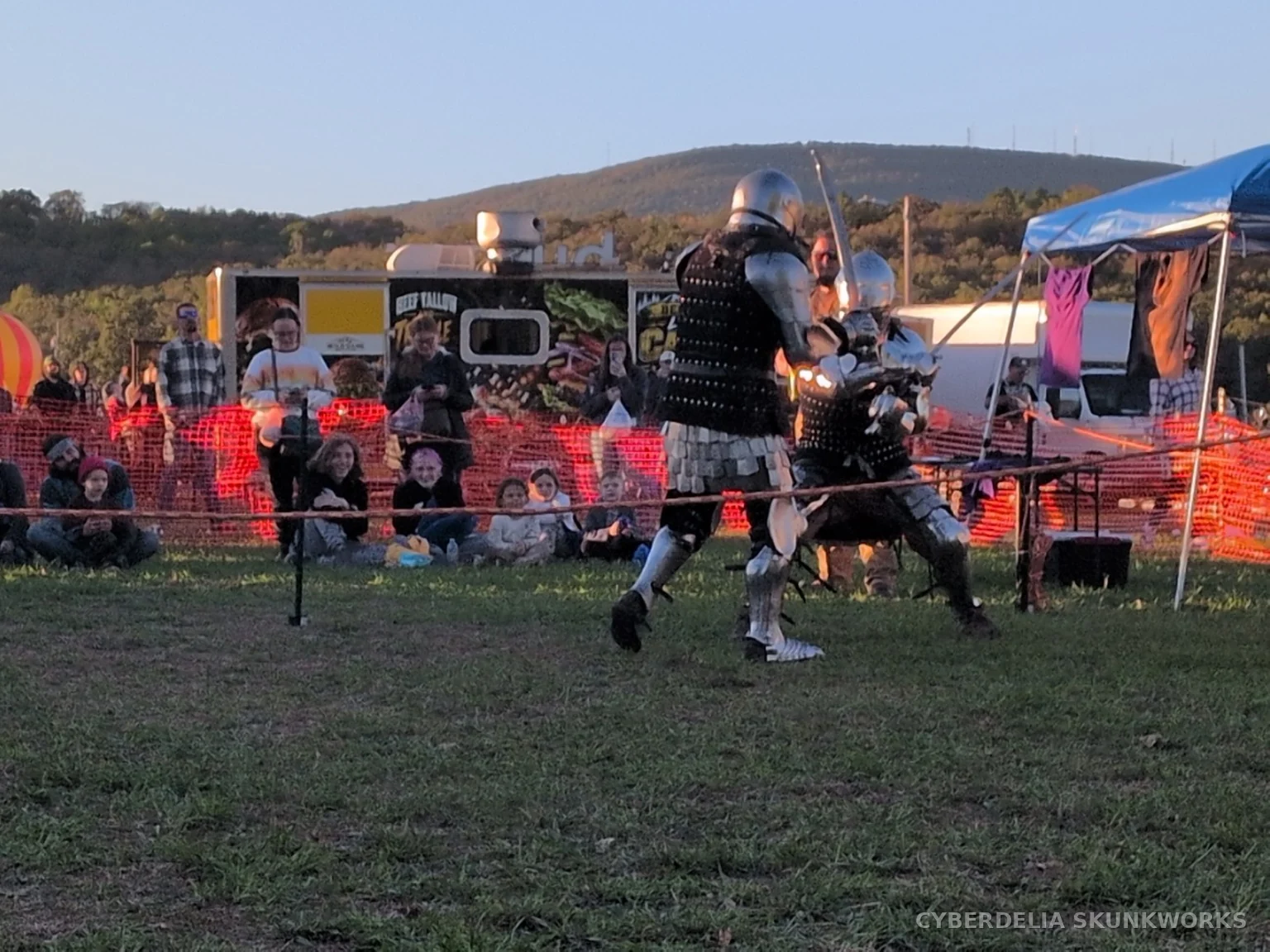
Weight must be managed. Balance matters. Visibility and mobility are constrained by equipment. Exchanges depend on distance, positioning, timing, endurance, and the ability to operate effectively while carrying protective gear.
It is a striking contrast to the technology dominating modern defense systems.
At Cyberdelia, we regularly examine robotics, autonomous platforms, drones, sophisticated sensors, and the changing relationship between machines and human operators.
Yet here was a group demonstrating a very old solution to a familiar engineering problem: how to protect a human body while allowing it to remain mobile and effective.
The materials and manufacturing methods have evolved, but the underlying trade-offs remain remarkably recognizable.
Protection has weight.
Mobility has limits.
And even with excellent equipment, the person operating it must know what they're doing.
The Tulsa Tyrants provided something more valuable than a novelty attraction.
They offered a practical reminder that technology never entirely separates itself from human movement.
The Tulsa Tyrants in Steel
When the Circus Arrived
The evening's entertainment wasn't limited to mechanical attractions or armored competition.
Inspyral Circus brought another dimension to the festival.
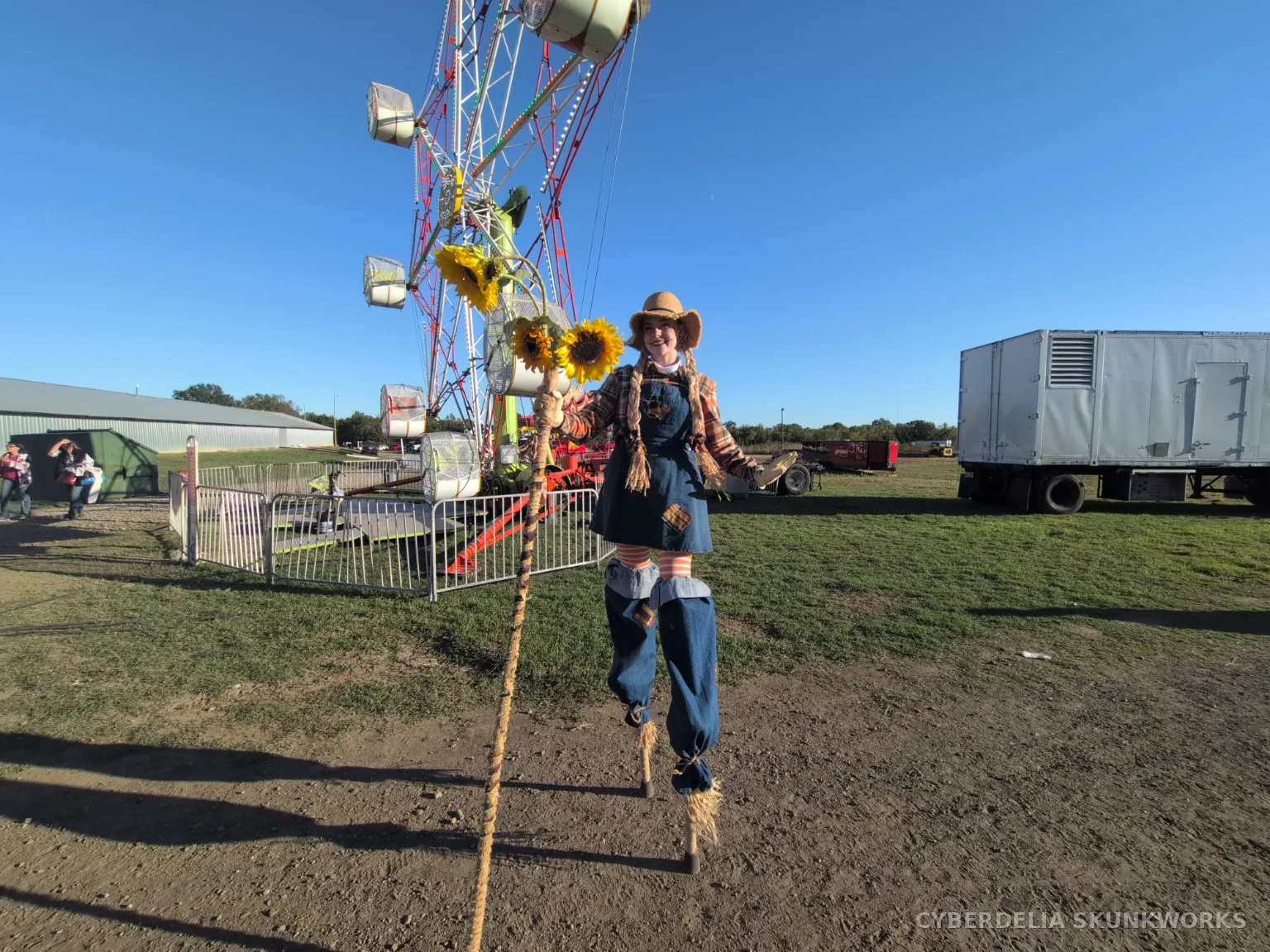
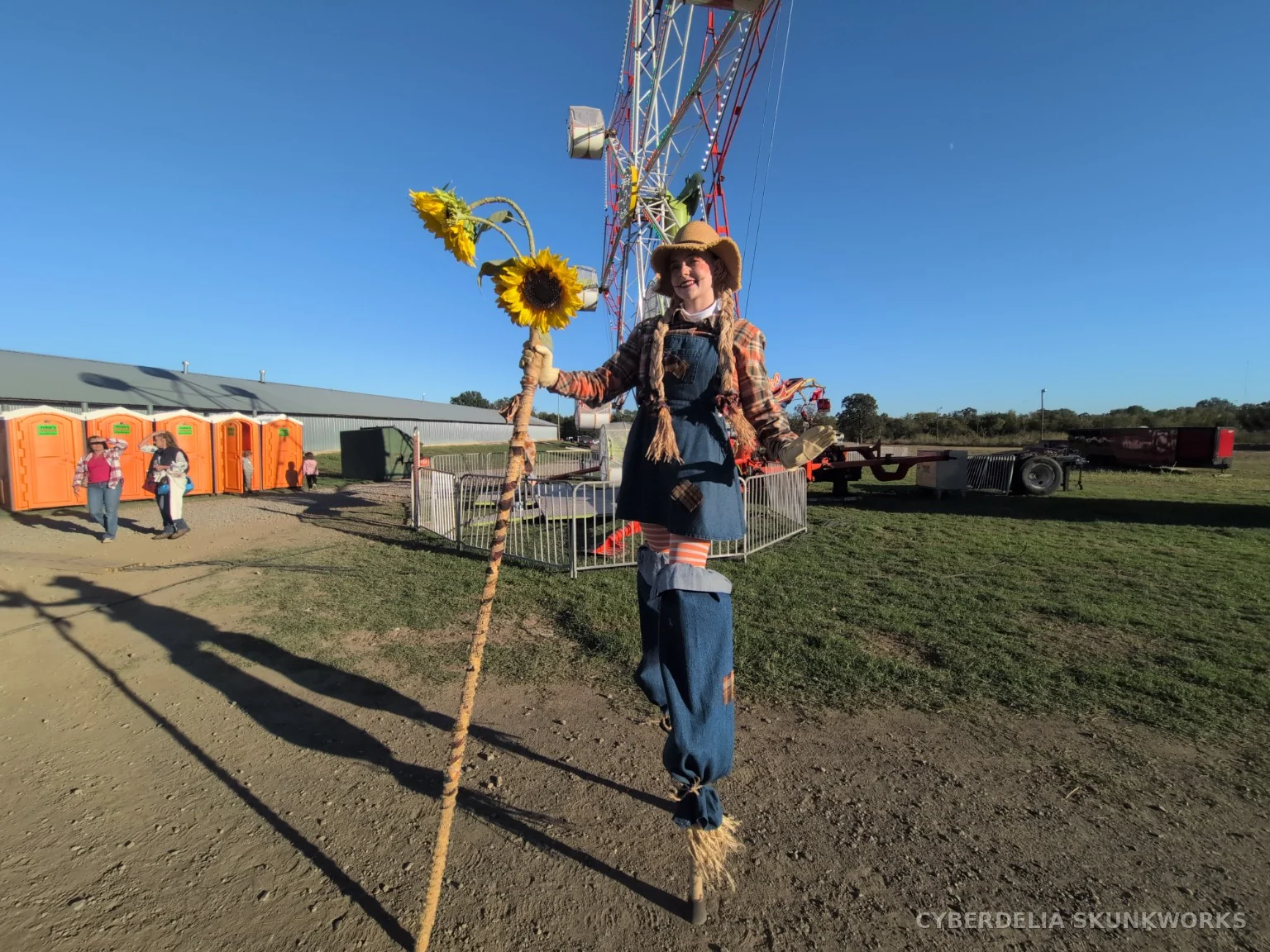
Earlier in the day, a performer on stilts moved through the grounds in a distinctive scarecrow-style costume, carrying sunflowers and engaging with the surroundings.
Against the carnival rides and festival crowds, the character was impossible to overlook.
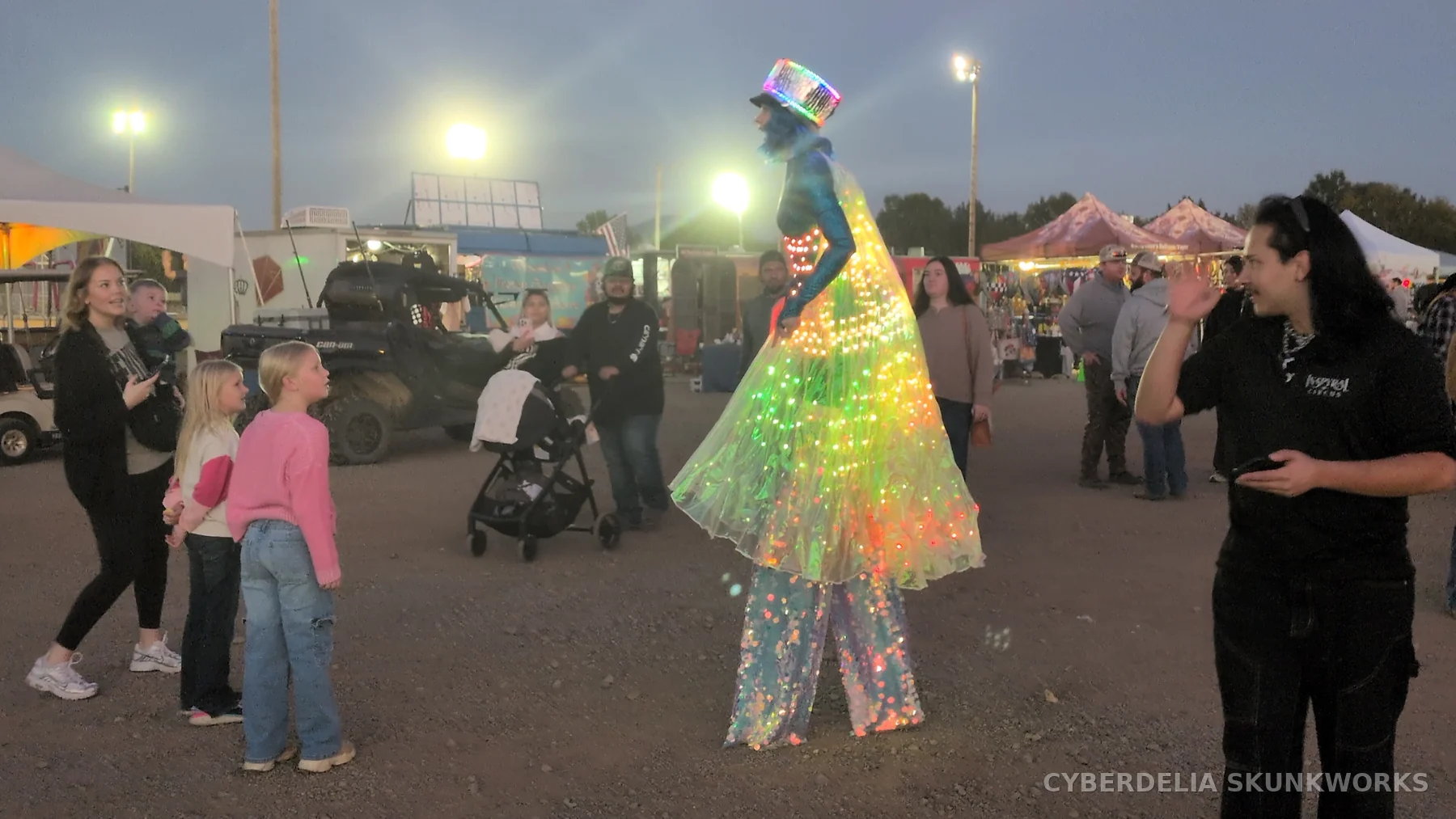
Stilt walking looks playful from a distance, but it requires exceptional coordination. Performers must manage an elevated center of gravity while moving among people, changing direction, maintaining balance, and remaining engaged with an audience.
It's a demanding physical discipline concealed beneath the appearance of effortless entertainment.
As darkness arrived, the performances became even more visually dramatic.
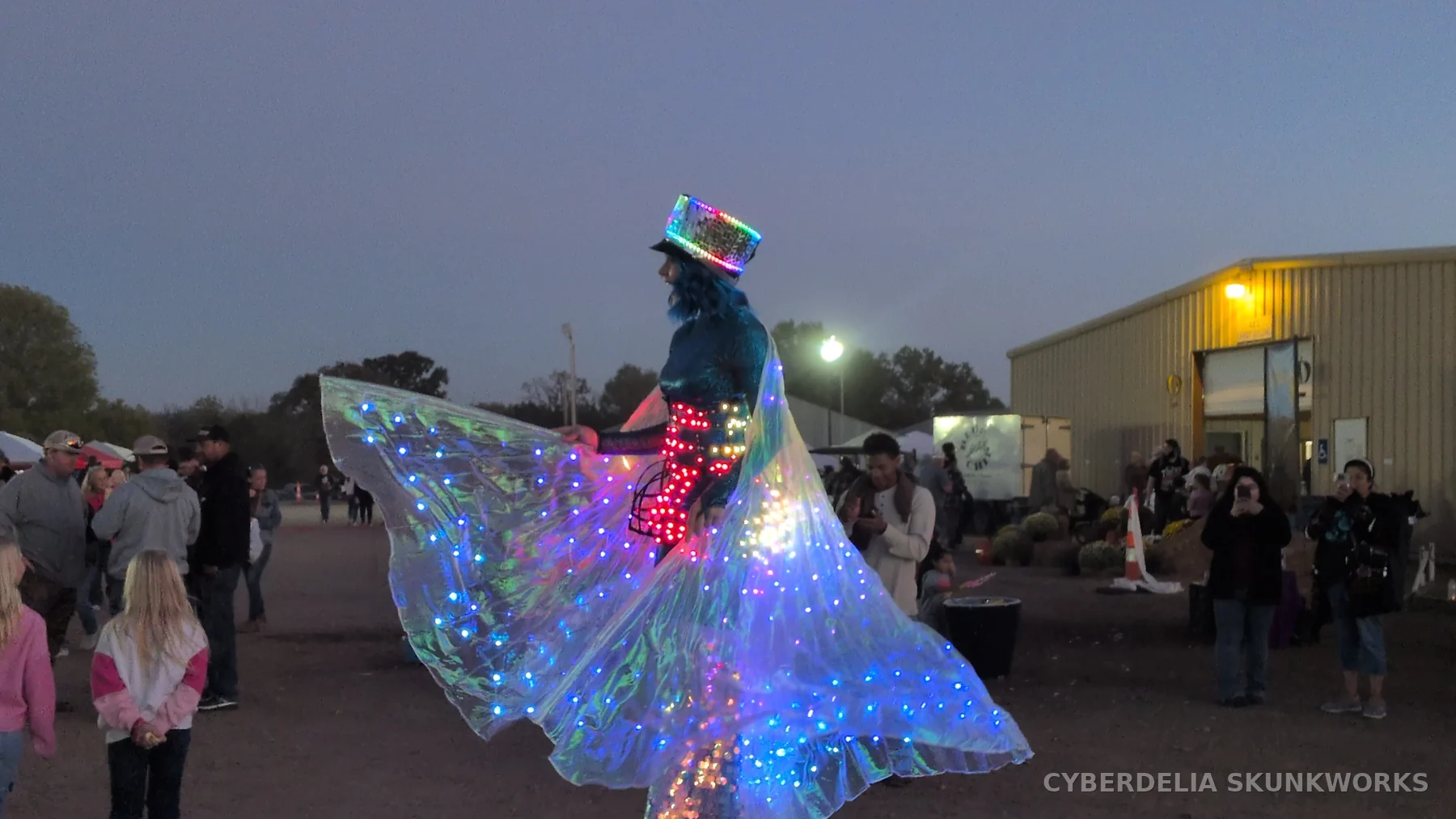
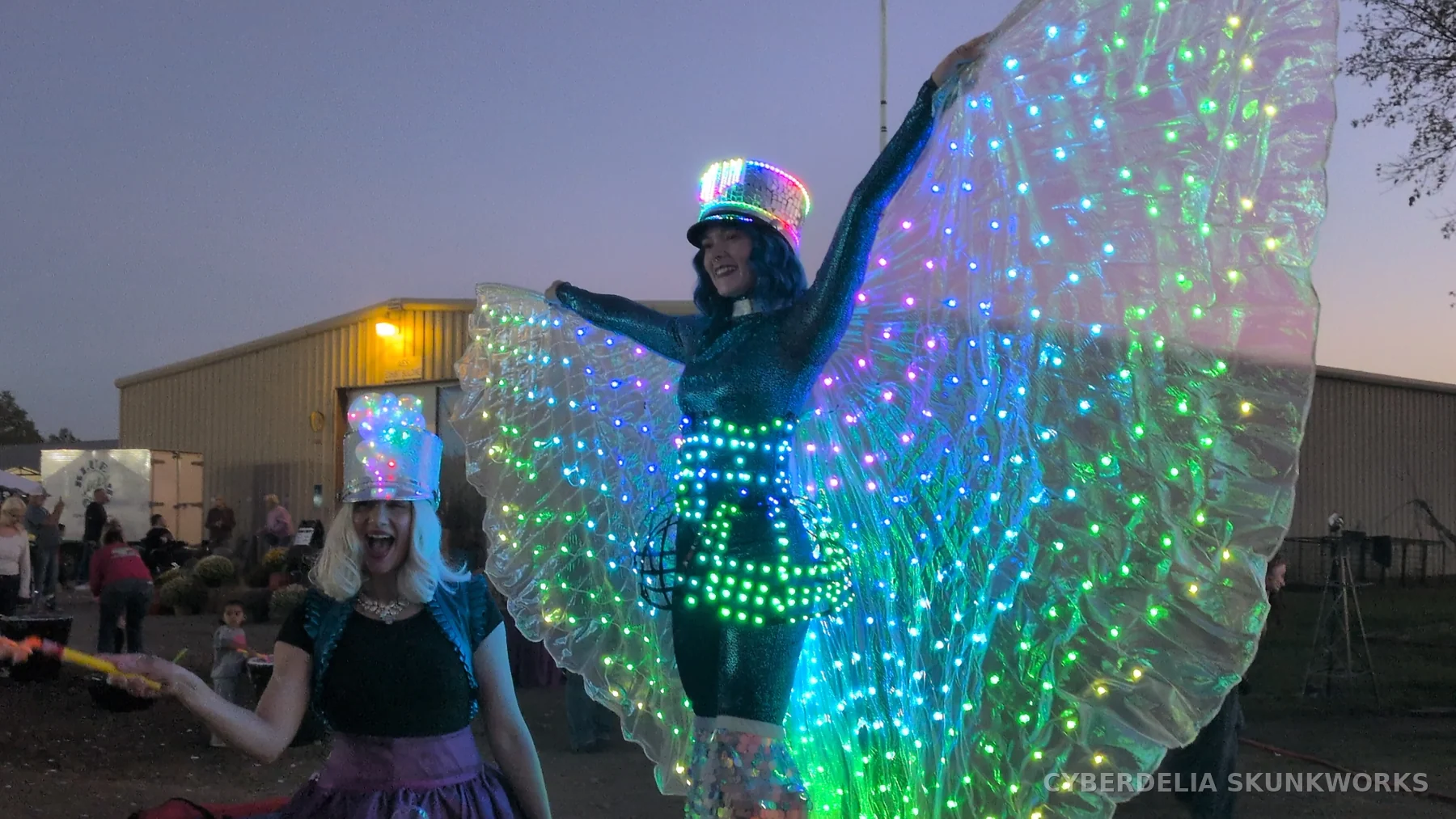
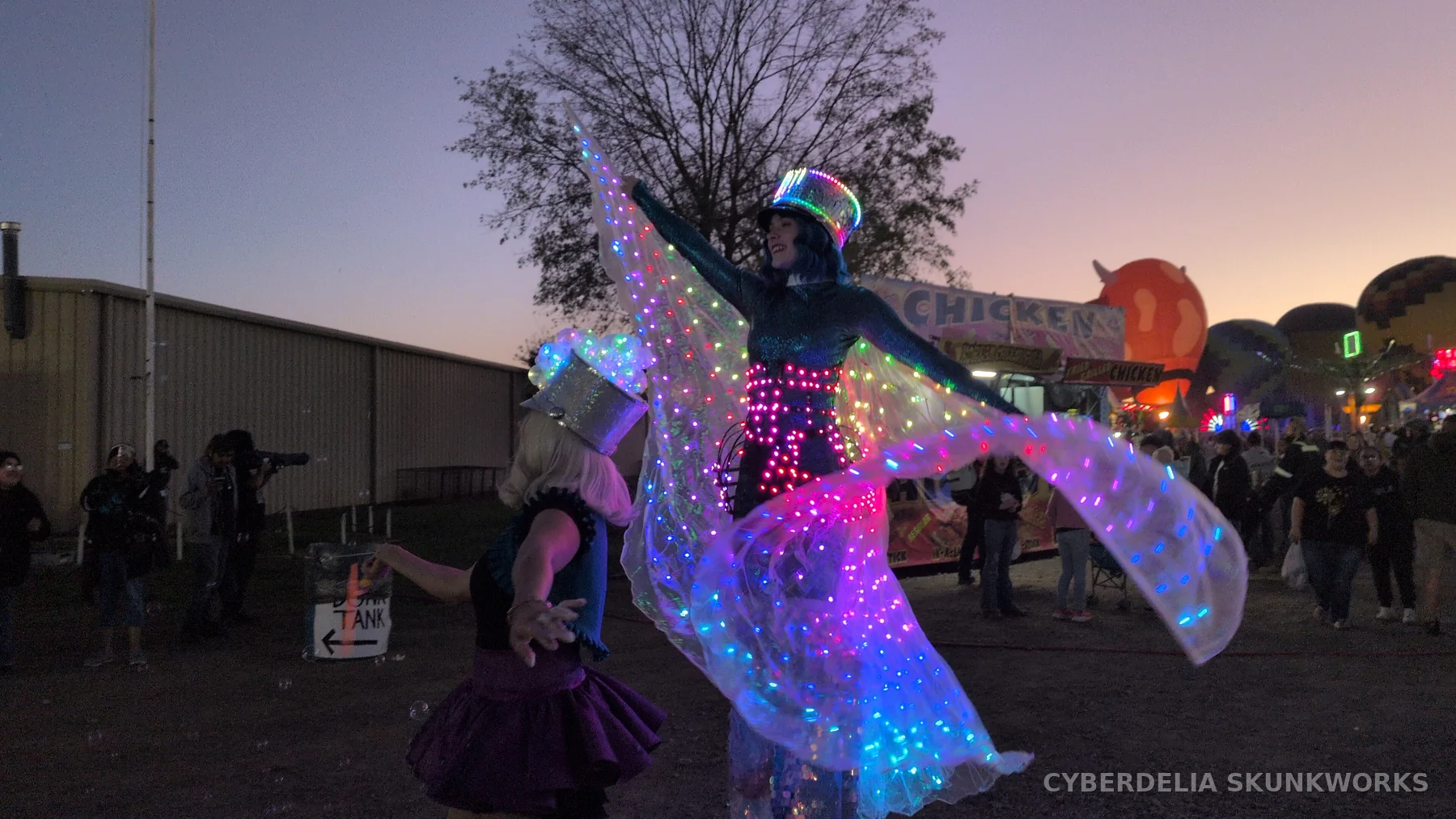
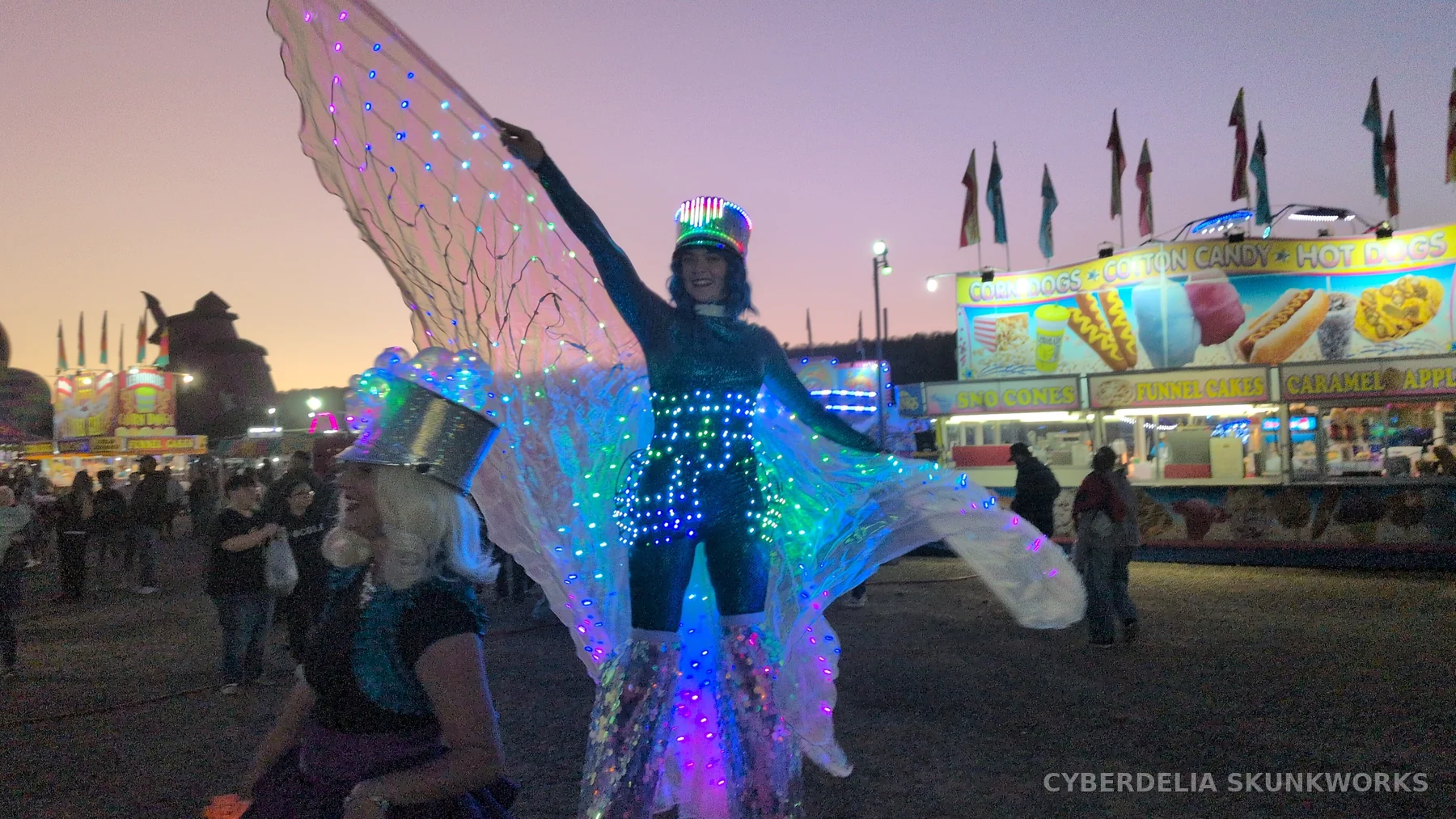
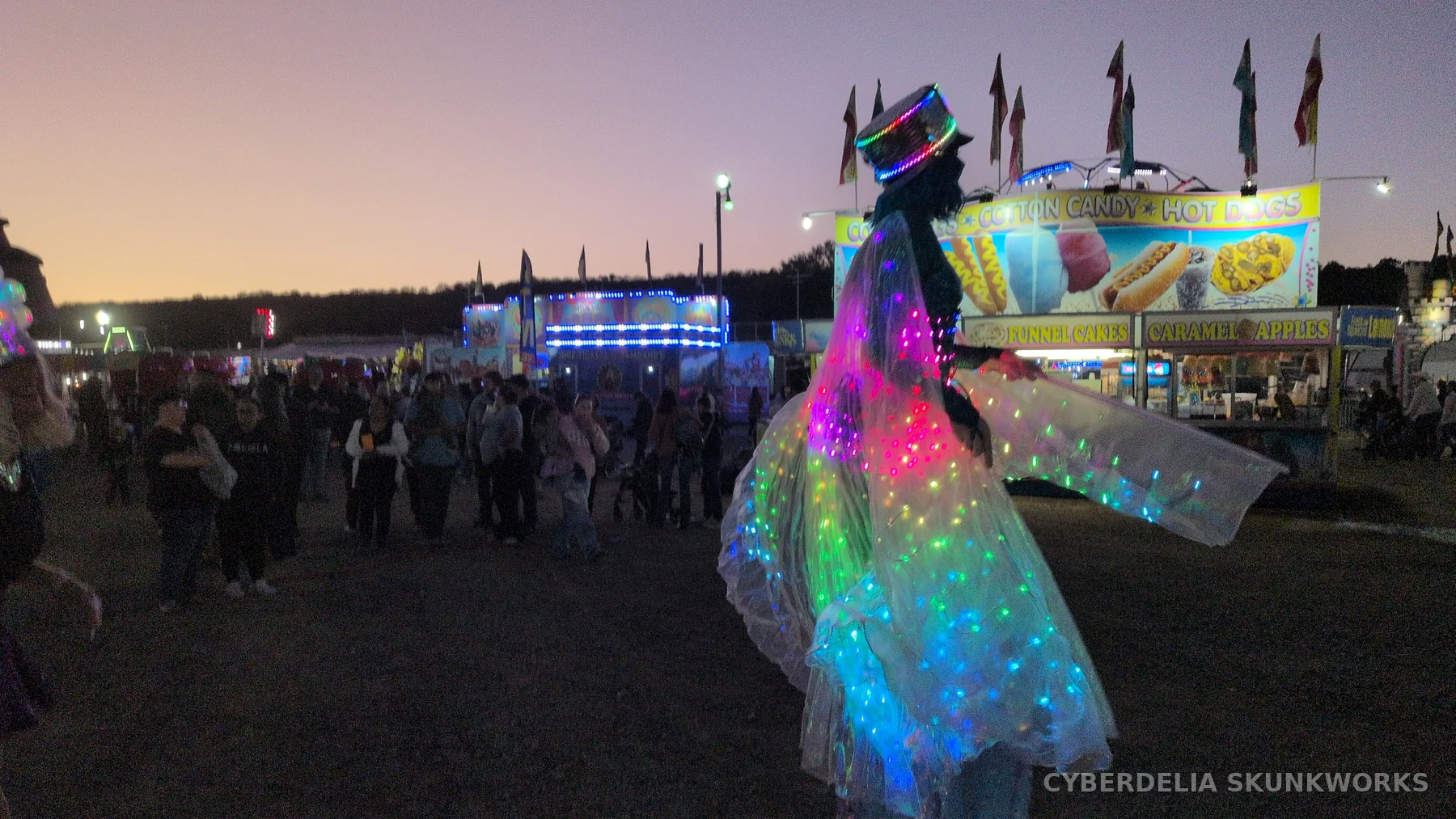
Illuminated costumes and large LED Isis wings transformed performers into moving displays of color. The fabric wings spread into broad, luminous shapes, creating shifting patterns as the performers turned and moved.
The visual effect was especially well suited to the surrounding festival.
The balloons glowed overhead, the carnival supplied its own changing lights, and the circus performers created a more immediate spectacle at eye level.
Or, in the case of the stilt walkers, somewhat above it.
Cyberdelia's photographer approached one of the illuminated-wing performers before taking photographs, introduced the publication, and explained the intention to document her performance for online coverage.
She welcomed the photographs and asked to be tagged when the images were published.
That small interaction reflects an important part of event reporting.
The best field coverage doesn't simply collect images. It recognizes the people creating the experience, engages with them respectfully, and makes room to acknowledge their work.
The performers weren't incidental decorations around the balloons.
They were skilled artists bringing their own technical and physical disciplines to the event.
Inspyral Circus specializes in interactive entertainment, including stilt walking, LED performances, fire entertainment, and other circus arts. Their presence helped connect the festival's large-scale aerial display with the crowds moving through the grounds.
The result was a surprisingly cohesive collection of experiences.
Machines in the sky.
Performers moving through the crowds.
Artists and athletes transforming specialized skills into public entertainment.
All of it happening in the same Oklahoma field.
Inspyral Circus and the Evening Crowd
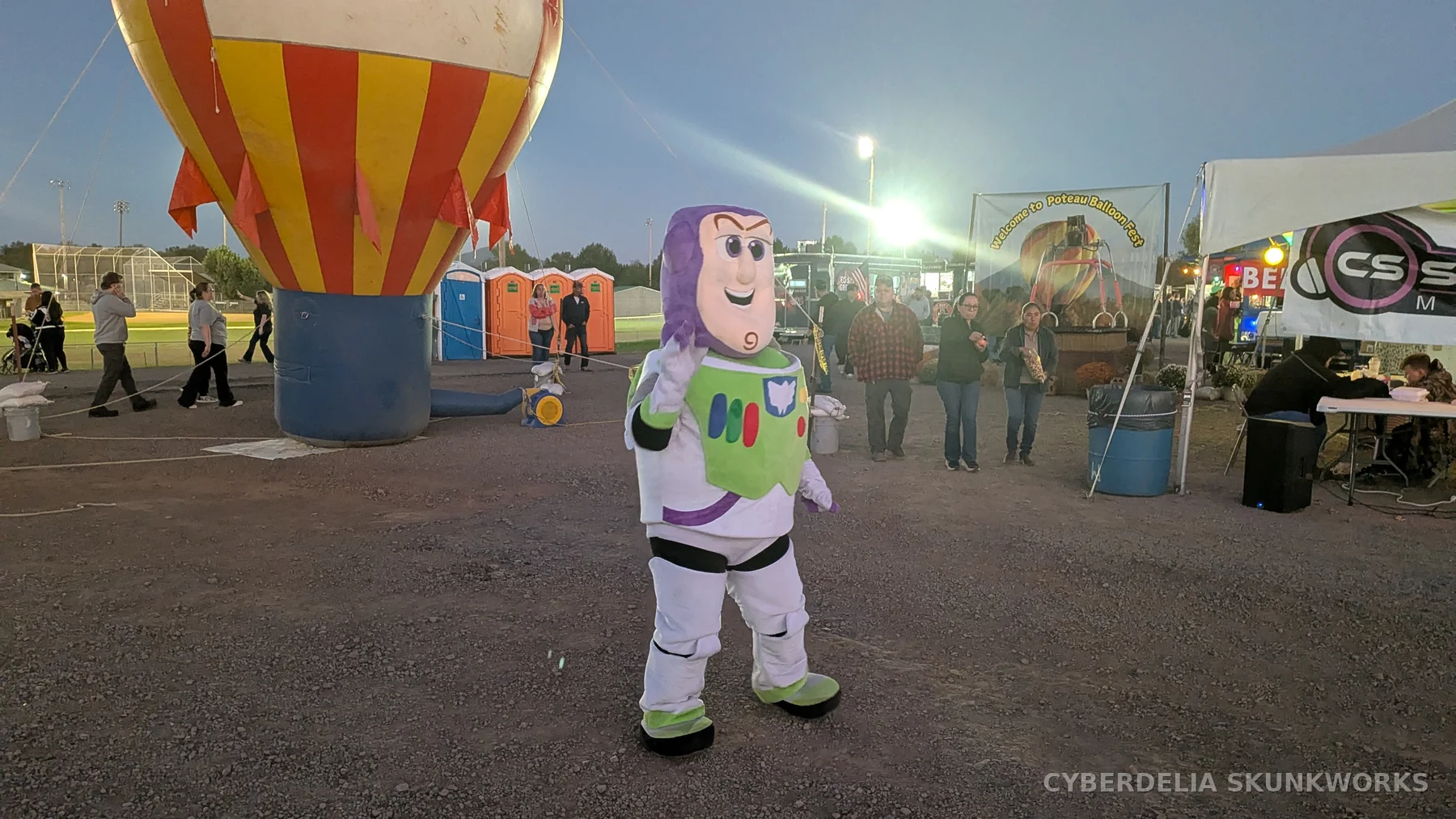
The Festival Beyond the Attractions
It would be easy to describe Poteau BalloonFest entirely through its largest attractions.
But events like this are also exercises in temporary infrastructure.
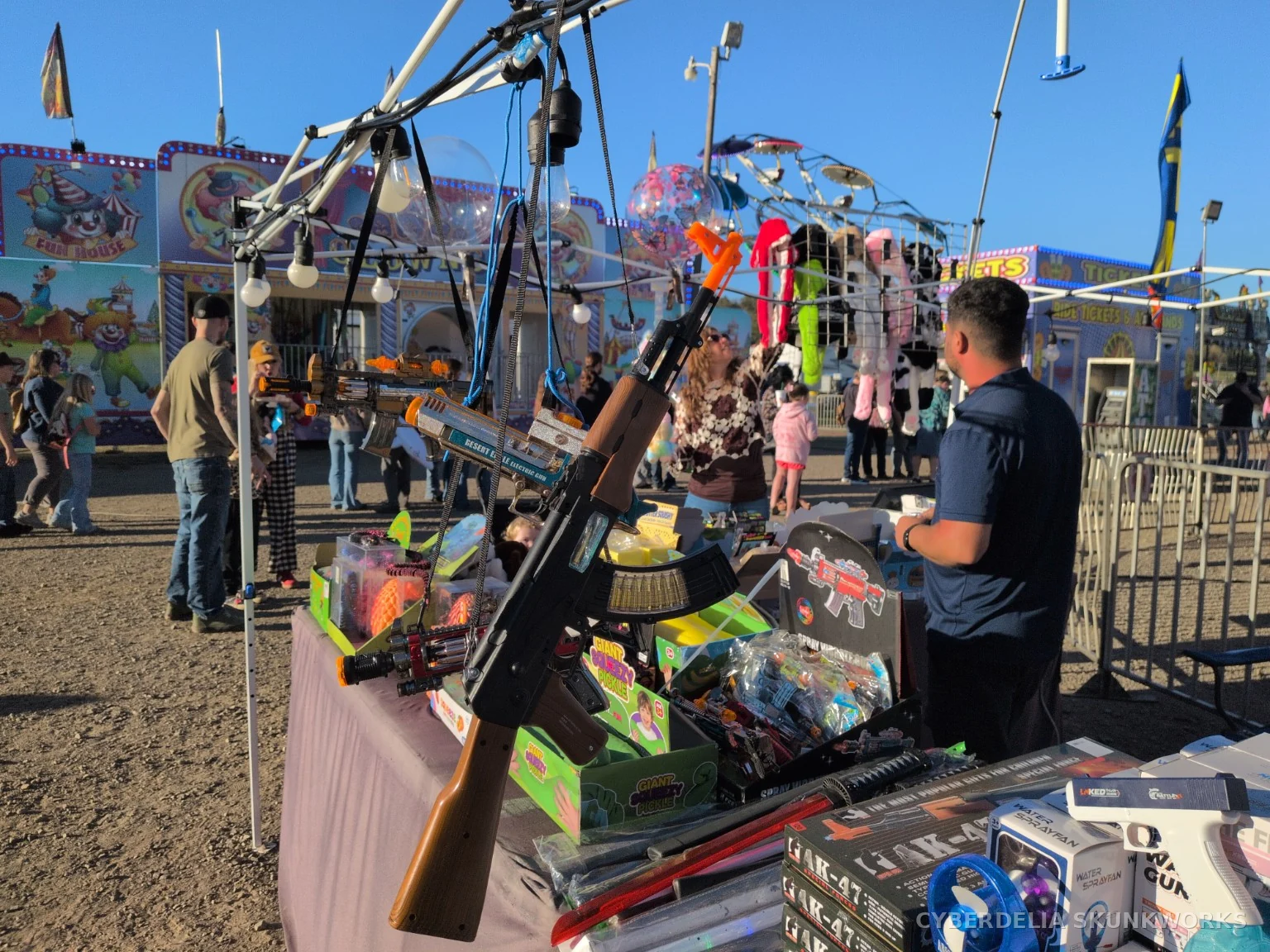
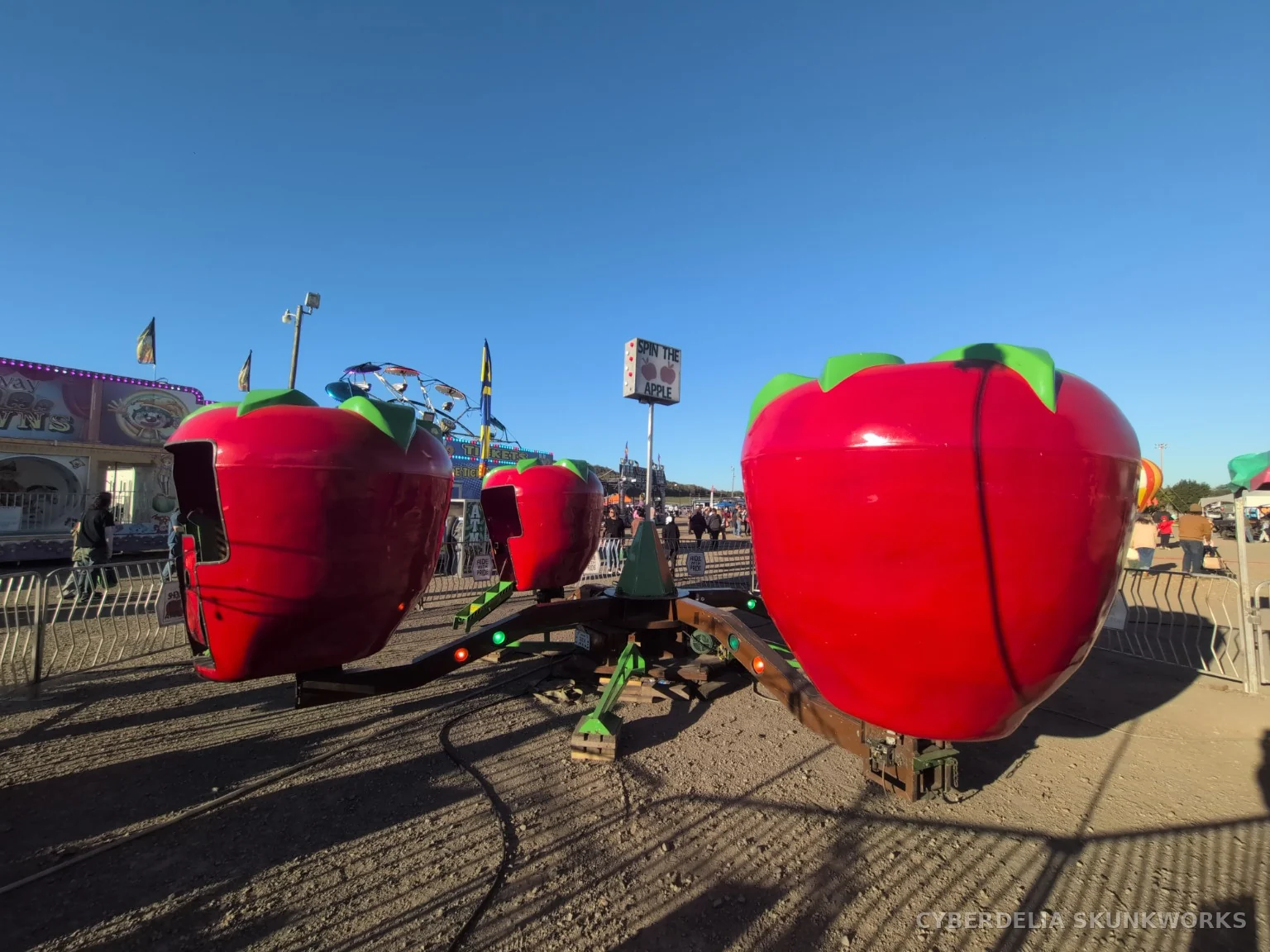
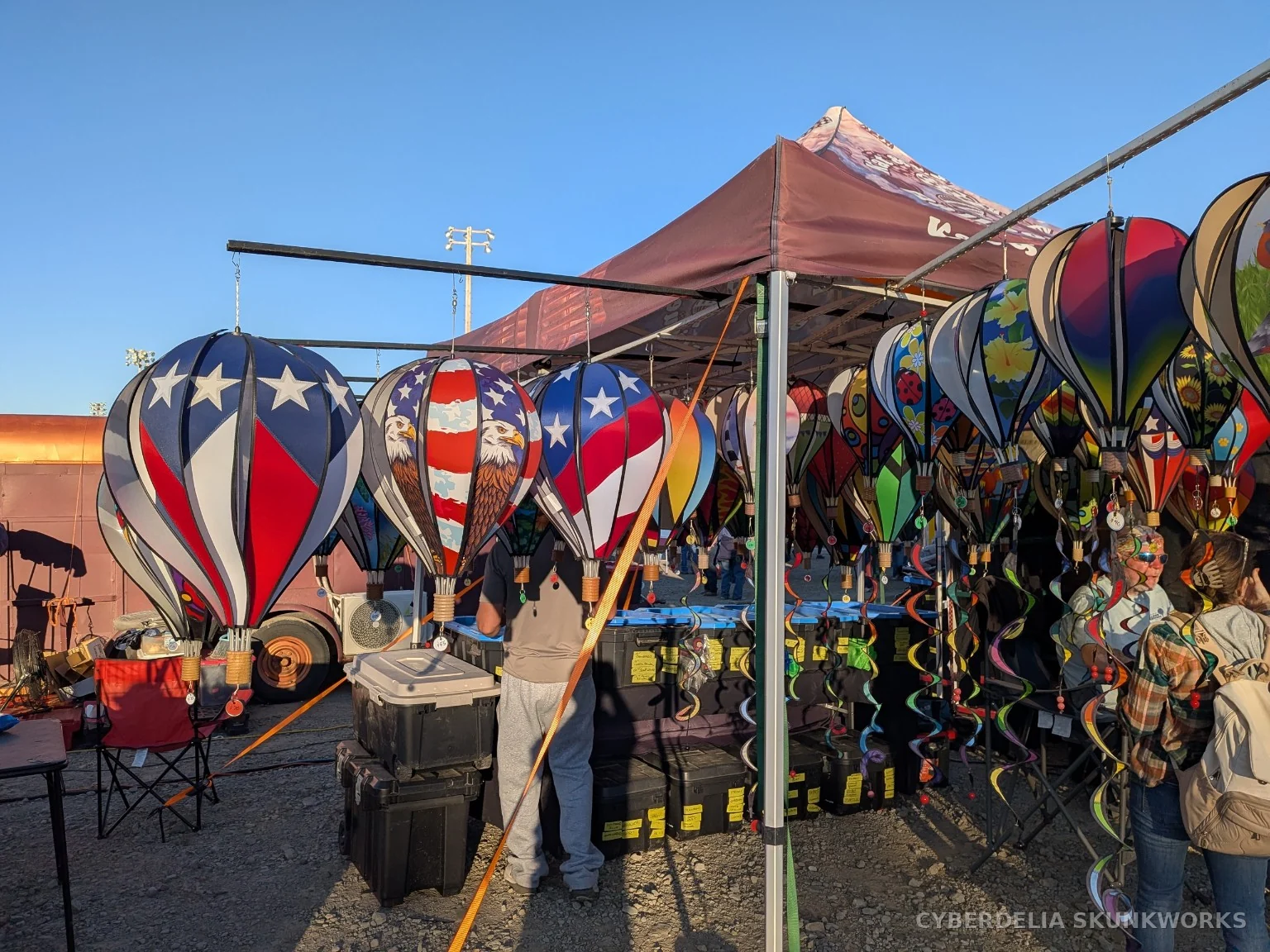
For a few days, an ordinary fairground becomes a small, functioning entertainment district.
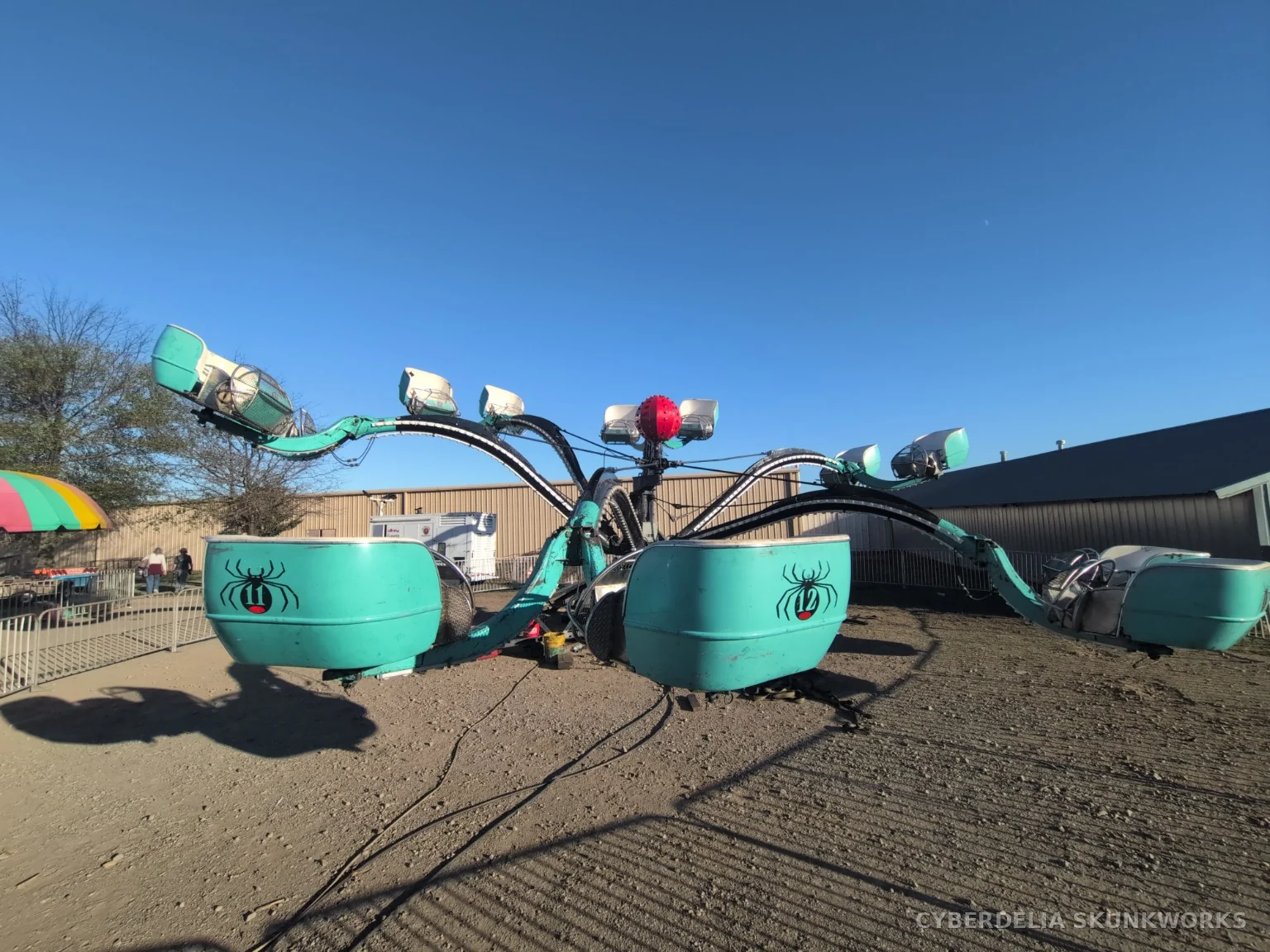
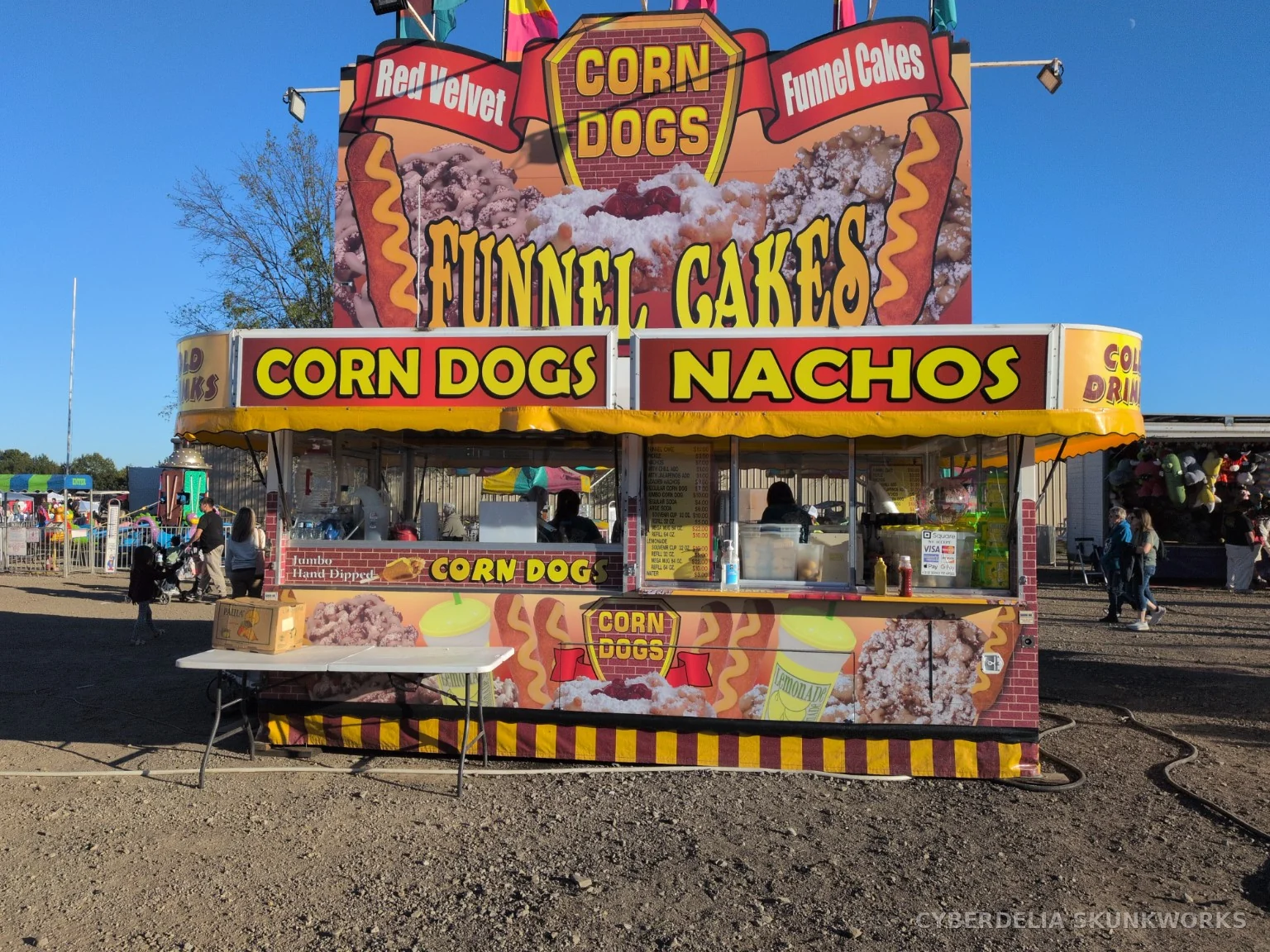
Vehicles arrive with equipment and supplies. Vendors establish their spaces. Food operations begin serving customers. Power and lighting systems support booths and attractions. Parking areas fill. Families move between activities while performers and operators work to keep everything functioning.
Each component exists within a larger network of dependencies.
The carnival needs room to operate. Balloon crews need appropriate conditions and working space. Vendors need access to their equipment and customers. Performers need room to engage audiences. Visitors need safe paths through an environment filled with moving equipment and temporary installations.
When the system works, the complexity becomes almost invisible.
People see the lights and the balloons, not the logistics that make those experiences possible.
That is one of the more interesting lessons of public infrastructure.
Its success is often measured by how little attention people have to give it.
A festival visitor doesn't need to understand every operational detail to enjoy the evening. But someone has to understand those details, or the evening doesn't happen.
There was also a strong local dimension to BalloonFest.
Small businesses, vendors, community organizations, entertainers, and visitors shared the same space. Conversations happened between strangers. People discovered businesses and activities they might never otherwise encounter.
During the event, Cyberdelia also met individuals discussing plans to open a bookstore in the area, a reminder that these gatherings often create opportunities well beyond the attractions themselves.
A family festival can also become a place where entrepreneurs, artists, publishers, and community members make useful connections.
The balloons draw the crowd.
The people give the event its staying power.
The Festival in Daylight
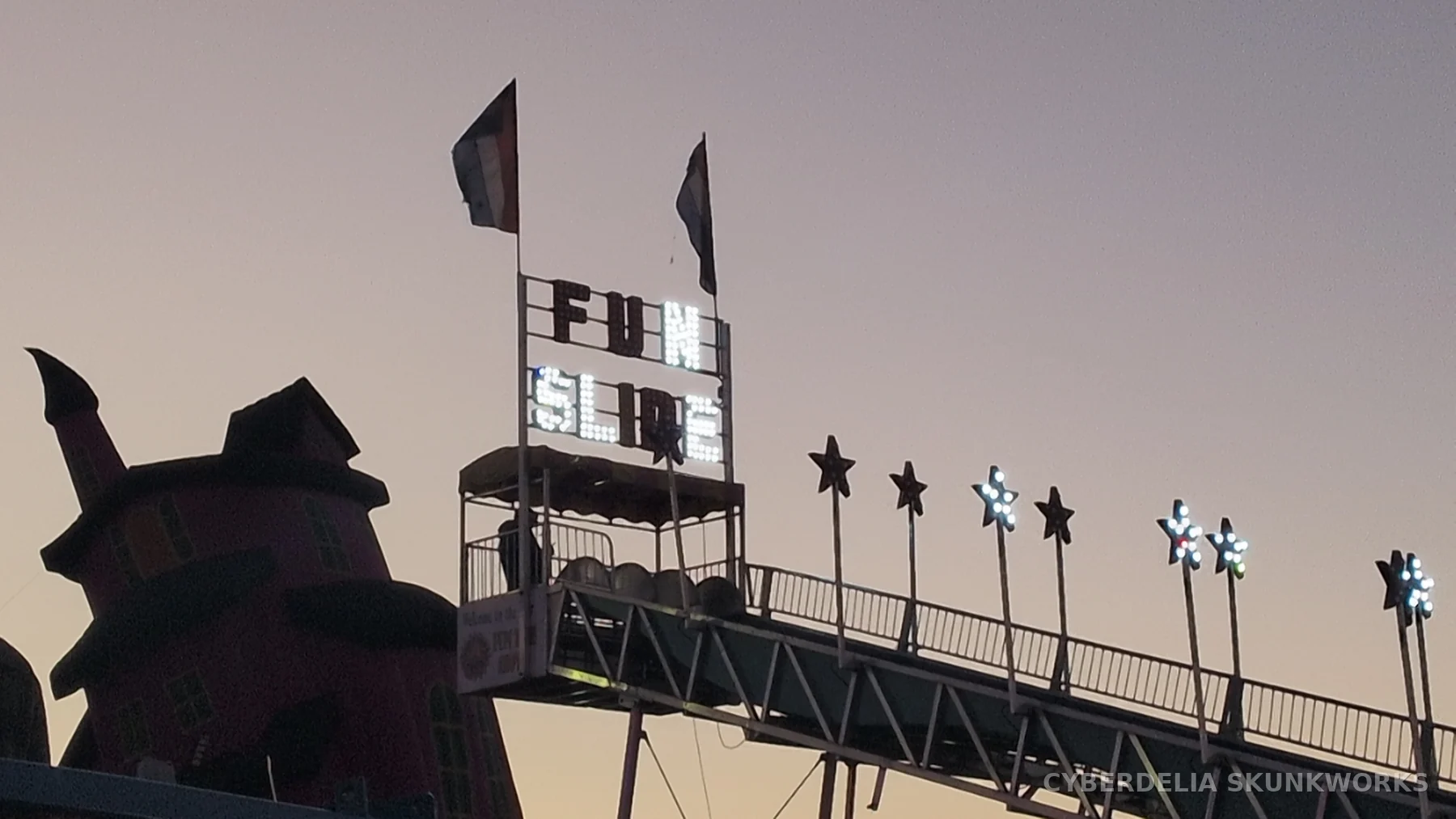
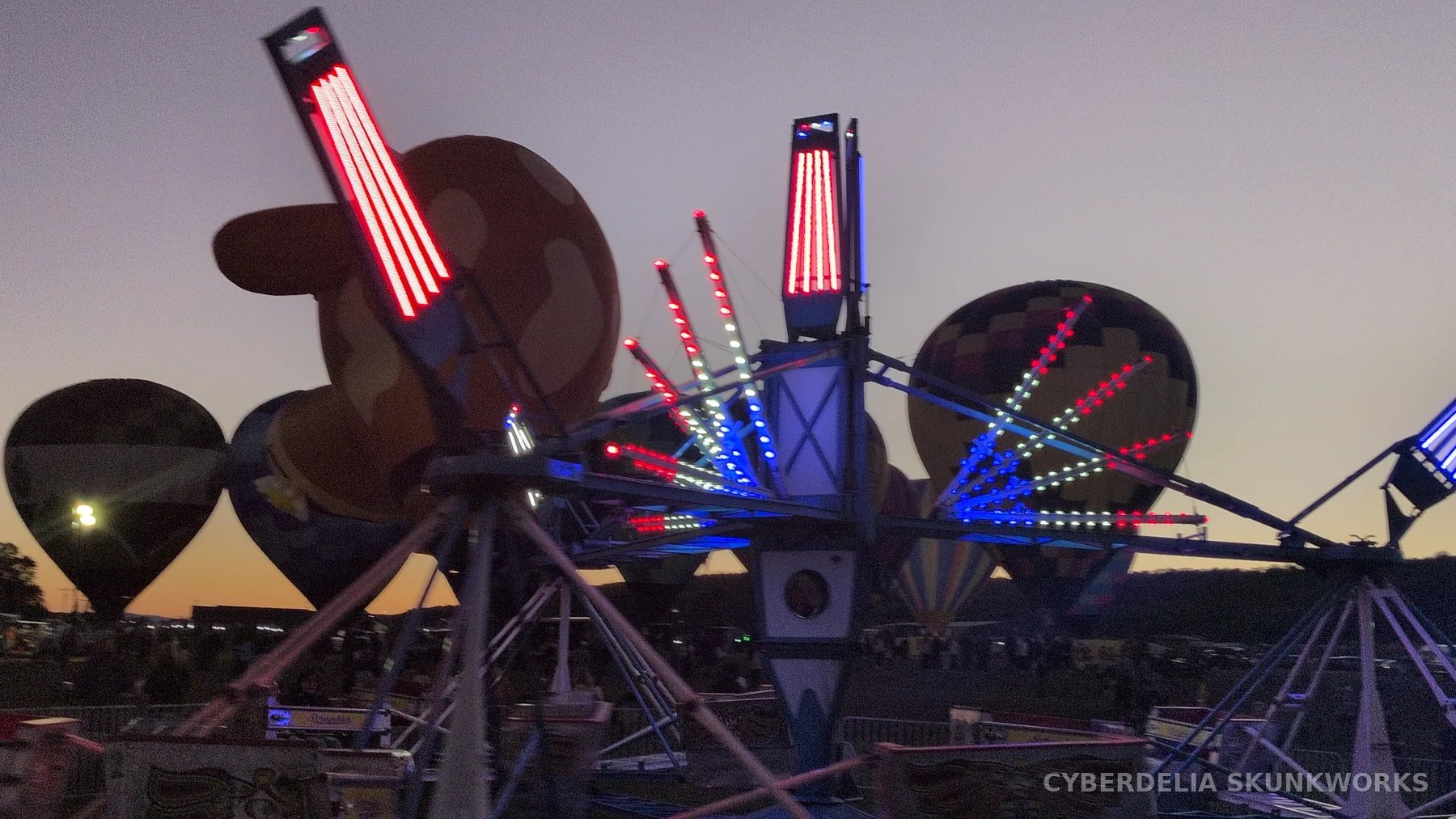
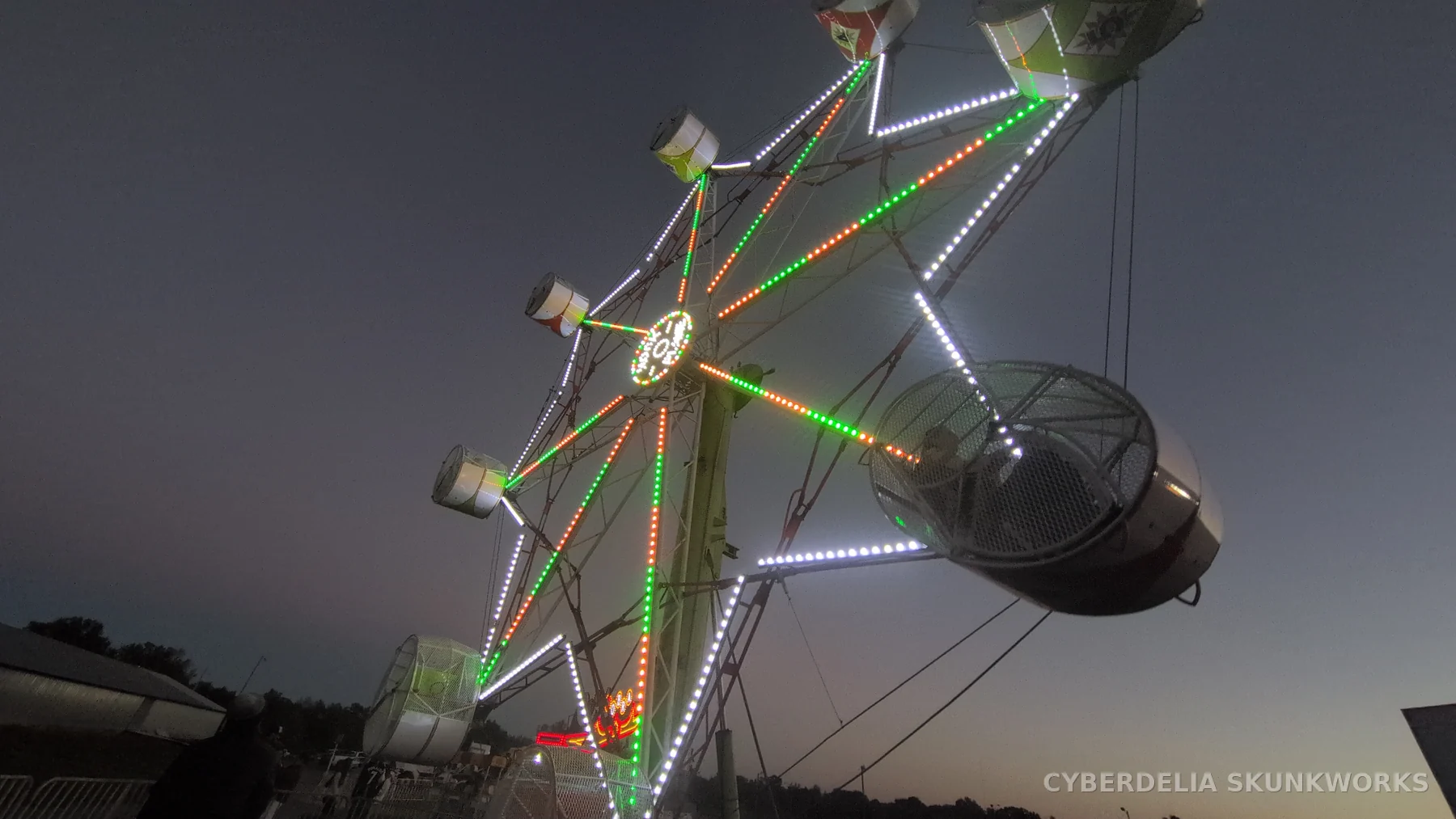
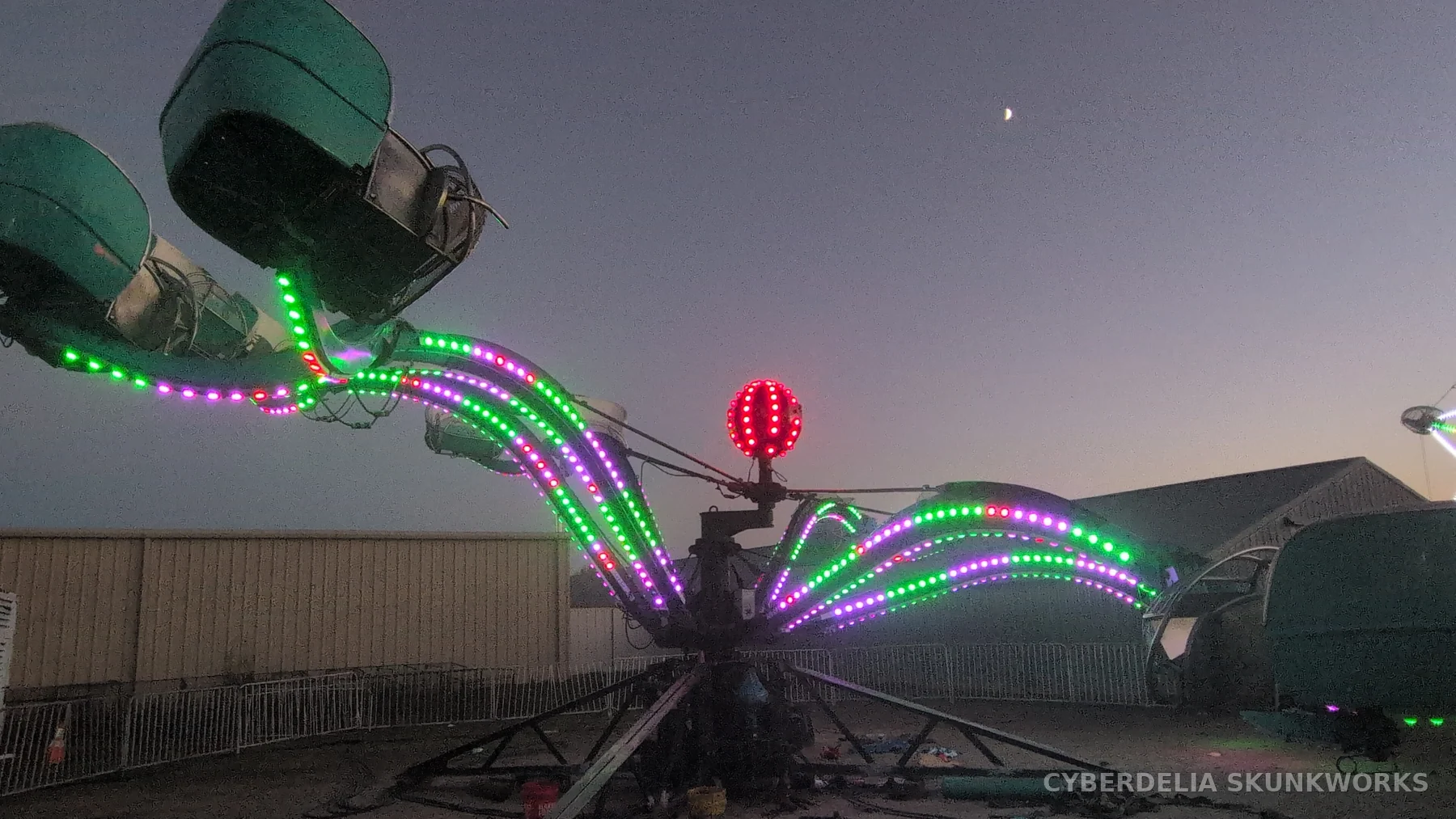
The Midway After Sunset
The Hour Everything Changed
For all the attractions and activity, the defining moment came at sunset.
The light began fading behind the surrounding Oklahoma hills.
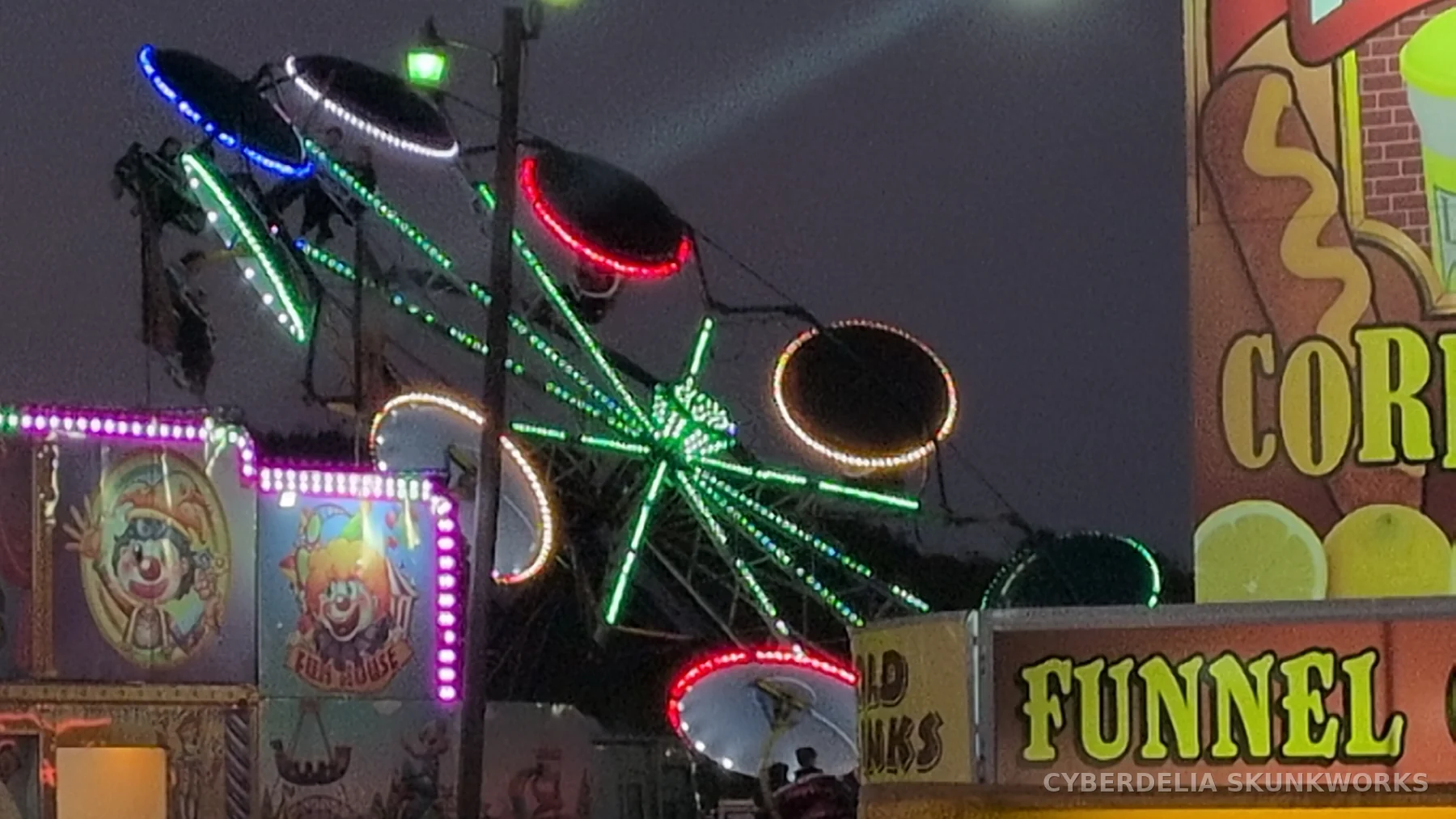
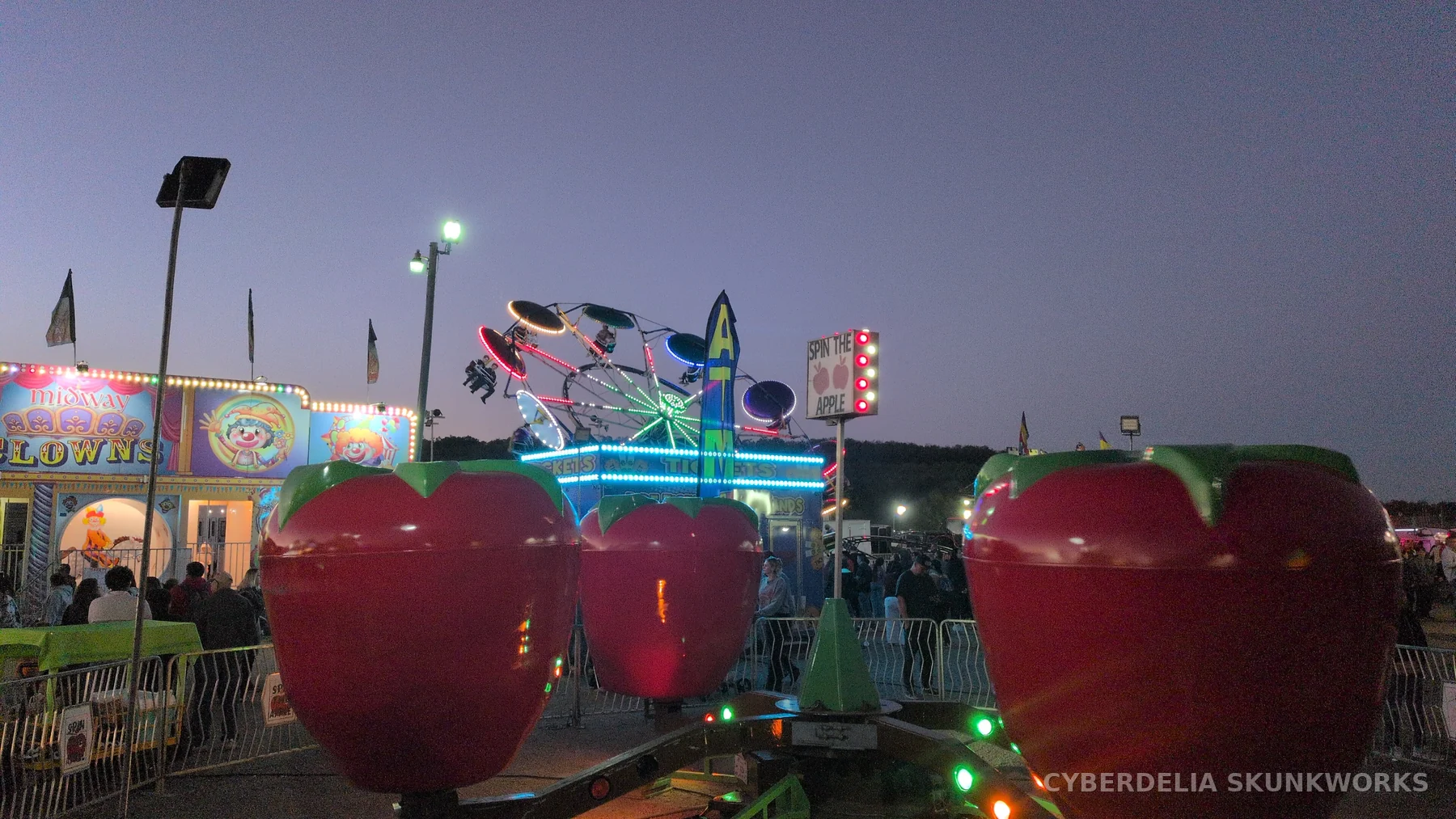
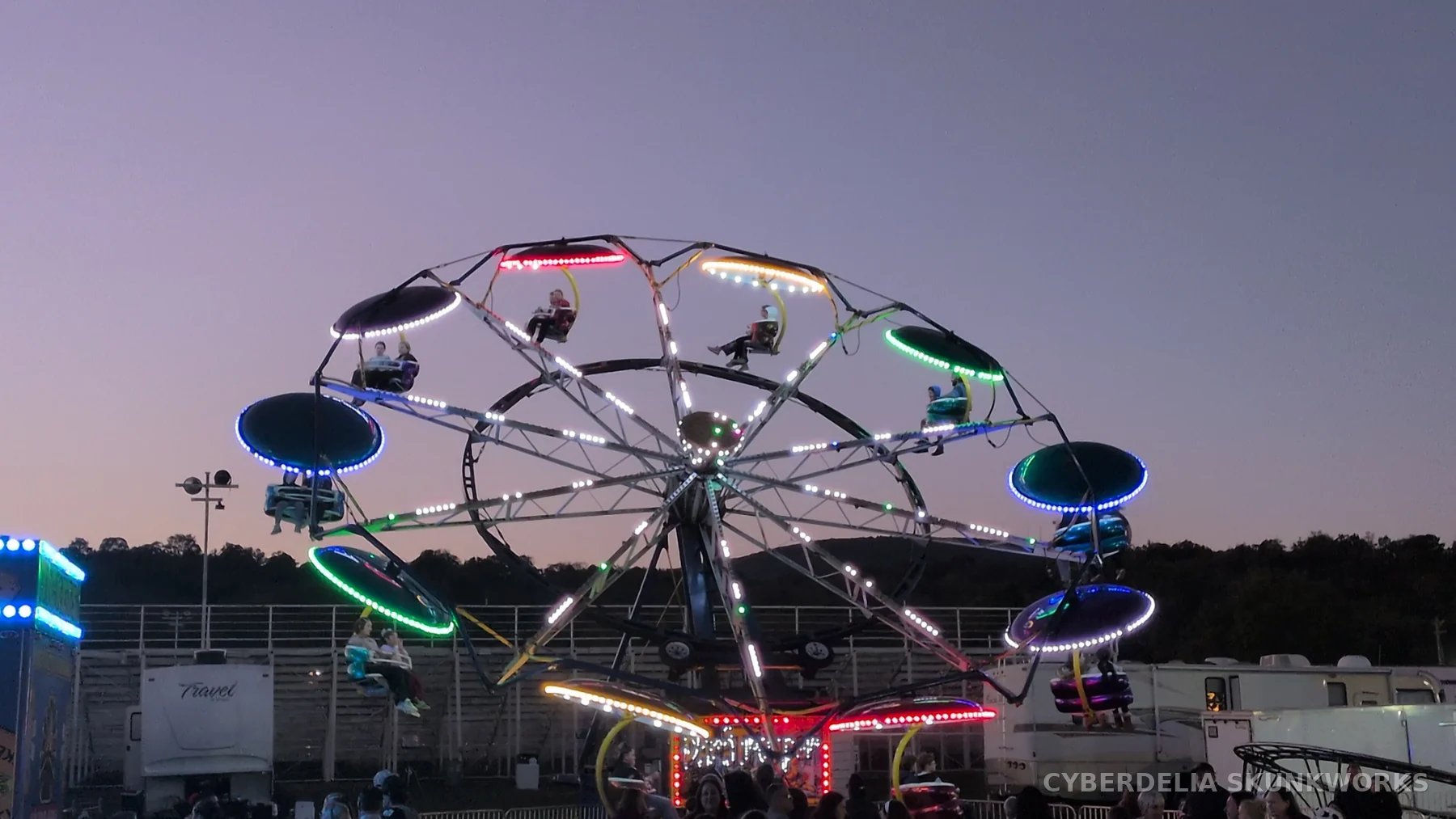
The carnival remained illuminated. People continued moving across the grounds. Balloon crews worked among trucks, trailers, ropes, and baskets.
Above them, the envelopes became enormous silhouettes against the evening sky.
Then the burners began lighting them again.
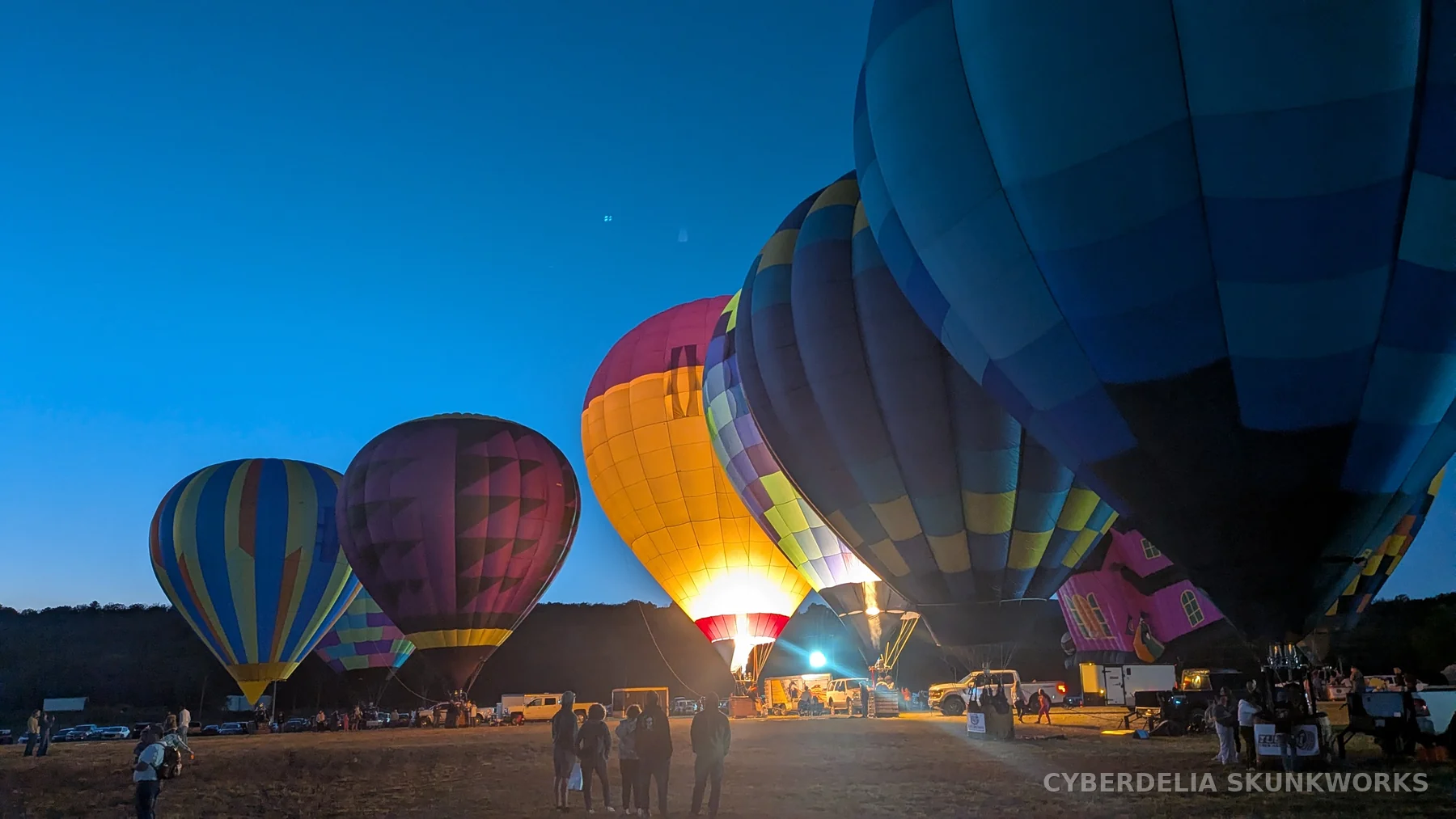
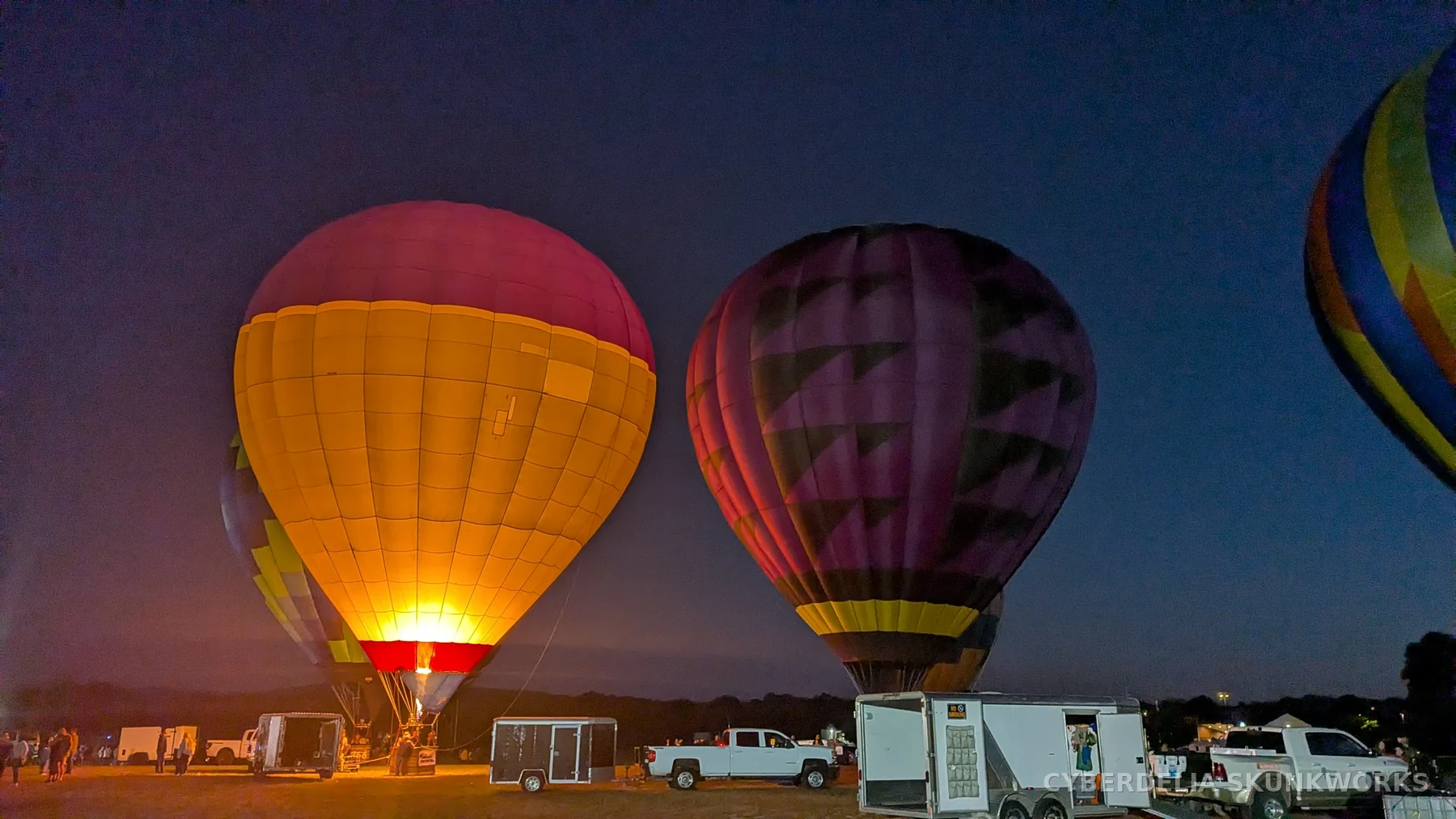
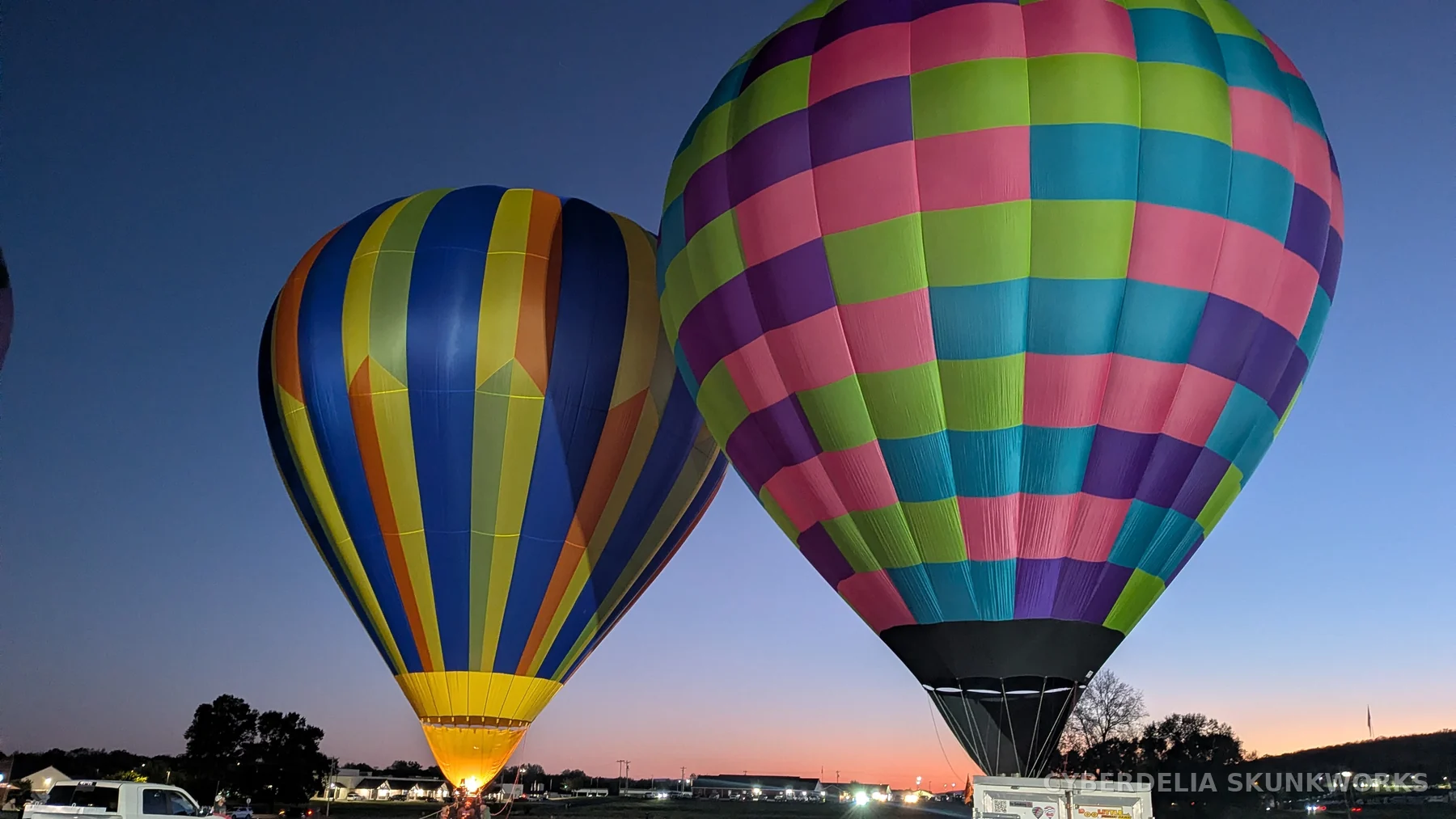
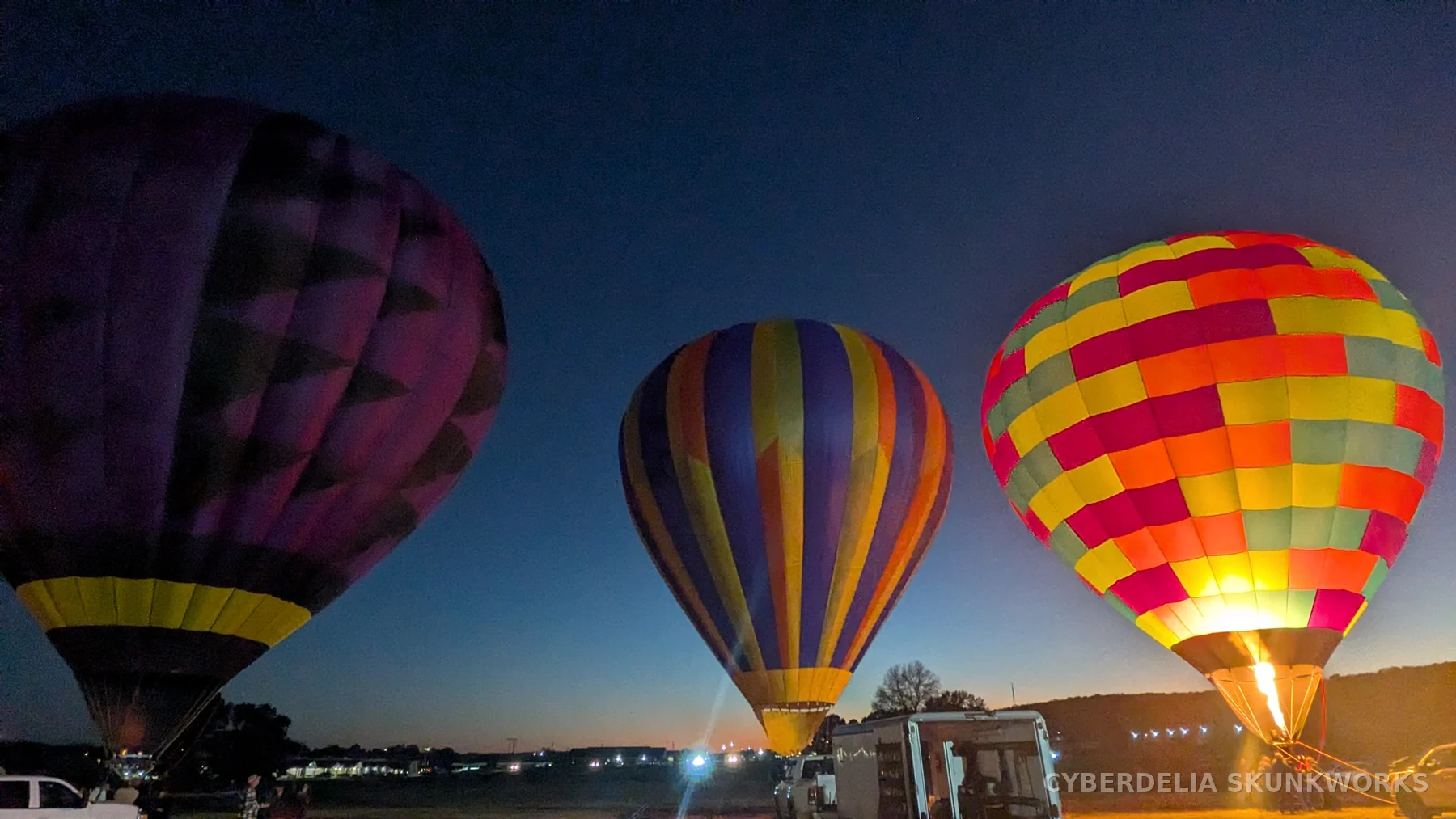
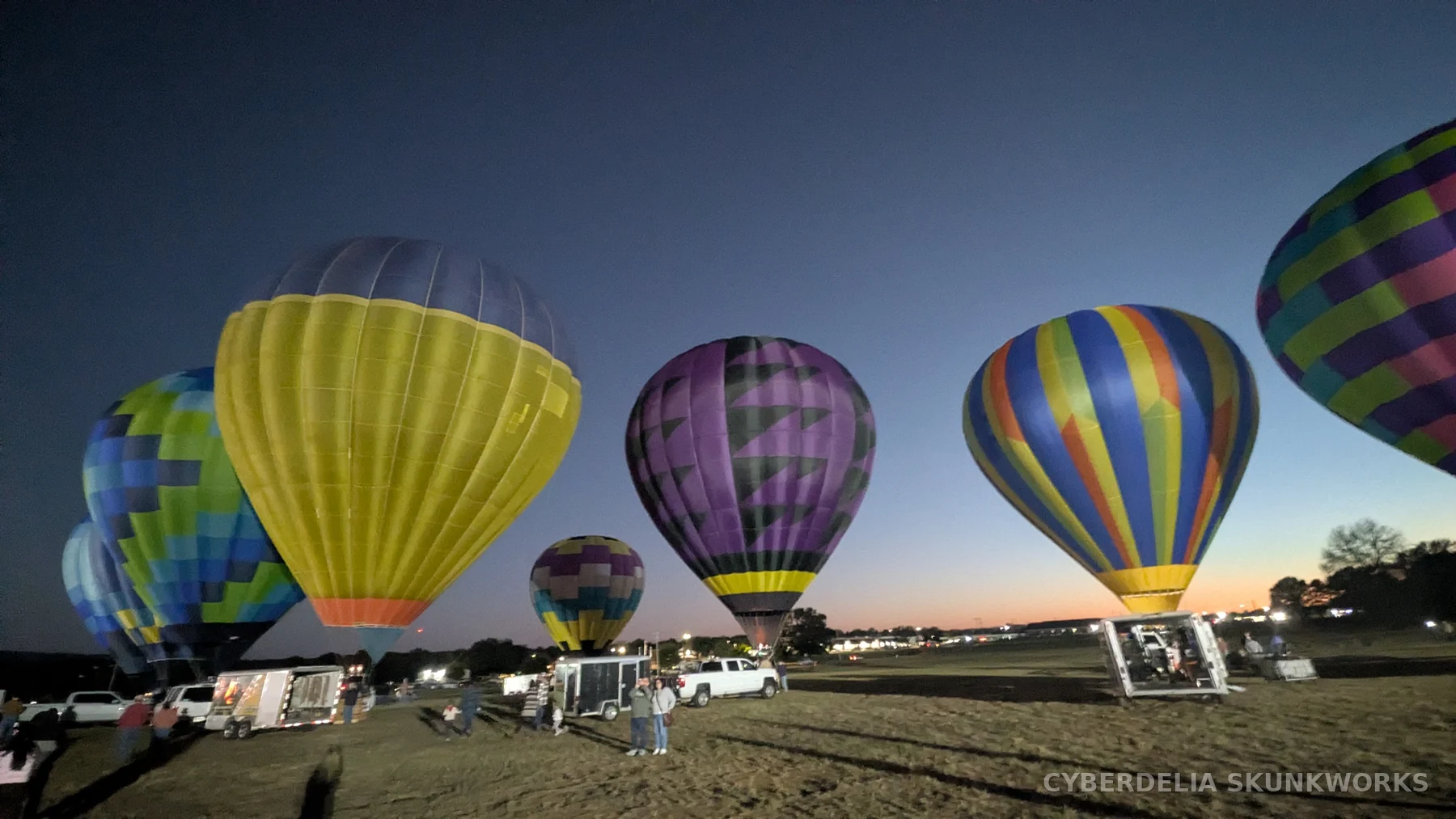
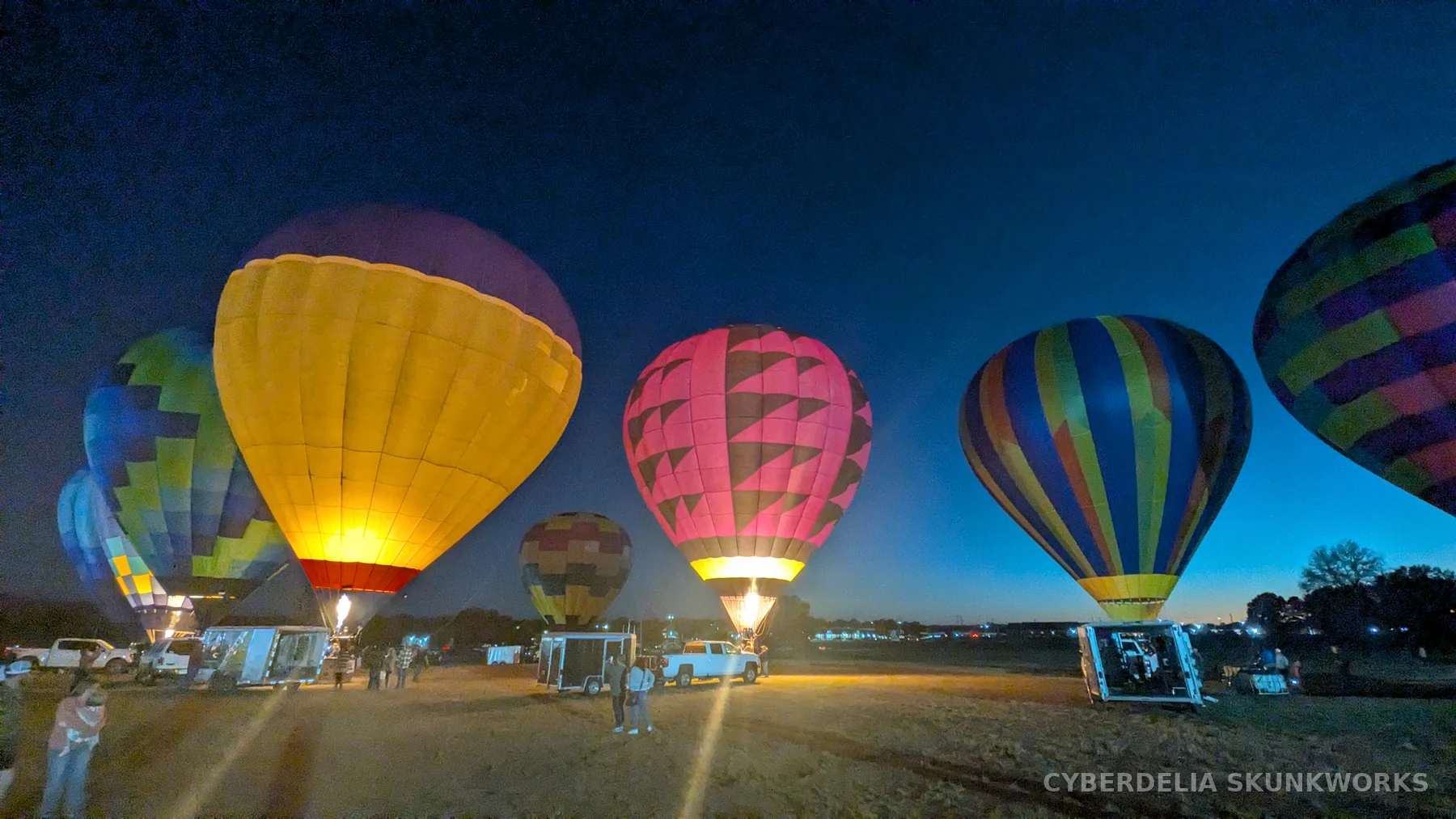
One balloon glowed a brilliant yellow-orange. Another filled with color as a flame illuminated its patterned envelope. A smaller balloon appeared between two larger aircraft, creating a layered scene of light and scale.
Elsewhere, the cow-shaped balloon towered over the gathering.
The contrast became stronger as the sky darkened.
Deep blue overhead.
Orange at the horizon.
Brightly illuminated fabric suspended between them.
It was the sort of scene photographers spend considerable effort trying to arrange artificially, except the entire thing was happening in real time.
The Cyberdelia field photographs captured both sides of that transformation.
Some images show the full field, with several balloons glowing at different intensities against the evening sky.
Others move much closer, revealing the open lower ends of envelopes and the brilliant flames rising from their burners.
In the strongest sequences, those two perspectives come together.
The engineering is visible, but so is the wonder.
The audience can see how the spectacle works without losing any appreciation for the spectacle itself.
That is a particularly satisfying kind of photograph.
It doesn't ask viewers to choose between understanding something and finding it beautiful.
It allows both.
The Nighttime Glow
Twenty Years of Making the Extraordinary Accessible
The Poteau Chamber of Commerce marked 2026 as BalloonFest's twentieth anniversary, and that longevity deserves recognition.
Events of this kind require sustained coordination, willing participants, vendors, sponsors, volunteers, operational support, and an audience that continues finding reasons to return.
They also serve an educational function, whether or not that is their primary intention.
A child standing beneath a balloon as its burner fires is seeing applied physics at an unforgettable scale.
Someone watching the Tulsa Tyrants encounters the relationship between protective equipment and human movement.
A spectator meeting a circus performer on stilts sees the result of years of balance, conditioning, coordination, and practice.
And anyone curious enough to examine the machinery behind the attractions leaves with a better understanding of how much specialized knowledge can be hidden inside a public celebration.
This is where events like BalloonFest fit naturally into Cyberdelia's interests.
Technology isn't confined to semiconductor laboratories, artificial intelligence systems, or the latest aerospace development.
It also exists in long-established machines that still perform astonishingly well.
In materials selected for strength and weight.
In the precision of practiced human movement.
In temporary infrastructure assembled by people who understand their work.
In the coordination required to make something complicated appear effortless.
The technologies may be old or new, extravagant or straightforward, but their value is ultimately determined by what people can accomplish with them.
One More Look at the Sky
By the time darkness settled over the LeFlore County Fairgrounds, the festival had become a collection of glowing shapes, moving lights, machinery, and people making memories.
The armored fighters had demonstrated their skills.
The circus performers had brought color and character to the crowds.
Vendors and attractions had helped turn a fairground into a temporary community.
And overhead, the balloons continued providing the evening's defining image: enormous illuminated aircraft standing against the Oklahoma night.
There is something refreshing about an experience that doesn't require a screen, an algorithm, or a digital simulation to make it extraordinary.
No artificial intelligence generated those flames.
No rendering engine was needed to create those colors.
The glowing balloons were real aircraft, operated by real people, using familiar principles of physics refined through generations of practical knowledge.
The photographs are beautiful precisely because the event was real.
Twenty years into its history, Poteau BalloonFest remains a reminder that technological wonder doesn't always arrive in the form of something new.
Sometimes it arrives in a wicker basket beneath thousands of cubic feet of heated air.
Sometimes it wears steel armor.
Sometimes it walks through a crowd on stilts, carrying sunflowers or glowing wings.
And sometimes it looks like an enormous cow lighting up against the last colors of an Oklahoma sunset.
For one October evening, the sky over Poteau became a gallery of fire, fabric, engineering, and human imagination.
And that was worth coming out to see.
Cyberdelia Skunkworks covered the twentieth annual Poteau BalloonFest on-site on October 17, 2026. All 68 selected photographs were taken by Pascal England. Published copies carry a translucent Cyberdelia Skunkworks watermark; original camera files remain unchanged. Select a photograph to open its larger version.
Special thanks to the Poteau Chamber of Commerce, participating balloon crews, the Tulsa Tyrants, Inspyral Circus, and the vendors, performers, and community members who helped make the event possible.
CYBERDELIA ASSESSMENT
BalloonFest makes specialized engineering and practiced human skill visible at public scale. Balloon crews, armored athletes, performers and temporary infrastructure turn separate disciplines into a shared community experience. The photographs document that work as well as the spectacle.
SOURCE TRAIL
- Pascal England’s original on-location reporting and photography, October 17, 2026.
- Poteau Chamber of Commerce: 2026 BalloonFest announcement — event dates, twentieth anniversary, location and advertised activities.
- Oklahoma Tourism: Poteau BalloonFest — independent official tourism listing.
- FAA Balloon Flying Handbook, Chapter 2 — balloon systems and buoyancy.
- Inspyral Circus and its stilt-walking program — organizational spelling and performance background.
METHOD & LIMITATIONS
This is a firsthand field report accompanied exclusively by the author’s original photographs. Event dates, venue and anniversary were checked against the organizer and Oklahoma Tourism. The aviation explanation was checked against the FAA handbook; it is background, not a claim that Cyberdelia inspected or certified any particular aircraft. Gallery captions describe visible subjects. Identifications of the Tulsa Tyrants and Inspyral Circus rest on on-site reporting, with the event performance sign also documenting both groups. Individual performer names and personal social accounts are unknown and are not inferred from appearance. No attendance count, operational safety audit or flight-performance measurement is claimed. The bookstore plans remain an unverified conversation, without a published business identity or private contact details.
Editorial clarification before publication: the buoyancy explanation distinguishes displaced-air force from the total weight it supports and notes the limited routing influence available through different wind layers. No interviews or quotations were added. Photographs were selected for composition, subject variety and useful sequences; blur, weak frames and redundant versions were culled. Published copies were resized, compressed and watermarked without synthetic enhancement.
CORRECTIONS
Submit documented corrections through the Corrections Ledger. Material updates will be dated and explained.
Continue the lighter-than-air engineering thread: The Modern Dirigible.